A good baby bedtime routine is simply the same few calm steps, in roughly the same order, each evening: a bath or wash, a clean nappy, a feed and a cuddle before sleep.
For newborns it stays loose and follows feeding. From around three months you can make it more predictable, and by the toddler years it usually includes teeth, pyjamas and a story. It won't guarantee a full night's sleep, but it can help your baby learn that night time is different.
If your evenings currently feel like a blur of feeds, nappies and rocking, you're not doing anything wrong. That's what the early weeks look like for most families. This guide walks through what a bedtime routine can look like at each age, how to fit in the bath, nappy and feed, and how to keep your baby's sleep space safe.
Why Is a Bedtime Routine Important for Babies?
Babies love predictability. When the same things happen in the same order every evening, those steps slowly become signals that sleep is coming. A warm bath, the smell of a clean sleepsuit, a dimmed room and a familiar song can all become part of that message.
A calm routine helps you too. It gives the evening some shape, especially when you're tired, and it makes it easier for a partner, grandparent or babysitter to step in.
It's worth knowing what a routine can't do:
- Newborns don't yet have a day-night rhythm. Their body clock develops over the first few months, so early on they sleep and wake around the clock.
- Night waking is normal. Young babies wake to feed, and many older babies still wake for comfort.
- Consistency matters more than the clock. Doing the same steps in the same order is more useful than starting at exactly 7pm.
The NHS suggests teaching your baby from the start that night is different from day. During the day, open the curtains, play and don't worry about everyday noise. At night, keep the lights low, talk quietly, avoid play and only change your baby when they need it.
When Should You Start a Baby Bedtime Routine?
You don't need to wait for a particular age. You can introduce a few calming habits from the newborn stage, such as dimming the lights, putting on a fresh nappy and using a quieter voice in the evening.
In the early weeks, though, the routine should bend around your baby. Feeds come when they come, and your baby's sleep is short and unpredictable. From around three to four months, many babies settle into slightly more regular patterns, and that's often when a set bedtime sequence starts to feel natural.
Let your baby's cues guide you. Common sleepy signals include:
- Yawning
- Rubbing their eyes or ears
- Staring into the distance or turning away from faces and toys
- Jerky movements or clenched fists
- Fussing or becoming grizzly
Starting the wind-down when you first notice these signs is usually easier than waiting until your baby is overtired.
Baby Bedtime Routine by Age
Every baby is different, so treat these routines as starting points you can adapt, not rules to follow.
0–3 Months: A Flexible Newborn Bedtime Routine
Newborns don't follow a bedtime. They sleep for short stretches day and night, often waking every two to three hours to feed. Evenings can also bring cluster feeding, when your baby wants to feed again and again over a few hours. That's normal and doesn't mean you're short on milk.
At this age, feed responsively. Follow your baby's hunger cues, such as rooting, sucking on hands or lip-smacking, rather than watching the clock.
Keep night-time nappy changes calm and quick. Use dim light, have everything ready before you start and only change the nappy if it's wet or dirty. Our guide on how to change a nappy at night without waking your baby has practical tips.
Your newborn doesn't need a bath every evening. Topping and tailing (washing the face, neck, hands and bottom) is enough on most days. See our step-by-step guide to topping and tailing a newborn.
Example newborn routine:
- Dim the lights and keep the room quiet.
- Check and change your baby's nappy if needed.
- Feed according to your baby's hunger cues.
- Wind your baby if they need it.
- Hold and cuddle them gently.
- Place your baby on their back in their own safe sleep space.
The order will vary. Some newborns need changing halfway through a feed, others fall asleep feeding and wake up when you change them. Go with what works.
3–6 Months: Building More Predictable Bedtime Habits
Around this age, sleep often becomes a little more predictable. Some babies start having a longer stretch at night, but many still wake for one or more night feeds, and that's completely normal.
This is a good time to settle on a consistent bedtime sequence. A short bath or a gentle wash can fit in nicely, as long as your baby enjoys it. Put on a clean nappy close to the end of the routine, so your baby goes down fresh and dry.
When you feed, let your baby decide how much they want. There's no need to push them to finish a bottle or stay on the breast longer than they want.
Example 3–6 month routine:
- Quiet play and fewer distractions.
- Bath or gentle wash, if needed.
- Dry carefully, including skin folds, and dress.
- Apply a gentle moisturiser if your baby's skin is dry.
- Change into a clean nappy.
- Feed your baby.
- Cuddle and settle.
- Place your baby on their back in their cot or Moses basket.
You can swap steps around. If your baby tends to poo after a feed, for example, you might feed first and do the nappy change last.
6–9 Months: Establishing a Consistent Evening Routine
By now, a predictable bedtime sequence often helps. Your baby is more alert and active, and naps, crawling practice and new skills can all affect how easily they settle.
A bath, a gentle massage or a short story can become part of the wind-down. Our article on how to make bath time calmer can help if your baby isn't a fan.
Your baby will also be starting solid foods, usually from around six months. Breast milk or first infant formula is still their main drink and an important part of their diet throughout the first year. Starting solids doesn't automatically mean fewer night wakings, so try not to expect too much from that change.
If night-time leaks become a problem, an overnight-friendly nappy in the right size can help. Read more in overnight nappies: how to stop night-time leaks.
Example 6–9 month routine:
- Calm play before bedtime.
- Bath or wash.
- Dry, moisturise if needed and dress in pyjamas.
- Fresh nappy for the night.
- Breastfeed or formula feed.
- A quiet story, song or cuddle.
- Place your baby on their back in their cot.
Many babies still wake for a feed or comfort at this age. Some don't. Both are normal.
9–12 Months: Strengthening Familiar Bedtime Cues
By nine months, your baby probably recognises their bedtime routine. They might start getting sleepy at the sound of running bath water or when you draw the curtains.
This is also an age when separation anxiety often appears. Your baby may cry when you leave the room or need extra reassurance at bedtime. Doing things in the same order every night helps, because they know what comes next.
A short story or lullaby makes a lovely last step before sleep. Do the final nappy change before the story, so the last thing your baby experiences is quiet and cosy rather than being laid down on a changing mat.
Keep feeding responsive. If your baby only ever falls asleep while feeding and you'd like to change that, you can slowly add other settling cues, such as a song, gentle patting or moving the feed earlier in the routine. Don't drop night feeds without thinking about your baby's needs, and speak to your health visitor if you're unsure.
12–24 Months: A Toddler Bedtime Routine
Toddlers usually do well with a slightly more structured routine and clear, gentle boundaries. They also love having some say, so offer simple choices: “Which pyjamas?” or “Which book tonight?”
A bath doesn't need to happen every night. On other evenings, a wash of face, hands and bottom is fine. If your toddler still wears nappies at night, put on a fresh one just before pyjamas. Some families find nappy pants easier for wriggly toddlers.
Expect a few delaying tactics: one more story, a drink of water, another cuddle. Decide in advance what's included, say two books, and stick to it kindly. Staying calm and predictable makes bedtime less of a negotiation.
Example toddler routine:
- Tidy away toys and start winding down.
- Bath or wash.
- Pyjamas and a clean nappy if needed.
- Brush teeth.
- Read a bedtime story.
- A cuddle and goodnight.
- Settle into bed in a safe sleep space.
Potty training and dropping night-time nappies happen at different ages for every child. There's no need to rush either. When you're ready, our guide on signs your child is ready for potty training is a good place to start.
Baby bedtime routine by age at a glance
| Age | What evenings usually look like | Bath | Nappy | Feeding |
|---|---|---|---|---|
| 0–3 months | No set bedtime, frequent feeds | Not needed every night; top and tail is fine | Change only when wet or dirty, keep it quiet | Responsive feeding, day and night |
| 3–6 months | Patterns start to emerge | Optional short bath or wash | Fresh nappy near the end of the routine | Bedtime feed; night feeds still normal |
| 6–9 months | A consistent sequence often helps | Bath, wash or massage | Fresh nappy suited to longer stretches | Milk feed plus solids during the day |
| 9–12 months | Baby recognises the routine | Bath or wash | Last change before story | Responsive milk feeds; night feeds vary |
| 12–24 months | More structure, simple choices | Not every night | Fresh nappy before pyjamas, if needed | Cows' milk can now be the main drink; brush teeth after |
The Ideal Baby Bedtime Order: Bath, Nappy, Feed, Sleep
There's no single correct order, but bath, nappy, feed, sleep works for a lot of families. Here's how to make each step work for your baby.
1. Bath: Does Your Baby Need a Bath Every Night?
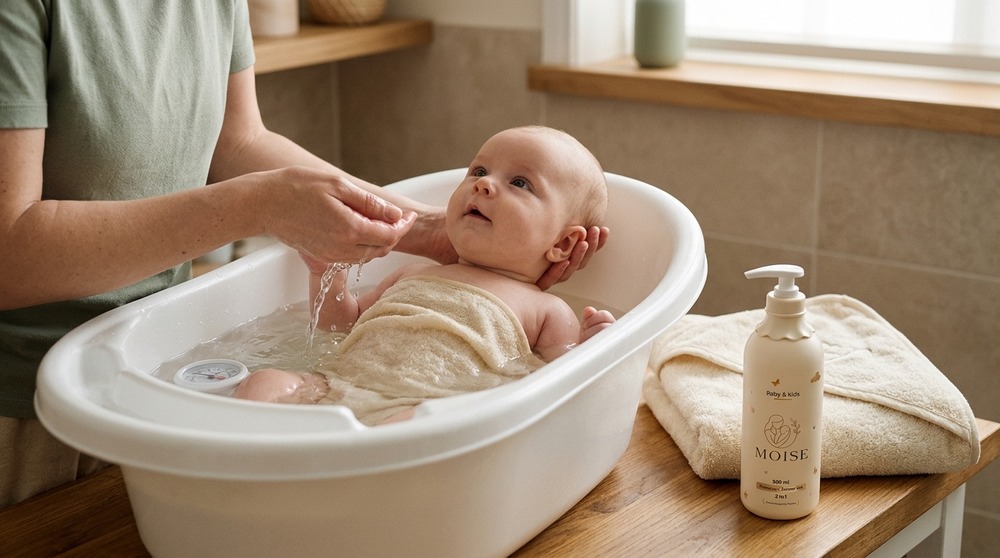
No. The NHS says you don't need to bath your baby every day. Many parents bath their baby two or three times a week and top and tail on the other days. If your baby loves the bath and it helps them relax, a daily bath is fine too. Just keep it short and gentle so their skin doesn't dry out. Our guide on how often you should bathe a baby goes into more detail.
A few bath-time safety basics:
- Never leave your baby alone in the bath, even for a second. Babies can drown in a few centimetres of water. Don't leave an older child in charge either.
- Warm, not hot. Run the cold water first, then add hot, and mix well. Test the water with your wrist or elbow before your baby goes in.
- Keep it simple. Plain water is fine, or a small amount of a mild cleanser made for babies. Skip bubble baths and strong fragrances, especially if your baby has dry or sensitive skin.
- Pick your moment. Avoid bathing straight after a feed, or when your baby is already very hungry or tired.
After the bath, pat your baby dry rather than rubbing, paying attention to the creases in the neck, arms and thighs. If their skin looks dry, a thin layer of a gentle, fragrance-free baby moisturiser can help. Our guide to dry skin in babies explains what to look for. For more on what to use, see baby bath products: what to use and what to avoid.
Think of the bath as a relaxing option, not a compulsory step. On busy nights, a quick wash and a fresh sleepsuit do the job just as well.
2. Nappy: When Should You Change Your Baby's Nappy Before Bed?
A clean nappy just before sleep helps your baby stay comfortable for as long as possible. Most parents do it after the bath and before the last feed, or after the feed if their baby tends to poo while feeding.
To keep the nappy area happy overnight:
- Clean gently. Use cotton wool and warm water, or soft, fragrance-free wipes such as Moise XL Water Wipes. Wipe front to back and don't scrub. Our guide on how to clean your baby's nappy area covers boys and girls.
- Dry properly. Pat the skin dry, including the creases, before putting on the fresh nappy. Damp skin under a nappy is more likely to get sore.
- Protect if needed. If the skin looks a little red, a barrier product such as the Moise Diaper Change Spray can help shield it from moisture.
- Check the fit and size. A nappy that's too small leaks; one that's too big gaps. See how to choose the right nappy size.
- Change after a poo, always. Even at night, a dirty nappy should be changed promptly to protect the skin.
For the night, choose a well-fitting, absorbent nappy. Moise nappies have a wetness indicator and are designed for overnight use, but every baby is different. Don't assume one nappy will always last the whole night, especially if your baby feeds a lot. If redness does appear, read our guide to nappy rash causes, treatment and prevention.
3. Feed: Should You Feed Your Baby Before Bed?
For most babies, yes. A feed is often a natural part of the bedtime routine, and a baby with a full tummy usually settles more easily.
How feeding fits in changes with age:
- Newborns feed little and often, day and night. Feed whenever your baby shows hunger cues.
- Older babies may have a more predictable bedtime feed, but many still need one or more feeds during the night in the first year.
- Breastfed and formula-fed babies can both have a bedtime feed. With a bottle, follow your baby's lead with paced feeding and stop when they show they've had enough.
Never pressure your baby to finish a feed. And feeding to sleep isn't a bad habit. It's one of the most natural ways for a baby to drift off. If your older baby can only fall asleep while feeding and that's becoming hard for you, you can gradually add other settling cues and move the feed a little earlier in the routine.
Good to know: Babies under 12 months shouldn't have cows' milk as their main drink. Breast milk or first infant formula remains their main milk drink throughout the first year. From 12 months, whole cows' milk can become the main drink. Once your baby has teeth, brush them after the last feed or bedtime milk.
4. Sleep: How to Help Your Baby Settle Safely
Watch for tiredness cues and start the final wind-down before your baby becomes overtired. Keep the room dim and quiet, and lower your voice. Some babies drift off quickly; others need a cuddle, a song or a bit of gentle patting. Every baby settles differently.
Whatever your routine, safe sleep comes first. The Lullaby Trust and the NHS recommend:
- Back to sleep. Always lay your baby on their back for every sleep, day and night.
- Firm, flat and clear. Use a firm, flat, waterproof mattress in a cot or Moses basket with nothing else in it.
- No pillows, duvets, cot bumpers or soft toys in your baby's sleep space. That includes nests, pods, wedges and rolled-up towels.
- Feet to foot. Place your baby with their feet at the foot of the cot, so they can't wriggle down under the covers. A baby sleeping bag in the right size is a good option.
- Keep their head uncovered. No hats indoors at bedtime.
- Don't let them get too hot. Keep the room between 16–20°C and check your baby's tummy or chest rather than their hands and feet.
- Same room for the first six months. Keep your baby in your room, in their own sleep space, for at least the first six months, day and night.
- Smoke-free. Keep your baby away from smoke, before and after birth.
Avoid inclined sleepers, sleep positioners and weighted sleep products, including weighted sleeping bags or blankets. Read more in our article on safe sleep for babies: the basics every parent should know.
How Long Should a Baby's Bedtime Routine Take?
Not as long as you might think. A newborn routine might just be a nappy change, a feed and a cuddle. Older babies and toddlers often do well with a slightly longer, consistent wind-down. A routine doesn't need to last an hour to work.
These timings are examples, not medical recommendations:
| Age | Example routine length |
|---|---|
| 0–3 months | Flexible, based on feeding and sleep cues |
| 3–6 months | Around 15–30 minutes |
| 6–12 months | Around 20–30 minutes |
| 12–24 months | Around 20–40 minutes |
If your routine is longer or shorter and it works for your family, that's fine.
Common Baby Bedtime Routine Mistakes to Avoid
None of these make you a bad parent. They're just easy traps when you're tired.
- Sticking to the clock when your baby is hungry or tired. Follow your baby's cues instead. Start the routine a little earlier or later if needed.
- Bathing every single night by default. Your baby doesn't need a daily bath. A wash works on other nights.
- Using too many products. Water is often enough. Add one gentle product at a time if your baby's skin needs it. See how to read a baby skincare ingredients list.
- Leaving a wet or dirty nappy on too long. Change before sleep and after every poo.
- Exciting play right before bed. Save tickles and loud games for earlier. Switch to books, songs and cuddles in the last half hour.
- A room that's too warm. Aim for 16–20°C and dress your baby in light layers.
- Loose bedding or soft toys in the cot. Keep the sleep space clear.
- Expecting a young baby to sleep through. Night waking is normal and protective in the early months.
- Comparing your baby with others. Some babies sleep long stretches early, many don't. Neither tells you anything about your parenting.
What If Your Baby Does Not Settle at Bedtime?
Some evenings, nothing seems to work. Common reasons include:
- Hunger, especially during growth spurts
- Being overtired, or not tired enough after a long nap
- A wet or dirty nappy
- Teething or a new developmental stage
- Feeling unwell or uncomfortable
- A change in routine, such as travel or visitors
- Separation anxiety in older babies
Start with the basics: check their nappy, offer a feed and make sure they're not too hot or cold. Then keep the room calm and offer comfort. It's fine to pick your baby up, cuddle them and try again.
If you're struggling, your health visitor can help with sleep and routines. Get medical advice if sleep problems come with other symptoms, such as a fever, breathing difficulties, poor feeding, fewer wet nappies, unusual drowsiness or floppiness, or if your baby just seems unwell. Call 999 if your baby has severe breathing problems or is hard to wake.
Conclusion: A Baby Bedtime Routine That Grows With Your Baby
A baby bedtime routine doesn't have to be complicated. A bath when it suits, a clean nappy, a feed and a cuddle, in roughly the same order each night, is all most babies need. In the newborn weeks, keep it loose and follow your baby's feeding cues. As they grow, you can build a more predictable sequence and add stories, teeth brushing and a little toddler independence.
Remember that a routine is a gentle signal, not a sleep guarantee. Responsive care and safe sleep matter more than any schedule. Some nights will go to plan and others won't, and that's okay. You and your baby are learning together.
Frequently asked questions
A simple, flexible one. Dim the lights, change the nappy if needed, feed when your baby shows hunger cues, wind them, cuddle and then lay them on their back in their own sleep space. Newborns don't have a set bedtime yet, so let feeding guide the evening.
You can start gentle bedtime habits, such as dim lights and quiet voices, from the newborn weeks. A more predictable routine usually becomes easier from around three months, when sleep patterns start to settle.
No, a nightly bath isn't necessary. Many parents bath two or three times a week and top and tail on other days. If your baby enjoys a bath and it helps them relax, a short daily bath is fine as long as their skin doesn't get dry.
Either works. Most parents change the nappy before the bedtime feed so their baby can drift off afterwards. If your baby often poos during or after feeding, change them after the feed instead.
A bedtime feed is a normal part of most routines and can help your baby settle. Feeding to sleep is fine. If you'd like your older baby to learn other ways to fall asleep, you can move the feed slightly earlier and finish with a story or song.
There's no fixed length. Newborn routines are flexible, and for older babies and toddlers around 15 to 40 minutes works for many families. What matters most is doing the same steps in a similar order.
There's no set bedtime for a 6-month-old. Many families settle on a time in the early evening, guided by when their baby shows sleepy signals and when their last nap ended. A consistent time that suits your family is more helpful than a specific hour.
Keep days bright and active and nights dark and quiet, follow a calm, consistent routine, and make sure your baby has a clean nappy and a feed before sleep. Even so, many babies wake at night for the first year, and that's normal.
Usually not, if the nappy is only wet and your baby is sleeping comfortably. Change it promptly after a poo or if the nappy leaks. If your baby has nappy rash, more frequent changes may help.
Yes. Newborns wake regularly to feed, and many older babies still wake during the night because of hunger, teething, developmental changes or the need for comfort. Waking at night is normal infant sleep, not a sign that your routine has failed.