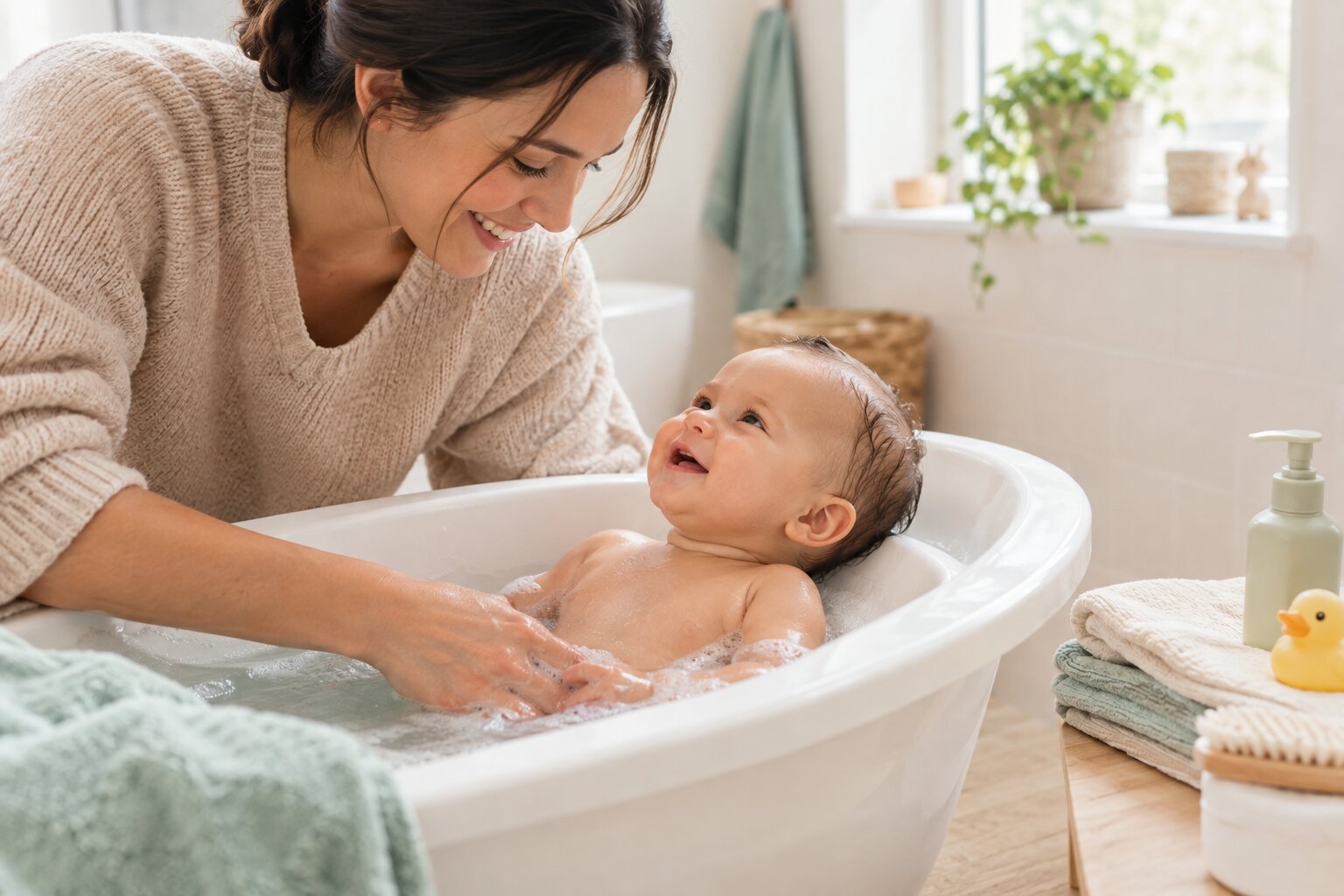
Most babies do not need a full bath every day. A gentle bath two or three times a week is generally plenty for a newborn, and daily bathing isn't necessary for most babies at any age, though it won't cause harm if you and your baby both enjoy it. In between baths, cleaning the face, neck folds, hands and nappy area as needed keeps your baby comfortable without the fuss of a full bath.
That's the short version. How often your baby actually needs bathing depends a fair bit on their age, their skin, how active or messy they've been, and honestly, what works for your family's routine. There's no single schedule every baby has to follow.
How Often Should You Bathe a Newborn?
Newborns don't need frequent full baths, and there's a good reason for it: their skin is still developing the protective barrier that helps keep moisture in and irritants out over the first month, and frequent bathing with water alone, or with unnecessary products, can work against that process.
How Often Should a Newborn Have a Bath?
A bath two or three times a week is generally enough for a newborn. Some babies genuinely enjoy bath time and there's no harm in bathing daily if that's what suits your baby and your routine — but it isn't a requirement. Between baths, cleaning your baby's face, neck, hands and bottom — sometimes called "topping and tailing" — keeps them clean without the full production of a bath.
In the very first weeks, using plain water rather than cleansers, lotions or wipes is generally recommended, since your baby's skin barrier is still establishing itself and doesn't need extra products to stay clean and comfortable.
What About a Newborn's First Bath?
There's no need to rush your baby's first proper bath. Many parents are advised to wait at least the first 24 hours, sometimes longer, partly to let the vernix — that white, waxy coating some babies are born with — do its job protecting the skin, and partly to allow time for skin-to-skin contact, feeding, and your baby settling into life outside the womb.
Guidance on exact timing can vary a little between maternity units and healthcare teams, so it's worth following what your own midwife or maternity team advises rather than assuming a single fixed rule applies everywhere. Until that first proper bath, topping and tailing works perfectly well to keep your baby clean.
[Internal link opportunity: Newborn care]
How Often Should You Bathe a Baby by Age?
| Baby's age | General bathing considerations |
|---|---|
| Newborn | Keep baths gentle and relatively infrequent (around 2–3 times a week); top and tail in between |
| 1–3 months | Continue gentle bathing; frequency can depend on your baby's skin and daily routine |
| 3–6 months | Baths often become part of a more regular routine, sometimes daily if it suits your baby |
| 6–12 months | More frequent bathing can be useful as babies become more active and start weaning onto solids, which tends to mean more mess |
| 12+ months | Bathing needs vary with activity levels, mess and your family's own routine |
These are general tendencies, not strict rules. Some babies genuinely need more frequent washing because of very active feeding or messy weaning; others do fine with less. What matters more than hitting a specific number is watching how your own baby's skin responds and adjusting from there.
Does a Baby Need a Bath Every Day?
No, a full bath every day is generally not necessary for most babies. Daily bathing isn't required to keep a baby clean, since the areas that get genuinely dirty — the nappy area, hands, face and skin folds — can be cleaned as needed without a full bath.
Some parents do choose to bathe daily simply because it's part of an enjoyable routine, particularly as part of a calming bedtime wind-down once babies are a bit older. That's entirely fine for most babies. The distinction worth keeping in mind is between a full bath and everyday spot-cleaning — you don't need the former to achieve the latter.
Is It OK to Bathe a Baby Every Day?
Yes, for many babies daily bathing is perfectly fine, particularly if baths are kept brief and gentle. Some babies, though, particularly those with drier or more reactive skin, may do better with less frequent bathing, since repeated exposure to water and cleansing products can contribute to dryness or irritation in sensitive skin. If you notice your baby's skin looking drier or flakier since starting more frequent baths, it's worth scaling back and seeing whether that helps.
What Happens If You Bathe a Baby Too Often?
Bathing itself isn't harmful — it's frequency, water temperature, bath duration and the products used that make the difference. Bathing very frequently, especially with hot water or with cleansers that aren't specifically gentle, can contribute to:
- Dry, flaky or tight-feeling skin
- Irritation, particularly in skin folds
- Disruption to the skin's natural barrier, which normally helps retain moisture
- Increased overall skin sensitivity
- A worsening of existing dry or eczema-prone skin, in babies who already have it
None of this means a bath here and there is a problem. It's really about the combination of frequency, water temperature and product choice, rather than bathing being inherently something to minimise.
[Internal link opportunity: Dry baby skin]
How Often Should You Wash a Baby's Hair?
Newborn hair generally doesn't need daily washing. Most babies have relatively little hair in the early months, and gentle washing during a regular bath — even just with plain water — is usually enough to keep the scalp clean.
How Often Should You Wash a Newborn's Hair?
Washing your newborn's hair once or twice a week, alongside their regular bath, is generally sufficient. If your baby has cradle cap — those common, harmless yellowish, scaly patches on the scalp — you may need a slightly different approach, such as gently massaging in a suitable oil before washing, and it's worth asking your health visitor or GP for specific guidance if it doesn't clear up on its own.
If you notice your baby's scalp becoming dry, flaky or irritated, washing less frequently, or with a gentler product, can often help rather than washing more.
[Internal link opportunity: Baby skincare routine]
What About Washing a Baby's Face and Skin Folds?
Between full baths, certain areas benefit from regular gentle cleaning, since they tend to collect milk, saliva, sweat, food residue and general moisture throughout the day:
- Neck folds, which can trap milk or sweat and become sore if left
- Behind the ears
- Under the chin
- Hands, particularly once your baby starts exploring food
- The nappy area, which needs attention at every nappy change regardless of bath schedule
Clean these areas gently with a soft cloth or cotton wool and warm water, patting rather than rubbing, especially in skin folds where the skin can be more delicate and prone to irritation if handled roughly.
[Internal link opportunity: Nappy rash]
How to Bathe a Baby Safely
Check the Water Temperature
Water should feel comfortably warm, never hot. Run the cold tap first, then add hot water, mixing well so there are no hot spots. A bath thermometer is a useful tool, but don't rely on it alone — test the water with your elbow or wrist as well, since these are more sensitive to temperature than your hands.
Keep the Bath Short
Babies generally don't need long baths. A few minutes is usually plenty, particularly for younger babies, both for comfort and to avoid the skin becoming waterlogged or the room feeling cold by the time your baby gets out.
Never Leave a Baby Alone in the Bath
This bears repeating clearly: never leave a baby unattended in or near bath water, not even for a moment, and not even if they're in a bath seat or supportive bath aid. These products can help with positioning, but they do not replace active, constant supervision. If you need something during bath time — the phone rings, someone's at the door — take your baby with you rather than leaving them, even briefly.
Prepare Everything Before You Start
Have your towel, a clean nappy, clean clothes, a gentle cleanser if you're using one, and a washcloth all within easy reach before you put your baby in the water. This avoids needing to step away mid-bath.
Support Your Baby Securely
Use one hand to support your baby's head, neck and shoulders, and the other hand to wash them gently. Keep your baby's head and shoulders above the water line throughout.
What Water Temperature Is Best for a Baby's Bath?
Bath water should be comfortably warm, generally around 37–38°C, which is close to body temperature. If you're using a bath thermometer, aim for this range and avoid anything hotter. Without a thermometer, testing with your elbow or the inside of your wrist — rather than your hand, which is less sensitive to temperature — gives a reasonably reliable check. The water should feel warm, with no noticeably hot patches once you've mixed it thoroughly.
Should You Use Baby Soap or Baby Wash?
For the first month, plain water is generally all that's needed — no soap, bubble bath or lotion required, since these can be unnecessarily drying for newborn skin that's still developing its natural barrier.
After the first month, if you'd like to use a cleanser, a mild, fragrance-free option designed for babies is a sensible choice. Using it sparingly, rather than at every single bath, can help avoid over-cleansing the skin. It's worth noting that "natural" or "organic" labelling doesn't automatically mean a product is gentler or safer for a baby's skin — checking the actual ingredient list matters more than the marketing terms on the front of the pack.
[Internal link opportunity: Baby skin care]
What If My Baby Has Dry Skin After a Bath?
A few adjustments often help:
- Use lukewarm rather than hot water
- Keep baths relatively short
- Avoid excessive cleansing — plain water is often enough, and using cleanser at every bath isn't necessary
- Gently pat the skin dry with a soft towel rather than rubbing
- Consider a suitable, fragrance-free moisturiser afterwards if your baby's skin tends to feel dry, once they're past the first month
When Should You Speak to a Healthcare Professional?
Occasional mild dryness is common and usually responds well to these simple changes. It's worth speaking to your GP or health visitor if you notice:
- Persistent or worsening redness
- Significant itching that seems to bother your baby
- Cracking or bleeding skin
- Oozing or weeping patches
- Signs that look like infection
- A widespread rash
- Skin problems that don't improve despite gentle care and reduced bathing frequency
This isn't about diagnosing what's causing it yourself — it's simply a sensible point to get a professional opinion rather than continuing to guess.
Baby Bath vs Sponge Bath
A sponge bath — sometimes called topping and tailing in the UK — involves washing your baby's face, neck, hands and bottom with a damp cloth or cotton wool, rather than immersing them in a bath. It's a practical, gentler alternative that many parents use in the early weeks.
When Is a Sponge Bath Useful?
Sponge baths are particularly useful for very young newborns, and specifically recommended until your baby's umbilical cord stump has fully fallen off, which typically happens somewhere between about ten days and three weeks after birth. Keeping this area clean and dry, rather than repeatedly wetting it in a full bath, supports it healing properly. Sponge baths are also a handy option any time a full bath isn't practical — between full baths, when your baby is unsettled, or simply on days when a quick clean-up is all that's needed.
[Internal link opportunity: Newborn care]
What Is the Best Time of Day to Bathe a Baby?
There's no universally correct time to bathe a baby. Parents choose morning, afternoon or evening bath times depending on what fits their baby's mood, feeding schedule, sleep routine and the family's own daily rhythm.
Is a Bath Before Bed Helpful?
For some babies, a bath becomes a genuinely calming part of a bedtime routine, particularly once they're a bit older and baths feel more like a settled, enjoyable activity than a novel experience. It's not a guaranteed sleep solution, though — some babies find bath time stimulating rather than calming, so it's worth paying attention to how your own baby actually responds rather than assuming an evening bath will automatically help with sleep.
Should You Bathe a Baby Before or After Feeding?
Many parents find it easier to avoid bathing a baby immediately after a large feed, since being moved around and handled with a full tummy can make some babies uncomfortable or more likely to bring up milk. Bathing when your baby is awake, content and not immediately post-feed or overly hungry tends to make the whole experience calmer for both of you. There's no precise, universally required waiting period — just use your own judgement based on how your baby generally responds after feeding.
A Simple Baby Bath Routine
- Prepare the room and supplies — keep the room warm, and have your towel, nappy, clothes, and any cleanser within reach.
- Check the water — comfortably warm, tested with your elbow or a thermometer, no hot spots.
- Undress your baby safely, keeping them wrapped in a towel until you're ready to lower them in.
- Support your baby securely — one hand under the head, neck and shoulders throughout.
- Clean gently, working from the face outward, paying attention to skin folds.
- Keep the bath brief — a few minutes is generally plenty.
- Remove your baby carefully, supporting their head and body as you lift them out.
- Pat the skin dry, focusing gently on creases and folds rather than rubbing.
- Moisturise if needed, using a fragrance-free product suited to your baby's skin.
- Dress your baby in a warm room to avoid them getting cold afterwards.
Common Baby Bathing Mistakes
- Bathing too frequently, particularly with strong cleansers, when it isn't needed
- Using water that's too hot rather than comfortably warm
- Leaving a baby unattended in the bath, even briefly
- Using too much cleanser rather than a small, sparing amount
- Scrubbing the skin instead of gentle washing and patting dry
- Using strongly fragranced products on delicate newborn skin
- Leaving supplies out of reach, meaning you have to step away mid-bath
- Making the bath unnecessarily long
- Assuming a full bath is needed every time your baby gets slightly messy, when a quick clean of the affected area would do
How Often Should You Bathe a Baby With Eczema or Very Dry Skin?
There's no single blanket rule here, since eczema-prone and very dry skin varies considerably between babies, and appropriate bathing frequency often needs to be tailored to your individual baby rather than following general guidance. Some babies with eczema do better with more frequent, brief baths followed immediately by moisturiser to lock in hydration; others do better with less frequent bathing generally.
Because this can genuinely differ from baby to baby, it's worth following the specific advice given by your GP, health visitor, dermatologist or paediatrician if your baby has a diagnosed skin condition, rather than relying on general bathing guidance alone.
[Internal link opportunity: Nappy rash]
How Often Should You Bathe a Baby in Summer?
Hot weather doesn't automatically mean your baby needs multiple full baths a day. Instead, focus on:
- Cleaning sweat from skin folds as needed, particularly the neck, armpits and behind the knees
- Keeping your baby comfortably cool with appropriate clothing and a well-ventilated room, rather than relying on extra bathing
- Cleaning as needed between full baths, using a damp cloth for sweaty or sticky patches
- Still avoiding very hot water, even though the weather outside is warm
- Avoiding the temptation to bathe more often "because it's hot," since excessive bathing can still dry the skin regardless of the season
How Often Should You Bathe a Baby in Winter?
Babies generally still don't need daily baths in winter. A few winter-specific points worth keeping in mind:
- Indoor heating can dry out the air and, in turn, your baby's skin, so extra bathing isn't usually the answer — moisturising more consistently often helps more
- Use lukewarm water, same as any other season — resist the urge to run it hotter just because it's cold outside
- Keep baths brief to avoid your baby getting cold once they're out of the water
- Moisturise afterwards if your baby's skin seems drier than usual
- Avoid harsh cleansers, which can compound the drying effects of central heating
Key Takeaways
- Most babies don't need a full bath every day — two to three times a week is generally enough for newborns.
- Topping and tailing keeps your baby clean between full baths, particularly in the first few weeks.
- Plain water is usually sufficient for the first month; a mild, fragrance-free cleanser can be introduced sparingly afterwards.
- Water should be comfortably warm (around 37–38°C), never hot, and always tested before your baby goes in.
- Never leave a baby unattended in the bath, even briefly, and don't rely on bath seats as a substitute for supervision.
- Bathing too frequently, with hot water or harsh products, can contribute to dry or irritated skin.
- Babies with eczema or very dry skin may need a tailored routine, best guided by a healthcare professional.
Conclusion
Bath time doesn't need to be a daily ritual to keep your baby clean and comfortable. A gentle bath a few times a week, combined with regular cleaning of the face, hands and nappy area in between, is genuinely enough for most babies — and paying attention to how your own baby's skin responds matters more than sticking to any fixed schedule.
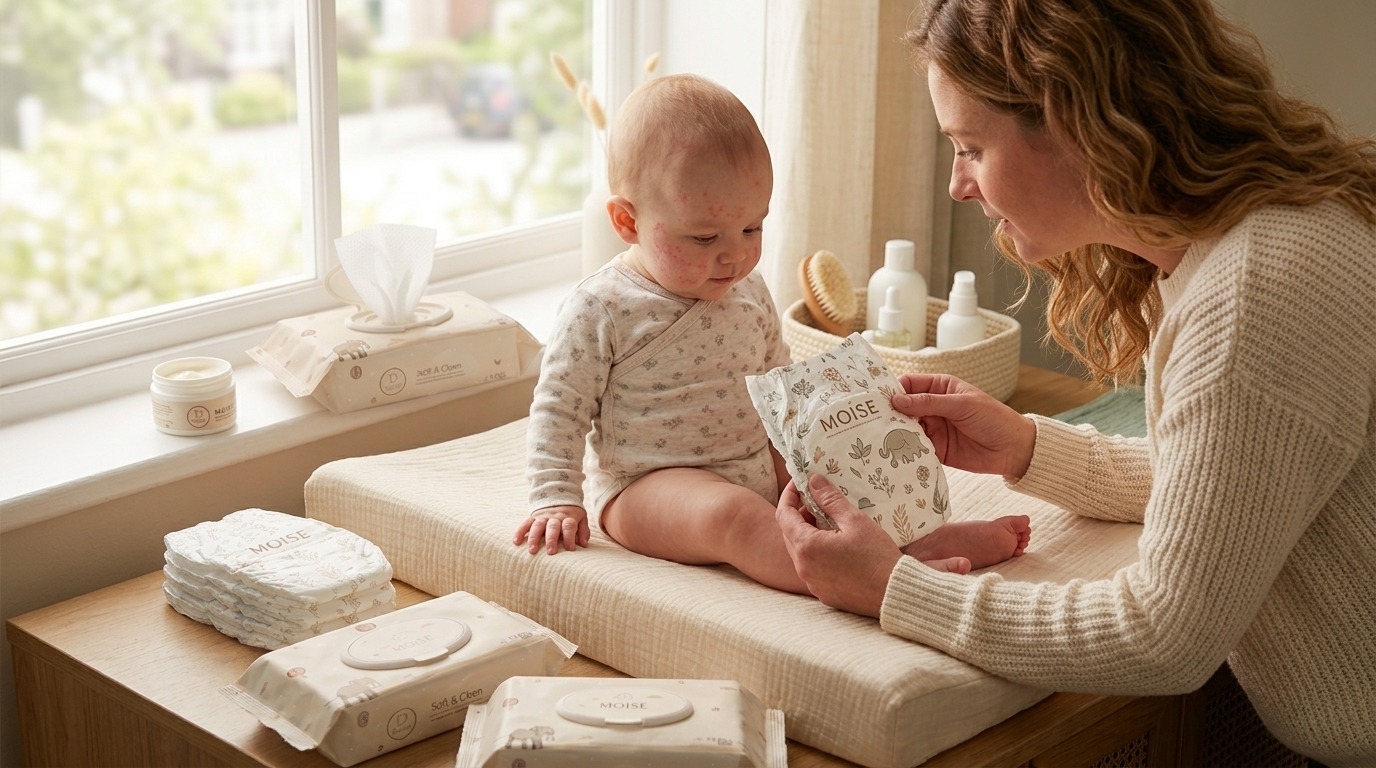
If gentle, everyday care is what you're after between baths, Moise's wipes and skincare range are worth a look for keeping your baby comfortable on the days a full bath isn't needed.