Finding your baby awake in the morning with a soaked nappy, damp pyjamas or wet bedding is one of those small frustrations that seems to catch every parent out at some point. It's easy to assume the nappy simply wasn't up to the job. More often, though, something more fixable is going on.
Overnight leaks are common, and before you reach for a different nappy altogether, there are several practical things worth checking: nappy size, fit, how the nappy is positioned, how long it's being worn, and how full it already is by the time your baby settles for the night. Most overnight leaks come down to one or two of these factors rather than the nappy simply not being absorbent enough.
Why Do Babies' Nappies Leak at Night?
There's rarely a single cause. Overnight leaks usually come from a combination of fit, timing and how much urine the nappy is being asked to hold in one stretch.
The nappy is too small
A nappy that's become too small for your baby can struggle in a few specific ways. It may fill up faster than expected, leave gaps around the legs or waist as your baby's body outgrows it, sit tighter than it should, and leak from the sides or back once it's reached capacity. If leaks have started happening more often recently, alongside signs like red marks or fasteners stretched to their limit, it may be time to check whether the next size fits better — though size alone isn't always the full answer.
The nappy is too large
The opposite problem causes leaks just as often, and it's the one parents most commonly miss. A bigger nappy doesn't automatically mean better overnight protection. If it's too large, gaps can form around the legs, waist or back, and urine can escape through these gaps before the absorbent core even has a chance to contain it. Sizing up isn't a fix if the current size is actually fitting well.
The nappy is simply reaching its absorbency limit
Every nappy has a finite capacity. A baby who urinates heavily overnight, or who sleeps for a long uninterrupted stretch, can genuinely fill a nappy to its limit before morning — at which point leaking isn't really a fit problem at all, just physics.
The nappy isn't positioned correctly
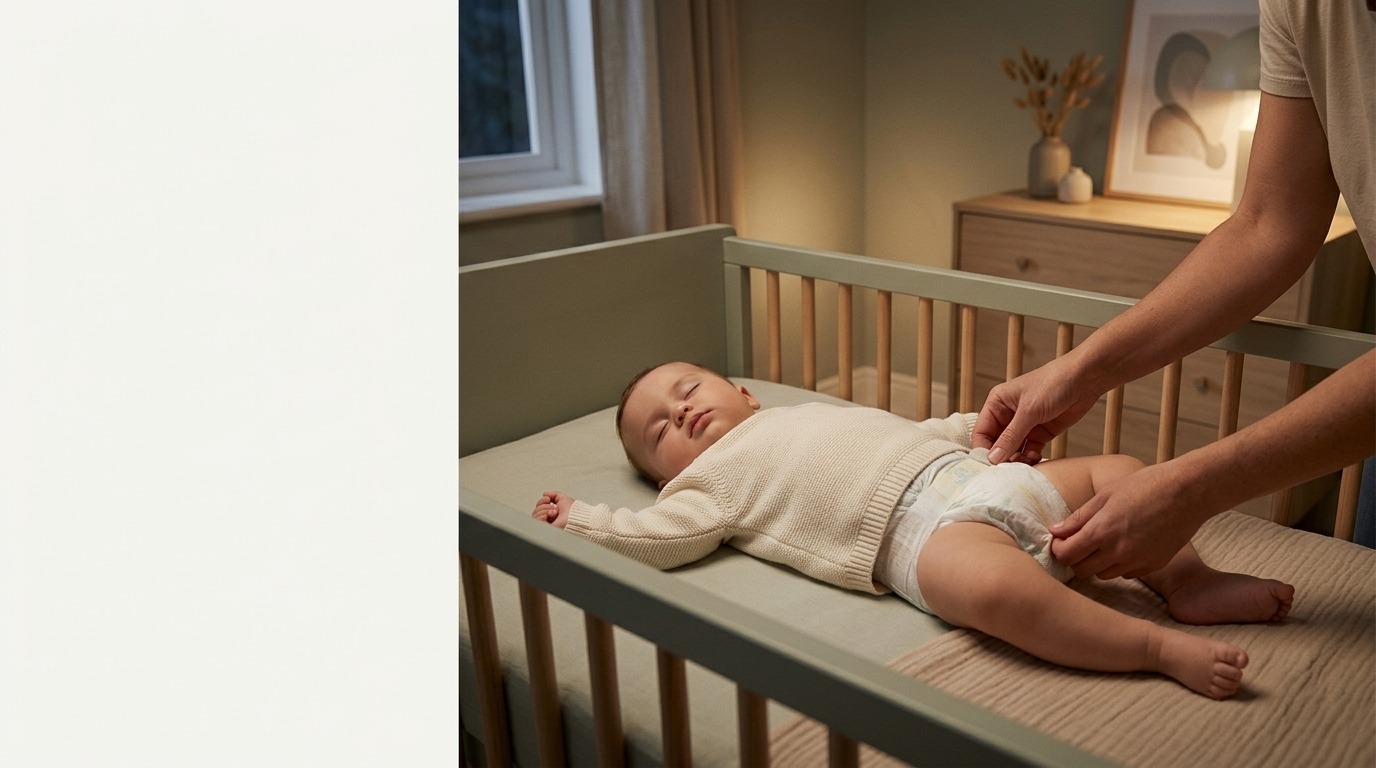
Small positioning details make a real difference overnight, when nobody's checking in every hour. Worth checking at bedtime:
- The waistband is sitting evenly, not twisted
- The leg cuffs are pulled outward, not tucked in
- For boys, the penis is pointing downward before fastening, so urine is directed into the absorbent core rather than toward the waistband
- The nappy is centred, front and back
- The leg elastics haven't folded inward against the skin
None of this is about doing something wrong — it's just easy to miss in a quick bedtime change, especially with a wriggly baby.
Your baby is sleeping for longer
As babies start sleeping in longer stretches, which often begins somewhere in the first few months, a single nappy has more time — and more urine — to deal with before it's changed. A nappy that coped fine with shorter stretches can start leaking simply because it's now being asked to last longer.
How to Stop Your Baby's Nappy Leaking at Night
Check the nappy size
Signs the current size might be too small: frequent leaks despite a good fit, red marks around the waist or legs, fasteners reaching their limit to close, the bottom no longer fully covered, or the nappy becoming very full well before morning.
Signs it might be too large: visible gaps at the legs or waist, the nappy shifting position overnight, or leaks specifically from the sides rather than soaking straight through.
Make sure the nappy fits properly
A simple bedtime fit check takes under a minute:
- Make sure the nappy sits comfortably around the waist, not twisted
- Pull the back panel up properly so it reaches high enough
- Ensure the leg cuffs are pulled outward
- Check for gaps around the thighs
- Fasten the tabs securely but comfortably — snug, not tight
- Make sure the nappy is centred front to back
Fit matters just as much as absorbency here. A highly absorbent nappy with gaps at the legs will still leak.
Consider an overnight nappy
Overnight nappies are generally designed with higher absorbency and materials intended to manage moisture over a longer wear period than a standard daytime nappy. They can be worth trying if your baby is regularly soaking through their usual nappy despite good fit and sizing — but not every baby needs one, and plenty of babies sleep perfectly comfortably in their regular nappy throughout.
Change your baby just before bed
A fresh nappy as part of the bedtime routine gives your baby the most capacity for the night ahead, particularly if they've recently fed or had a bowel movement. This is a sensible habit to build in rather than something you need to force if your baby's current nappy is still relatively fresh.
Check the nappy during night feeds
If your baby is already awake for a feed, that's often a practical, low-disruption moment to check whether a change is needed. This is different from deliberately waking a sleeping baby just to check their nappy, which generally isn't necessary purely for wetness.
Should You Use a Bigger Nappy at Night?
This is one of the most common assumptions parents make, and it's not always right. Sometimes moving up a size genuinely helps, giving a bit more room and absorbency for a longer overnight stretch. Just as often, though, it creates gaps at the legs and waist that cause new leaks rather than solving the old ones.
The right size depends on your baby's weight, body shape and how that specific nappy brand fits them — not a blanket rule that bigger is always safer overnight. A simple decision framework:
- If the current size fits well with no gaps, marks or tightness, but you're still getting occasional leaks purely from volume, an overnight-specific nappy in the same size may help more than sizing up
- If the current size is genuinely tight, leaving marks or barely fastening, sizing up makes sense regardless of the overnight leak question
- If you size up and leaks continue or get worse, that's a sign the bigger size introduced new gaps rather than fixing the problem, and it's worth reverting and troubleshooting fit instead
Where Is the Nappy Leaking From?
Where a leak happens is often a useful clue to what's actually causing it.
Leak around the legs
Possible causes: poor overall fit, leg cuffs folded inward instead of outward, the nappy being too large (creating gaps) or too small (creating tightness that pushes moisture outward), or your baby's sleeping position pressing against one side more than the other.
Leak around the back
Possible causes: the nappy being too small, the back panel not pulled high enough at the last change, the nappy being very full by the time it leaks, or your baby's sleeping position — babies who sleep on their front or side sometimes put more pressure on the back of the nappy.
Leak around the front
Possible causes: the nappy reaching its absorbency limit, incorrect positioning (particularly relevant for boys, where urine needs to be directed downward into the absorbent core), or a nappy that's the wrong size for how much urine is being produced in one stretch.
Tracking where leaks happen over a few nights, rather than treating every leak the same, makes it much easier to identify what's actually going wrong.
Do Babies Need Special Overnight Nappies?
Not necessarily. Many babies sleep comfortably and dry through the night in their regular, everyday nappies, particularly if the fit and size are right. Overnight nappies can be genuinely useful for babies who regularly soak through their usual nappy despite good fit and correct sizing — but they're not a default requirement for every baby.
Whether it's worth trying one depends on your baby's age, how much urine they're producing overnight, how long they're sleeping in one stretch, and how their current nappy is actually performing. If leaks are rare and your current nappy mostly works fine, there's often no need to change anything.
When Should You Change an Overnight Nappy?
A few situations are worth a change regardless of the clock: at bedtime as part of the routine, during an already-awake night feed if the nappy is clearly wet or full, after a bowel movement (which is worth changing promptly even overnight, since prolonged contact with stool is more likely to irritate skin than urine is), and if the nappy is visibly very full or has been on for an unusually long stretch.
What's not generally necessary is waking a settled, sleeping baby purely because their nappy is wet, provided it isn't leaking or causing visible discomfort. The goal is comfort and skin protection, not a fixed overnight schedule.
Overnight Nappies for Different Ages
Newborns
Frequent feeding means frequent urination, so newborns typically need more frequent nappy changes than older babies, including overnight. Very young babies rarely go a full night without at least one change.
Babies 3–6 months
As sleep stretches lengthen, urine patterns often start to shift too. This is a common point for parents to reassess nappy fit, since a nappy that worked fine with shorter overnight stretches may start underperforming as sleep periods extend.
Babies 6–12 months
Increased movement and changing sleeping positions can affect how a nappy sits overnight, even if size and fit haven't changed. Longer overnight periods without a change also become more typical at this stage.
Toddlers
Larger urine volumes and longer stretches without a change mean some toddlers benefit from a higher-absorbency nappy overnight, though this varies considerably from child to child.
Every baby's pattern is different, and these are general tendencies rather than a fixed timeline every child follows.
What About Adding an Absorbency Booster?
Absorbency boosters or nappy inserts exist and are used by some parents, particularly for toddlers with high overnight urine output. They're not necessary for every baby, and if you do use one, it's worth following the specific product's instructions carefully, since fit can be affected by adding extra material inside a nappy.
What's not advisable is improvising with other materials — tissue, towelling, sanitary products or anything not specifically designed for this purpose — as these can affect fit, comfort and absorbency in unpredictable ways, and aren't designed with a baby's skin in mind.
Common Mistakes That Can Cause Overnight Leaks
A few patterns come up again and again:
- Choosing a nappy size based on age rather than current weight and fit
- Assuming a bigger nappy is automatically better protection
- Leaving leg cuffs folded inward instead of pulled outward
- Not pulling the back panel high enough during the bedtime change
- Fastening the nappy unevenly, tighter on one side than the other
- Starting the night with a nappy that's already close to its absorbency limit
- Waiting too long after a bowel movement before changing
- Adding unapproved materials to try to boost absorbency
- Repeatedly ignoring fit problems rather than troubleshooting them
How to Choose an Overnight Nappy
If you do decide to try a dedicated overnight nappy, a few practical things are worth checking rather than assuming one brand is universally best:
Absorbency — can it realistically handle your baby's typical overnight stretch?
Fit — does it sit securely without gaps at the legs or waist for your baby's specific shape?
Size range — is your baby's current weight within the manufacturer's recommended range for that nappy?
Leg cuffs — do they sit comfortably against the skin without digging in?
Waistband — does it stay secure through the night without needing to be uncomfortably tight?
Your baby's sleeping pattern — how many hours is the nappy realistically going to be worn in one stretch?
Skin sensitivity — does your baby tolerate the specific materials comfortably, without irritation?
No single overnight nappy works best for every baby, since so much depends on individual fit and urine output.
What If My Baby Keeps Leaking Despite Everything?
Persistent leaks are frustrating, but they usually respond well to a bit of systematic troubleshooting rather than repeatedly switching products. Try changing one variable at a time:
- Check the fit at the next bedtime change
- Check whether the size is genuinely right for your baby's current weight
- Check positioning — cuffs, waistband, centring
- Check whether the nappy is reaching its absorbency limit before morning
- Consider a higher-absorbency or overnight-specific option if the above are all correct
- Keep a rough note of when and where the leak happens over a few nights
Changing several things at once makes it much harder to work out what actually fixed it — or what's still causing it.
When Should You Speak to a Doctor or Health Visitor?
An occasional overnight leak is usually just a practical nappy issue, not a sign of anything medically wrong. That said, it's worth seeking advice if you notice:
- A sudden, persistent change in how often or how much your baby is urinating
- Unusually frequent urination alongside other symptoms
- Very little urine, or noticeably fewer wet nappies than usual — this can be a sign of dehydration, alongside symptoms such as a sunken soft spot (fontanelle), fewer or no tears when crying, or your baby seeming unusually drowsy or irritable
- Blood in the urine
- Fever or your baby seeming generally unwell
- Significant discomfort during urination
- Swelling or other symptoms that concern you
If you notice signs of dehydration, such as very few wet nappies alongside drowsiness or a sunken fontanelle, contact your GP or NHS 111 for advice. Your health visitor is also a good first point of contact if something about your baby's nappies feels different and you're not sure whether it's worth pursuing further.
Final Takeaway
Overnight leaks are frustrating, but they're usually something you can work through with a bit of troubleshooting rather than a sign you're doing something wrong. Start with fit and positioning, check whether the current size is genuinely right for your baby, think about how long the nappy is being worn, and only then consider whether a higher-absorbency overnight option might help.
If you're exploring nappy options at Moise, our nappies and nappy pants are worth a look alongside anything else you're trying — checking fit and sizing for your own baby remains the most useful place to start, whichever nappy you choose.