Flaky patches on your baby's scalp can look worrying. In most cases they are harmless, and you do not need a cupboard full of products to manage them. If you are searching for the best baby shampoo for cradle cap, the honest answer is simpler than most product pages suggest.
Short answer: There is no single best baby shampoo for every case of cradle cap. For many babies, gentle washing with a mild, fragrance-free baby shampoo is enough, and plain water is best in the first month. Scalp problems that are severe, or that do not settle, need professional advice.
This guide explains what makes a shampoo suitable for cradle cap and sensitive scalps. It also covers how to use it, how often to wash your baby's hair, and when to see a doctor.
What Is Cradle Cap?
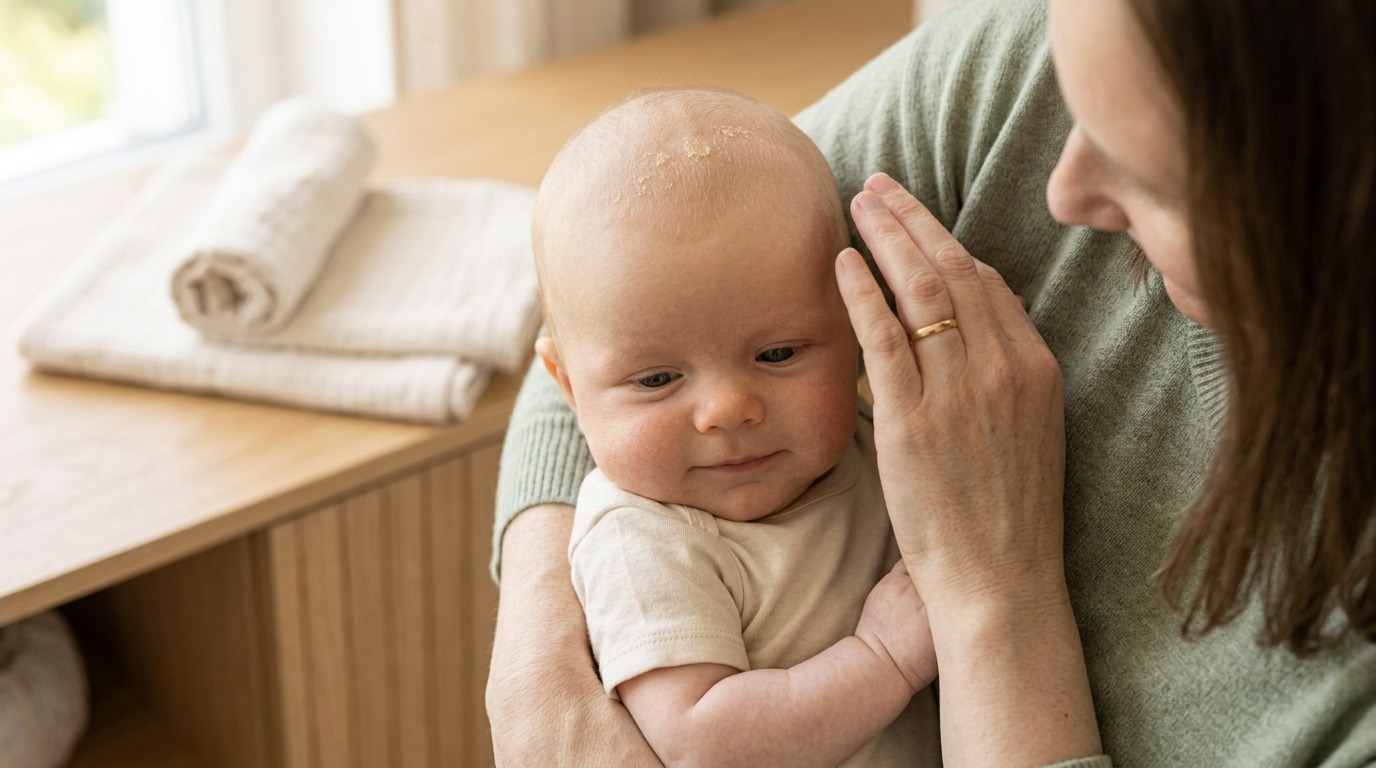
Cradle cap is a common, harmless skin condition in babies. It shows up as greasy, scaly patches, most often on the scalp. Doctors usually call it infantile seborrhoeic dermatitis.
The scales tend to be white or yellow. They can build into a crust that flakes off. The NHS notes that the scales look similar on all skin tones. The skin underneath may look pink or red on white skin. On brown or black skin it may look lighter or darker than the skin around it.
Here is what parents most often ask:
- Where does it appear? Mostly on the scalp. It can also affect the face, eyebrows, skin creases and the nappy area.
- When does it start? It usually appears before three months of age. The National Eczema Society says it usually clears by 6 to 12 months.
- Is it contagious? No. Your baby cannot catch it or pass it on.
- Is it caused by poor hygiene? No. The exact cause is not known. It is thought to be linked to the oil-producing glands in a baby's skin and a yeast called Malassezia, whose exact role is still unclear.
- Does it bother the baby? Usually not. Cradle cap is not normally itchy or painful, and most babies feed, play and sleep as usual.
One caution matters here. Parents use the words "cradle cap" for many kinds of flaky scalp, and not every flake is cradle cap. Dry skin, eczema and other conditions can look similar. A scalp that is very inflamed, itchy or unusual in any way should be checked by a professional.
For more background, read our guide to cradle cap causes, treatment and when to worry.
Does Cradle Cap Need a Special Baby Shampoo?
Usually not. Cradle cap often clears on its own, and an ordinary mild baby shampoo is enough for most babies.
The NHS advice is simple. Soften the scales with an emollient, brush gently with a soft brush, then wash with baby shampoo. It does not ask parents to buy a specialised product. The American Academy of Dermatology suggests starting with a fragrance-free baby shampoo. A shampoo labelled for cradle cap is a second step, for when ordinary washing is not keeping the flakes in check.
The aim is a clean scalp without extra irritation. Shampoo helps to lift loosened flakes and wash away oil. It is not a cure. Cradle cap clears in its own time, whichever product you use.
A specific treatment is sometimes recommended. A pharmacist can suggest an emollient or an unperfumed baby shampoo. If the scalp has not improved after a few weeks of gentle care, a GP can assess it and decide whether treatment is needed. Medicated products belong in that conversation. They are not routine home care.
What Makes a Baby Shampoo Suitable for Cradle Cap?
A suitable shampoo cleans gently, is made for babies, rinses out easily and does not add things the scalp does not need. Six points are worth checking.
Mild cleansing
A baby's scalp needs far less cleaning than an adult's. A mild baby shampoo lifts oil and loose flakes without stripping the skin. Harsh cleansing can leave the scalp dry and more easily irritated, which is the opposite of what you want.
Fragrance
Fragrance is not harmful to every baby, and many babies tolerate a lightly scented product well. It can irritate some sensitive skin, though. For cradle cap, the NHS advises against products containing fragrance or perfume. So a fragrance-free baby shampoo is the sensible choice while the scalp is flaky, or if your baby's skin reacts easily.
Ingredients
You do not need to decode every word on the label. Check that the list is clear and easy to find. A shorter, simpler formulation gives sensitive skin fewer things to react to.
Baby-specific formulation
Choose a product that is made and labelled for babies, with a clear age range. Adult shampoos are built for adult scalps and hair. The NHS specifically says not to use soap or adult shampoo on cradle cap.
Rinseability
A shampoo that rinses away quickly makes hair washing shorter and calmer. It also leaves less product sitting on the scalp afterwards.
Minimal routine
More products do not mean better scalp care. One mild shampoo, a soft brush and, if needed, an emollient cover almost everything. Our baby skincare routine by age shows how little most babies need.
Baby Shampoo Ingredients: What Should Parents Look For?
Look for a mild, simple, fragrance-free formulation that is labelled for babies. That tells you more than any single ingredient on the list.
In practice, helpful signs include:
- Mild cleansing agents. These are the ingredients that do the washing. In a baby shampoo they should be gentle and used in small amounts.
- A fragrance-free formulation. This removes one of the more common triggers for sensitive skin.
- A simple formulation. Fewer extras mean fewer chances of a reaction.
- Moisturising ingredients where appropriate. These can help the scalp feel less dry after washing.
- Suitability for sensitive skin. Treat this as a starting point, not a guarantee. The National Eczema Society points out that products described as "natural" or "for sensitive skin" may still contain fragrance.
Be wary of "chemical-free" and "100% natural" claims. Everything in a cosmetic product is made of chemicals, including water, so "chemical-free" is not a meaningful safety category. Natural ingredients can irritate skin too.
What matters is the formulation as a whole: how much of each ingredient it contains, what the product is designed for, how it has been tested, and how your own baby's skin responds. Babies differ. A shampoo that suits one baby may not suit another.
Ingredients and Products to Be Careful With
Some products are best avoided, or used only with advice, while your baby's scalp is flaky or sensitive:
- Heavily fragranced products. The NHS advises against fragrance and perfume on cradle cap.
- Soap and harsh cleansers. These can dry the scalp.
- Adult shampoos. They are not designed for baby skin, and the NHS says not to use them.
- Adult anti-dandruff shampoos. These are medicated products made for adults. Do not use one on a baby unless a doctor or pharmacist has told you to.
- Exfoliating scalp products. Scrubs and rough tools can damage delicate skin.
- Essential oils. They are concentrated and strongly scented, and the NHS, National Eczema Society and dermatology advice used for this article does not recommend them for cradle cap.
- Olive oil and peanut oil. The NHS says olive oil may not be suitable for skin, and peanut oil carries an allergy risk.
- Strong medicated products. Use these only on professional advice.
- Anything not designed for babies.
This is a list for caution, not fear. Preservatives, sulphates and synthetic ingredients are not automatically dangerous. Preservatives, for example, stop water-based products from growing bacteria and mould. The amount, the full formulation and your baby's own tolerance matter more than a single name on the label.
Our guide to baby bath products: what to use and what to avoid covers the rest of bath time.
How to Use Baby Shampoo for Cradle Cap
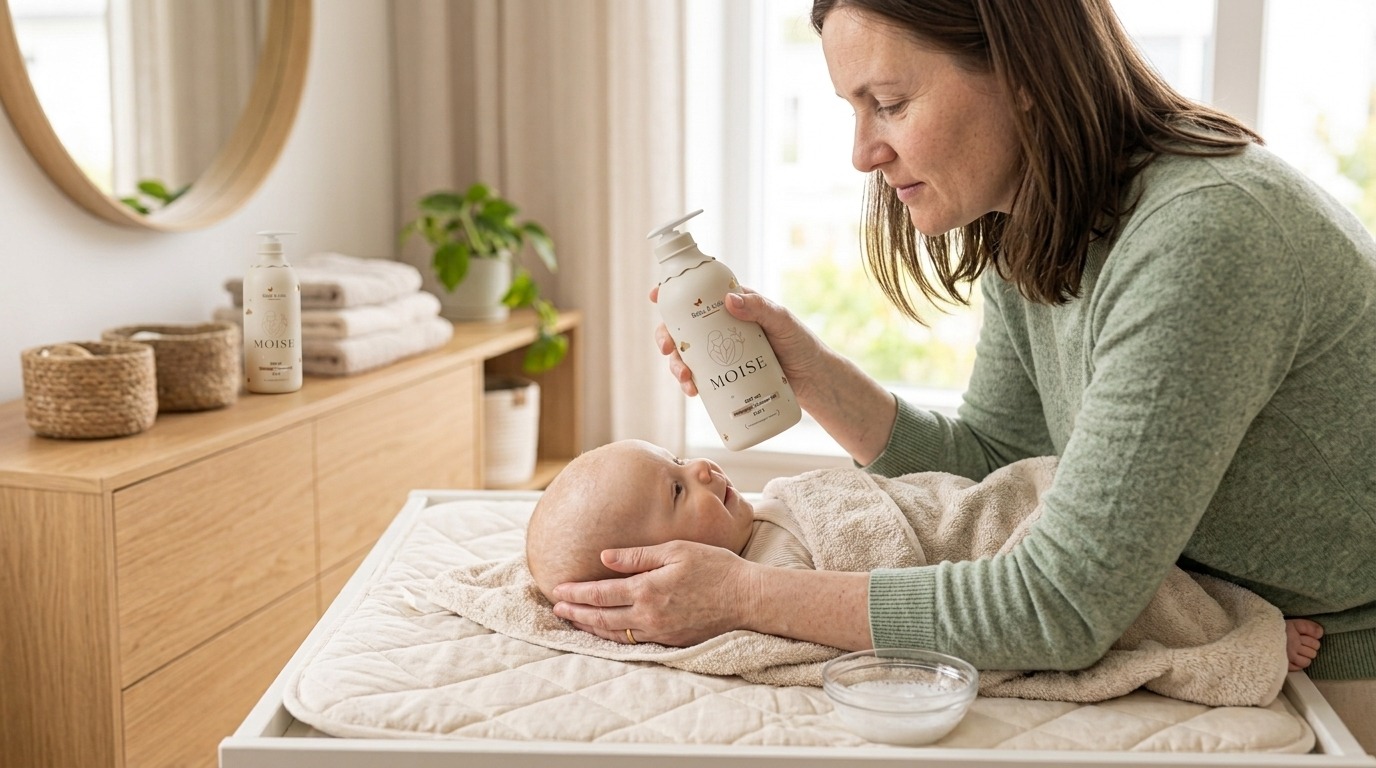
Wash gently, use very little shampoo, rinse well and never force a scale off. In the first month, the NHS says plain water is best for your baby's skin, so shampoo can wait.
- Wet the scalp gently. Use comfortably warm water and support your baby's head.
- Apply a small amount of shampoo. A small drop is plenty for most babies. More shampoo does not clean better.
- Massage gently. Use the pads of your fingertips in small circles. Do not use your fingernails, and do not scratch or scrub.
- Rinse thoroughly. Pour or wipe clean water over the scalp until no product is left.
- Dry gently. Pat the scalp with a soft towel. Do not rub hard.
- Leave attached flakes alone. If scales are still stuck, do not pull them off. Soften them before the next wash instead.
To soften stubborn scales, the NHS suggests lightly massaging an emollient or coconut oil onto the scalp. Brush gently with a soft brush, then wash with baby shampoo. For thicker scales, the National Eczema Society suggests applying an emollient or unperfumed oil the night before a wash.
Some hair may come away with the scales. The NHS says this is nothing to worry about, and the hair soon grows back.
Should You Brush or Comb Cradle Cap?
Yes, a soft baby brush can help, as long as you only lift flakes that are already loose. Both the NHS and the National Eczema Society recommend gentle brushing with a soft brush.
Brush after the scales have been softened, or during a wash. Use light strokes and let the bristles do the work. Flakes that are ready will come away easily.
Do not scrape, pick or use your fingernails. Picking can leave raw patches of skin, and the NHS warns that it raises the chance of infection. Sharp or fine-toothed combs dragged against the scalp carry the same risk.
Stop if the scalp looks red, sore or irritated. Give the skin a few days to rest, then go back to gentle washing. If it stays sore, ask a pharmacist, health visitor or GP.
How Often Should You Wash a Baby's Hair?
There is no single schedule that suits every baby. For most, a hair wash every few days is enough, and more washing is not better.
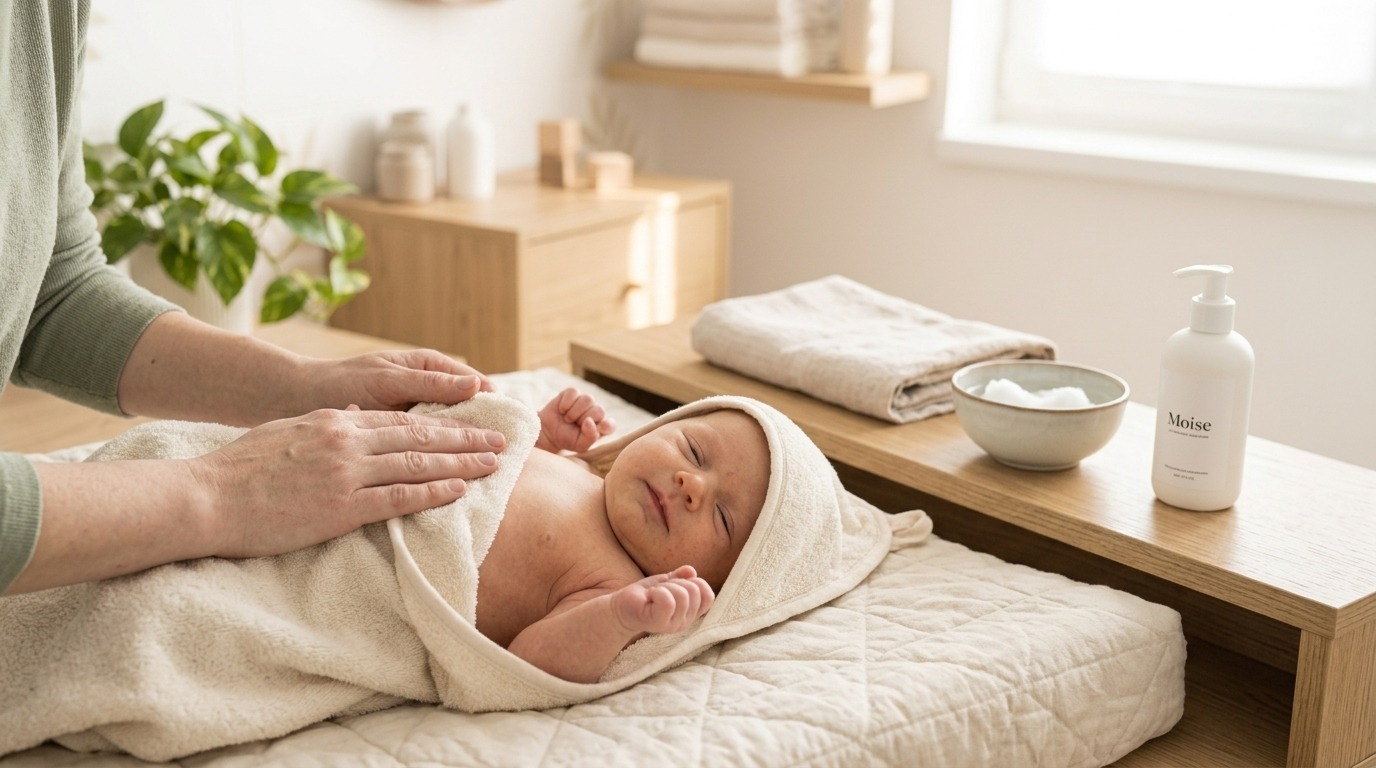
- Newborns. The NHS says a newborn does not need a bath every day, and that two or three times a week should be fine. In the first month, wash hair with plain water only. Between baths, top and tailing keeps your baby clean.
- Young babies. Once shampoo is introduced, a small amount at bath time is plenty. Not every bath has to include a hair wash.
- Babies with cradle cap. Guidance varies. The National Eczema Society suggests washing the scalp every few days. The American Academy of Dermatology says washing as often as every other day can help soften the scales. Start with every few days and see how the scalp responds.
- Babies with sensitive or eczema-prone skin. Frequent shampooing can dry the skin. If your baby has eczema or another skin condition, follow the washing advice from your GP, health visitor or dermatologist.
- Babies who sweat or get messy. An extra rinse with plain water is fine after a hot day or a messy meal. You do not need shampoo every time.
Watch the scalp, not the calendar. If it looks dry, tight or red after washing, wash less often or use less product.
Is Baby Oil Useful for Cradle Cap?
It can be, as a way to soften scales before a wash. Oil does not cure cradle cap, and it should not stay on the scalp.
The guidance differs slightly on which product to use:
- The NHS suggests an emollient (moisturiser) or coconut oil.
- The National Eczema Society says an unperfumed mineral oil or a vegetable oil such as coconut or sunflower oil is fine.
- The American Academy of Dermatology suggests a non-food-based oil, such as baby oil, before the bath.
Most baby oils are based on mineral oil, so they fit this advice. Many baby oils are perfumed, though, so choose an unperfumed one. Do not use olive oil. The National Eczema Society says it is no longer recommended because it has been found to damage the skin barrier. Avoid peanut oil because of the allergy risk, and do not use essential oils.
Use a small amount. Massage it in lightly, give it time to soften the scales, then brush gently and wash it out with baby shampoo. Oil left behind makes the scalp greasy. The NHS also advises avoiding oils and lotions until your baby is at least one month old.
If you are unsure which emollient to choose, a pharmacist can advise.
Baby Shampoo for Cradle Cap vs Shampoo for Sensitive Skin
The needs overlap almost completely. Both call for a mild, fragrance-free baby shampoo used gently and sparingly.
| Feature | Cradle cap | Sensitive scalp |
|---|---|---|
| Mild cleansing | Important | Important |
| Fragrance-free option | Advised by the NHS | Often a sensible choice |
| Frequent shampooing | Every few days is usually enough | Can dry or irritate the skin |
| Gentle massage | Appropriate | Appropriate |
| Scrubbing flakes | Avoid | Avoid |
| Adult anti-dandruff shampoo | Not without professional advice | Not without professional advice |
| Medicated shampoo | Only when advised | Only when medically appropriate |
Best Baby Shampoo for Cradle Cap: What Should You Actually Buy?
Buy one mild, fragrance-free shampoo that is clearly labelled for your baby's age. The best baby shampoo for cradle cap is the gentle one your baby's skin tolerates well, not the one with the boldest claims.
Look for:
- a formulation made for babies
- gentle cleansing
- a fragrance-free or low-irritant formulation
- clear age suitability on the label
- a simple, transparent ingredient list
- good tolerance on your own baby's skin
Do not choose based only on:
- "natural" marketing
- "chemical-free" claims
- a premium price
- celebrity endorsements
- "miracle" claims
- before-and-after photos
A higher price does not make a shampoo gentler. If you want a specific suggestion, ask a pharmacist. The NHS lists unperfumed baby shampoos among the things a pharmacist can help with.
When you try a new shampoo, change one product at a time. That way you can tell what suits your baby and what does not.
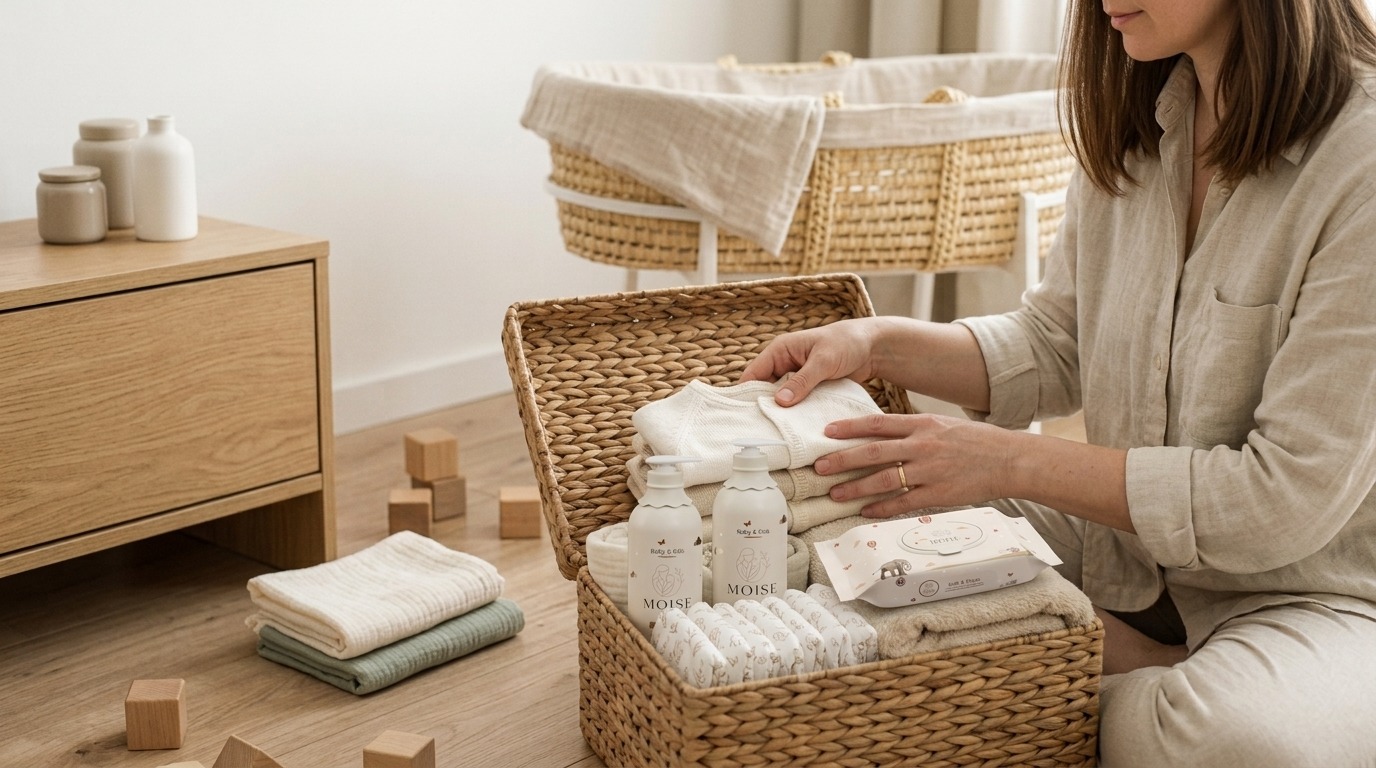
At Moise, we believe baby care should be simple: not too little, never too much. A short routine with a few gentle, baby-suitable products is usually all a young scalp needs. Our newborn essentials checklist follows the same idea.
Cradle Cap vs Eczema: What Is the Difference?
Cradle cap and eczema are different conditions, but they can look alike and a baby can have both. The clearest general difference is itch. Cradle cap is not usually itchy, while eczema usually is.
| Feature | Cradle cap | Eczema |
|---|---|---|
| Appearance | Often greasy, white or yellowish scales | Often dry, inflamed skin |
| Itching | Usually minimal | Often itchy |
| Typical areas | Mainly the scalp | Can affect the face and body |
| Skin inflammation | Often mild | Can be more pronounced |
| Care | Gentle scalp care | May need specific skincare or medical advice |
These are general patterns only. Appearance alone cannot tell you which condition your baby has. Inflamed skin can also look different on different skin tones.
The National Eczema Society notes that if a baby is itchy, or the cradle cap persists, atopic eczema becomes more likely. It often starts on the face and scalp. If you are unsure, ask your health visitor or GP to look at it.
When Should You See a Doctor About Cradle Cap?
See a GP if the scalp is not improving after a few weeks of gentle care, or if anything about it looks different from simple flaking. Seek advice if:
- the scalp becomes very red or inflamed
- the affected areas look swollen
- the crusts bleed or leak fluid
- the skin feels hot, smells unusual or weeps
- your baby seems uncomfortable or very itchy
- the patches spread widely, or appear all over the body
- there is hair loss beyond the few hairs that come away with scales
- the problem persists or gets worse despite gentle care
- you are not sure it is really cradle cap
The NHS explains that bleeding, leaking fluid and swelling can be signs of an infection or of another condition, such as atopic eczema or scabies. Only a healthcare professional can tell which.
A baby who seems generally unwell needs a medical assessment in their own right. That includes a fever, poor feeding or unusual sleepiness. Do not assume those symptoms are part of cradle cap.
Common Baby Shampoo Mistakes
Most mistakes come from trying too hard. These are the ones to avoid:
- Using too much shampoo. A small drop cleans a baby's scalp. Extra product only means more rinsing.
- Shampooing too often. Frequent washing can dry sensitive skin.
- Using adult shampoo. It is not made for baby skin, and the NHS advises against it.
- Scrubbing hard. Rough washing irritates the scalp and does not shift attached scales.
- Picking flakes. This can leave raw skin and raises the chance of infection.
- Scratching with fingernails. Use fingertips or a soft brush.
- Using essential oils. They are strongly scented and are not part of NHS advice for cradle cap.
- Changing several products at once. If the skin reacts, you will not know which product caused it.
- Using anti-dandruff products without advice. These are medicated and made for adults.
- Assuming more washing will cure it. Cradle cap clears in its own time. Gentle care keeps the scalp comfortable while it does.
Medical disclaimer: This article provides general information about baby scalp care and cradle cap. It does not replace personalised advice, diagnosis or treatment from a qualified healthcare professional.