Dry skin in babies is one of the first things many parents notice. A rough patch on a cheek, flaky ankles or peeling fingers can look worrying on skin you expected to be perfectly soft. Most of the time it is mild, temporary and easy to manage at home.
Short answer: Mild dry skin is common in babies and can often be managed with gentle bathing, avoiding harsh products and using a suitable moisturiser when needed. Skin that stays dry, or becomes very itchy, inflamed, cracked or weepy, should be checked by a healthcare professional.
This guide explains why a baby's skin gets dry, what actually helps, what you can skip and when to ask for advice.
Is Dry Skin Normal in Babies?
Yes, mild dry skin is common in babies and is usually nothing to worry about. A baby's skin barrier is still developing, so it loses moisture more easily than adult skin and reacts faster to water, weather and products.
Newborn dry skin is especially common. Many babies have dry, peeling skin in the first days and weeks as the top layer sheds. Later in the first year, a dry patch often comes down to something simple, such as a long bath, heated rooms, a cold walk or a lot of dribble.
There is no neat line between normal and not normal, so watch how the skin behaves over time. Dryness that comes and goes, and does not seem to bother your baby, is usually ordinary. Skin that stays dry, looks inflamed, itches or keeps getting worse deserves a professional opinion.
What Causes Dry Skin in Babies?
If you are asking "why is my baby's skin so dry?", there is rarely one single answer. Several small things often add up.
Normal newborn skin changes
In the womb, a creamy coating called vernix protects your baby's skin. After birth, the top layer of skin sheds, which is why newborn skin peeling is so common on the hands, feet and ankles. Babies born after their due date often have drier, more cracked-looking skin, because the vernix has already been absorbed.
Bathing too frequently
Water removes some of the natural oils that keep skin soft. For some babies, a daily bath is enough to cause dryness. The American Academy of Pediatrics notes that about three baths a week may be enough in the first year.
Hot bath water
Hot water strips oils from the skin faster than warm water, and a baby's skin needs cooler water than yours. If you notice dry skin after a bath, water temperature is one of the first things to check.
Harsh soaps and cleansers
Strong soaps, bubble baths and heavily fragranced washes can dry or irritate a baby's sensitive skin. The NHS advises plain water only for the first month.
Dry indoor air
Central heating lowers the moisture in the air, and dry air draws moisture from the skin. Air conditioning can have a similar effect.
Cold or windy weather
Cold air and wind can leave exposed skin chapped. Cheeks, chin and hands usually take the brunt.
Saliva and food around the mouth
Dribble, milk and food leave the skin repeatedly wet. Add frequent wiping, and you get dry skin around your baby's mouth and chin. Teething and weaning often make it more noticeable.
Friction and clothing
Rough fabrics, tight cuffs, scratchy seams and vigorous towel drying all rub the skin. Elbows, knees and the tops of the feet can get rough once babies start to crawl.
Skin conditions
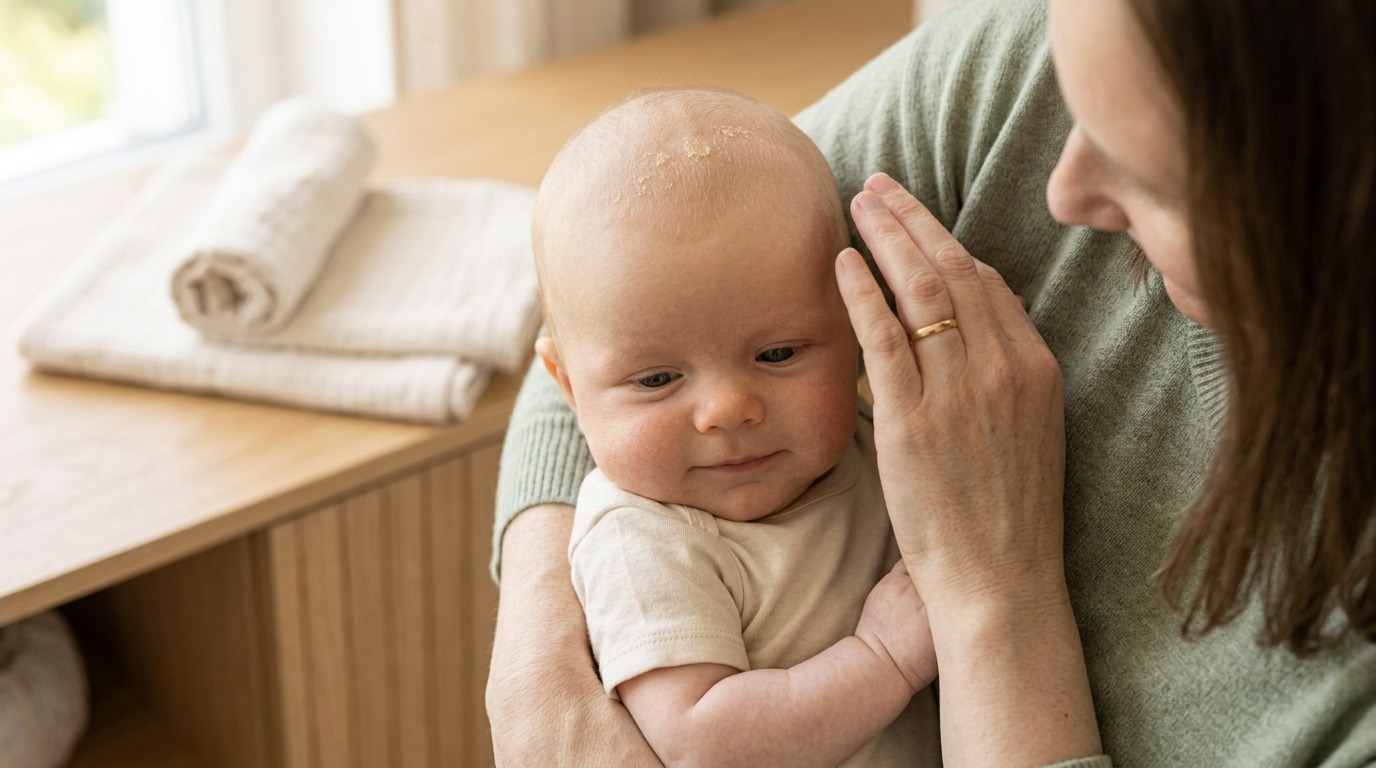
Sometimes dryness is part of a skin condition, such as atopic eczema. Cradle cap can cause flaky, greasy scales on the scalp, which is different from ordinary dry skin on a baby's scalp. Our guide to cradle cap covers that in detail. Only a health professional can tell you what is causing a skin problem.
What Does Dry Baby Skin Look Like?
Dry baby skin usually looks and feels a little rough, with fine flakes rather than an angry rash. Common signs include:
- a rough or sandpapery texture
- mild flaking or fine scaling
- skin that looks tight or slightly dull
- small dry patches, often on the cheeks, arms or legs
- light peeling, especially in newborns
- mild redness, which can be harder to see on brown and black skin
Looks alone cannot always tell you the cause. Some signs are less typical of simple dryness and are worth having checked:
- marked inflammation or swelling
- strong itching, such as rubbing, scratching or broken sleep
- oozing, crusting or bleeding
- redness or colour change that spreads quickly
Dry Skin vs Eczema in Babies
Dry skin is usually mild, causes little itching and settles with gentle care. Eczema tends to be itchier, more inflamed and keeps coming back. The NHS describes atopic eczema as itchy skin that can be dry, cracked, crusty or scaly. In babies it often shows on the face.
| Feature | Dry skin | Possible eczema |
|---|---|---|
| Texture | Dry, rough or slightly flaky | Dry, rough and often inflamed |
| Redness or colour change | Mild or absent | Often more noticeable |
| Itching | Usually limited | Can be significant |
| Pattern | May be temporary or widespread | Often appears in recurring patches |
| Oozing or crusting | Unusual | Can occur in more inflamed eczema |
| Response to gentle moisturising | May improve | May need a more specific treatment plan |
| Medical assessment | Often unnecessary if mild | Recommended if persistent or troublesome |
This table is a general guide, not a diagnostic tool. Dry, itchy skin on a baby can have several causes, and the two can look alike early on. If you are weighing up baby dry skin vs eczema and cannot decide, ask your health visitor, pharmacist or GP.
How to Treat Dry Skin in Babies
The most reliable remedies for dry skin in babies are also the simplest: less washing, gentler products and a plain moisturiser where it is needed. These steps support the skin barrier while it matures. They are everyday care, not medical treatment.
Keep baths short and comfortably warm
Aim for a bath that feels warm, not hot, on your wrist or elbow. Five to ten minutes is plenty for most babies. Long soaks feel lovely but leave skin drier.
Use gentle cleansing
For the first month, the NHS recommends plain water only. After that, water alone is still enough for most of the body on most days. A small amount of mild, baby-suitable cleanser is useful for the nappy area, skin folds and anything sticky. Our guide to baby bath products explains what to look for.
Moisturise after bathing
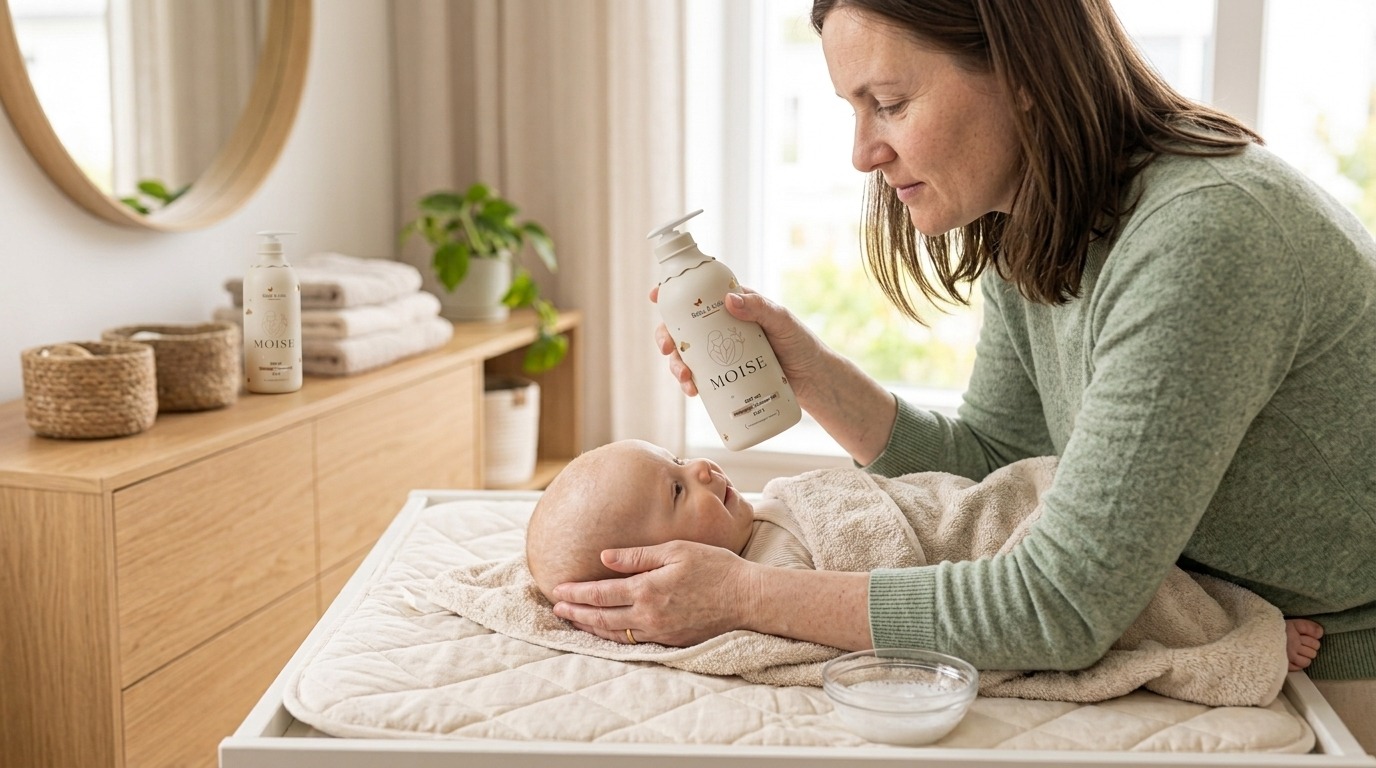
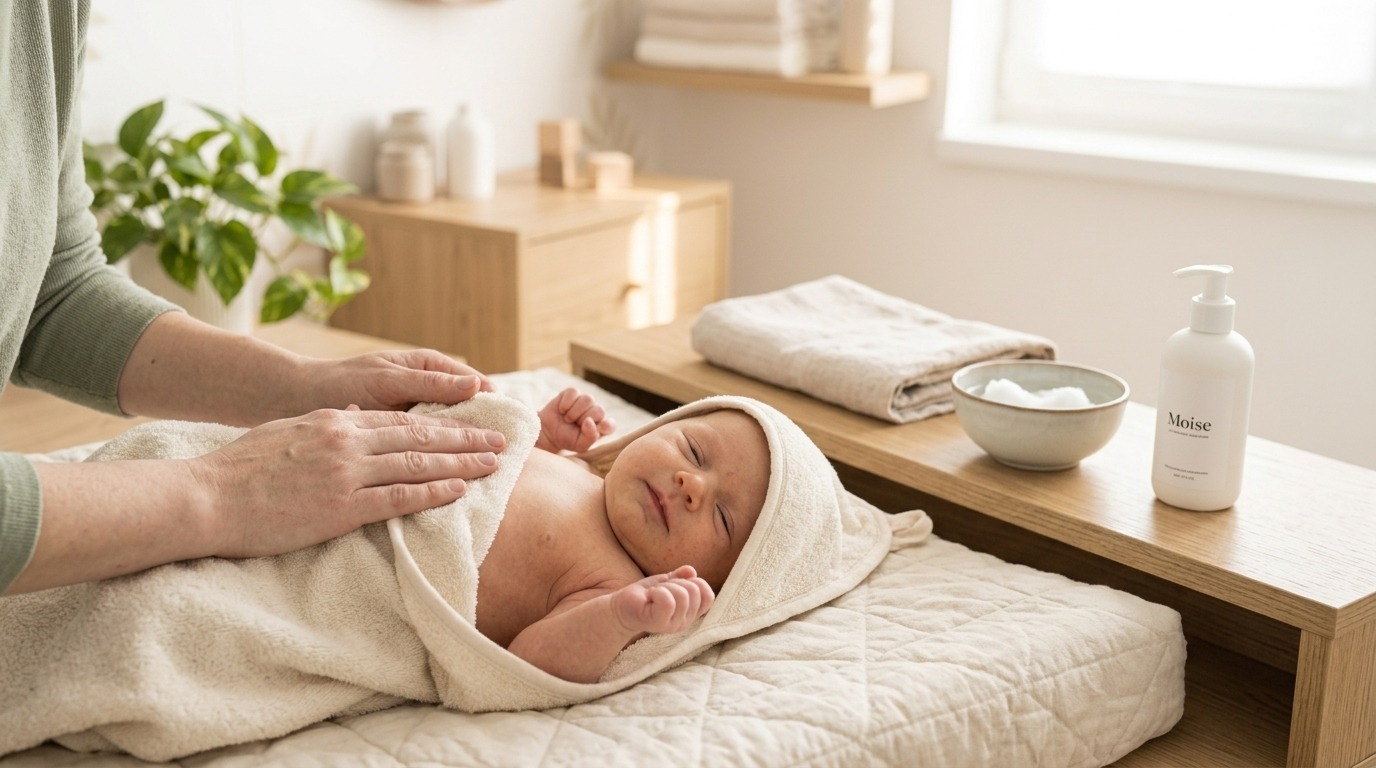
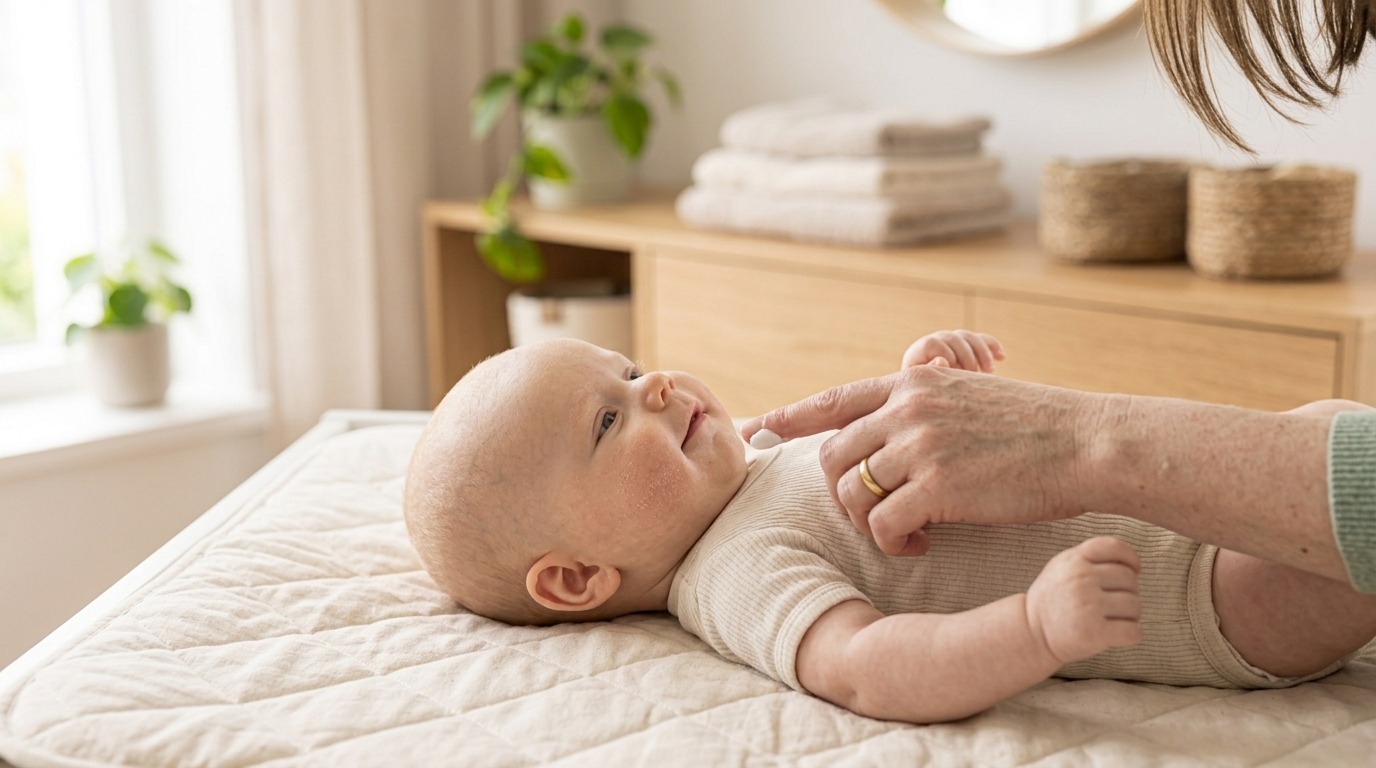
Pat your baby dry, then apply moisturiser within a few minutes, while the skin is still slightly damp. This is when moisturisers work best. Smooth it on in the direction the hair grows instead of rubbing it in.
One important exception applies to newborns. The NHS advises avoiding lotions and oils until your baby is at least one month old.
Choose simple skincare products
A baby with dry skin needs very little: water, a mild cleanser and one moisturiser that suits them. At Moise we work to the same idea, which is not too little and never too much. If you want a fuller picture of what changes as your baby grows, see our baby skincare routine by age.
Protect the skin from cold and wind
Cover hands and feet outdoors, use the pram hood or a rain cover in wind, and choose soft layers next to the skin. A thin layer of moisturiser on the cheeks before a cold walk can help babies over a month old.
Change wet or soiled clothing promptly
Damp fabric against the skin causes irritation over time. Swap wet bibs, milky vests and soggy cuffs when you notice them, and change nappies regularly.
What Is the Best Moisturiser for Baby Dry Skin?
There is no single best moisturiser for baby dry skin. The right one is a simple, fragrance-free product made for babies that your baby's skin tolerates well and that you will actually use.
Moisturisers differ mainly in how much oil and water they contain:
| Type | What it is | When it tends to suit |
|---|---|---|
| Lotion | Mostly water, light and quick to absorb | Mild, widespread dryness and warm weather |
| Cream | Thicker, with more oil | Drier skin and everyday use in winter |
| Ointment | Greasy, mostly oil | Very dry, rough or chapped areas |
Thicker products stay on the skin longer and hold in more moisture, which is why a cream for baby dry skin often works better than a thin baby lotion on stubborn patches. They also feel greasier, so many parents use a lotion by day and a cream or ointment at night.
When choosing, look for:
- fragrance-free on the label
- a short ingredients list
- a product intended for babies
- no alcohol or added colour
Skin tolerance is individual. Try a new product on a small area first, and stop using anything that seems to sting or redden the skin. If your baby already has a diagnosed skin condition, follow the advice of your GP or health visitor on which emollient to use.
Should You Use Baby Oil on Dry Skin?
You can, but you do not need to. Baby oil makes skin feel smoother for a while, yet it does not add water to the skin, so it may not help in the same way as a suitable cream or ointment.
A few practical points:
- Oil in the bath makes your baby and the bath very slippery. Take extra care or keep it out of the water.
- Formulas vary. Check that an oil is fragrance-free and made for babies.
- Kitchen oils are not made for baby skin. Ask your health visitor before using one.
- Avoid oils altogether in the first month, in line with NHS advice.
- Never use essential oils on a baby's skin.
No oil is a cure for dry skin. If one suits your baby and you enjoy using it for massage, that is fine. If the dryness is not improving, a plain cream is usually the better next step.
How Often Should You Bathe a Baby With Dry Skin?
Most babies do not need a full bath every day. Two or three baths a week is enough for many babies in the first year, and bathing more often can dry the skin.
There is no schedule that suits every family. Some babies love a nightly bath and tolerate it well, especially if it is short, warm and followed by moisturiser. If your baby's skin is dry, try the following and see what changes:
- Cut back to every second or third day.
- Keep each bath short.
- Check the water is warm, not hot.
- Use cleanser only where it is needed.
On the days in between, a quick wash of the face, neck, hands and nappy area keeps your baby clean. Our step-by-step guide to top and tailing shows how.
Baby Dry Skin on the Face
Baby dry skin on the face is usually caused by moisture and friction, not by anything you have done wrong. Dry cheeks, a chapped chin and a rough forehead are all common, because the face is always exposed and often wet. Saliva, milk, food, wiping, cold air and wind all play a part.
To care for dry skin on your baby's face:
- Clean gently with lukewarm water and cotton wool or a soft cloth.
- Pat dry instead of rubbing.
- Dab away dribble and milk during the day, without scrubbing.
- Apply a thin layer of baby-suitable, fragrance-free moisturiser if needed.
- Shield the face from cold wind when you are out.
Do not use adult face creams or balms on a baby.
Dry Skin on a Baby's Body
Dry skin on a baby's arms, legs, tummy and back usually responds to the same simple care. Legs and arms are often the driest areas, as clothing rubs there. Hands and feet can look flaky too, especially in the early weeks.
The easiest approach is to fold skincare into what you already do. Moisturise after the bath and check for dry patches at nappy changes. Dress your baby in soft, breathable fabrics. One product, used regularly, does more than five used now and then.
Dry Skin in Newborns
Dry skin on a newborn is usually part of the normal adjustment to life outside the womb. In the first weeks you may see peeling, flaking, changes in texture and skin that reacts easily. This typically settles without any treatment. If you are also noticing mottling, redness or other shifts in tone, our guide to skin colour changes in the first weeks may help.
Newborn skincare should be very simple:
- Use plain water only for the first month.
- Avoid lotions, oils and cleansers during that time, unless a midwife, health visitor or doctor advises otherwise.
- Leave peeling skin alone. Do not pick or rub it off.
- Premature babies have more delicate skin. Follow the advice of your neonatal team.
Speak to your midwife, health visitor or GP if dryness comes with significant redness, cracking, bleeding, oozing or obvious discomfort. A newborn who has a fever, feeds poorly or seems unwell needs prompt medical assessment, whatever their skin looks like.
Dry Skin in Babies in Winter
Dry skin on a baby in winter is common because cold outdoor air, indoor heating and lower humidity all pull moisture from the skin. Extra layers add friction and can make a baby sweaty, which irritates the skin further.
What helps:
- Dress your baby in soft layers you can remove indoors, so they do not overheat.
- Cover hands, feet and head outside.
- Keep baths warm and short. Hot baths are tempting in cold weather but dry the skin.
- Moisturise dry areas after the bath, and before going out if cheeks are chapped.
You do not need special equipment. A comfortably warm room, not a hot one, is kinder to skin.
Dry Skin in Babies in Summer
Dry skin on a baby in summer is less expected, but warm weather affects skin too. Sweat, heat, more frequent baths, air conditioning and sun exposure can all leave it dry or irritated.
Keep your baby cool in loose cotton clothing and rinse off sweat with plain water. A lighter lotion often feels more comfortable than a heavy cream in hot weather. Keep babies out of direct sun, which is not a treatment for any skin problem.
Parents often confuse dry skin with heat rash. Dry skin feels rough and flaky. Heat rash shows up as small raised spots, often in skin folds or under clothing, when a baby gets too warm. Our article on heat rash in babies explains the difference.
Ingredients and Products to Be Careful With
Most baby products are fine for most babies, so there is no need to fear ingredients lists. A few types of product are more likely to irritate sensitive baby skin:
- Heavily fragranced washes and lotions. Fragrance is a common cause of irritation.
- Harsh soaps and bubble baths. These remove more natural oil than a mild cleanser.
- Exfoliating products. Babies never need scrubs, mitts or peels.
- Adult skincare. It is made for a mature skin barrier.
- Essential oils. They are concentrated and can irritate, even when diluted.
- Unverified "natural" remedies. Natural does not automatically mean gentler or safer.
Synthetic ingredients and preservatives are not harmful simply for being synthetic. What matters is how your own baby's skin responds.
Common Mistakes When Caring for Baby Dry Skin
These habits are easy to fall into and just as easy to change:
- Bathing too often. Daily baths can dry some babies' skin.
- Water that is too hot. Warm is enough.
- Too much cleanser. A small amount, only where needed.
- Scrubbing dry patches. This damages the surface and makes dryness worse.
- Rubbing with a towel. Pat instead.
- Using too many products. Each one is another possible irritant.
- Switching products often. Give one moisturiser a couple of weeks, unless it irritates.
- Borrowing adult products. Stick to baby-suitable ones.
- Using essential oils. Leave them out entirely.
- Picking at peeling skin. Let it shed by itself.
- Ignoring persistent itch or inflammation. Ask for advice instead of waiting it out.
When Should You See a Doctor About Baby Dry Skin?
See your GP, health visitor or pharmacist if your baby's dry skin is not improving with gentle care, or if anything about it worries you. Seek advice if:
- the dryness persists or keeps getting worse
- your baby seems very uncomfortable or is sleeping badly because of their skin
- there is a lot of itching, rubbing or scratching
- the skin becomes very red, inflamed or swollen
- cracks are deep or bleeding
- there is oozing, weeping, blistering or yellow crusting
- a rash spreads quickly
- your baby has other symptoms, such as a fever or poor feeding
- you are unsure what is causing the problem
Skin that suddenly worsens, weeps or crusts may be infected and should be seen promptly. Very young babies who have a fever or seem unwell need urgent medical assessment. Do not assume the cause is dry skin. In the UK, you can call NHS 111 for advice at any time.
You know your baby best. Asking early is never an overreaction.
Simple Baby Skincare Routine for Dry Skin
A baby skin care routine for dry skin takes a few minutes a day. This is general guidance for babies over one month, not a medical treatment plan.
Morning
- Check the skin as you dress your baby.
- Gently clean only where necessary.
- Moisturise dry areas if appropriate.
During the day
- Dab away saliva, milk and food before they sit on the skin.
- Pat, do not rub.
- Change damp clothing and bibs when needed.
Bath time
- Use comfortably warm water.
- Keep the bath reasonably short.
- Use a mild cleanser only where needed.
- Avoid vigorous rubbing.
After bathing
- Pat the skin dry, including the creases.
- Apply a suitable baby moisturiser after the bath, while the skin is still slightly damp.
Quick Guide: What May Help and What to Avoid
| Situation | What may help | What to avoid |
|---|---|---|
| Mild dry skin | Gentle, fragrance-free moisturiser | Scrubbing |
| Dry cheeks | Gentle cleaning and moisturising | Repeated rubbing or wiping |
| Dry skin after bathing | Shorter, cooler baths and moisturiser | Very hot water |
| Dry skin in winter | Gentle skincare and protection from cold and wind | Overheating |
| Sensitive skin | Simple, fragrance-free products | Heavily fragranced products |
| Persistent itchy patches | Medical assessment | Assuming it is only dry skin |
| Oozing or crusted areas | Prompt medical advice | Scratching or trying home remedies |
Medical disclaimer: This article provides general information about baby skincare and dry skin. It does not replace personalised medical advice, diagnosis or treatment from a qualified healthcare professional.