Top and tailing is a simple way of washing a newborn without giving them a full bath. It means gently cleaning your baby's face, neck, hands and nappy area using warm water and cotton wool, rather than immersing them in water. Many parents use this method in the early weeks, partly because newborns don't get very dirty and partly because it's a lot less daunting than a full bath with a brand-new baby. If you've heard your midwife or health visitor mention it and aren't quite sure what it involves, this guide walks through exactly what it is, what you need, and how to do it safely, step by step.
What Is Top and Tailing a Newborn?
Top and tailing simply means washing the parts of a newborn that need it most often, rather than bathing their whole body. The name describes the two halves of the routine.
"Topping" refers to cleaning the top half of your baby — their face, neck, hands and any skin folds that collect milk, dribble or fluff. "Tailing" refers to cleaning the nappy area, which needs attention at every change regardless of whether a full bath is happening that day.
The term is particularly common in UK newborn-care guidance, and it's often introduced by midwives in the first days after birth as a gentler alternative to bathing while parents get used to handling their baby. Every family settles into their own rhythm, though, so it's worth checking with your midwife or health visitor if you want advice tailored to your baby.
Why Do Parents Top and Tail a Newborn?
Top and tailing exists because newborns don't actually need much washing. In the first few weeks, most of what needs cleaning is fairly localised — a bit of sick around the mouth, milk trapped in a neck fold, or the nappy area after a change. A full bath isn't required to deal with any of that.
Parents commonly choose to top and tail because it:
- Keeps the face, neck and hands clean between full baths
- Removes milk or dribble before it irritates the skin
- Cleans skin folds where moisture can collect
- Covers the nappy area thoroughly at each change
- Takes only a few minutes, which suits a newborn's limited patience
- Avoids unsettling a baby who isn't keen on bathing yet
Top and tailing isn't medically necessary for every baby, and some families move straight to bathing a few times a week without it. It's simply a practical option that many parents find easier to manage early on.
What Do You Need to Top and Tail a Newborn?
Having everything ready before you start makes the whole process quicker and calmer for both of you.
| Item | Notes |
|---|---|
| Bowl of warm water | Test the temperature on the inside of your wrist — it should feel warm, not hot |
| Cotton wool or soft washcloths | Use a fresh piece for each area to avoid spreading germs |
| Clean towel | For wrapping your baby and patting them dry |
| Fresh nappy | Have it open and ready |
| Clean clothes | Laid out in advance so you're not searching mid-routine |
| A safe, warm changing area | A changing mat on a stable surface, or the floor |
| Muslin cloth (optional) | Useful for keeping your baby warm while you work |
You don't need fragranced soaps, lotions or specialist newborn-washing products for top and tailing. Plain warm water is usually enough for a young baby's skin, and keeping things simple reduces the chance of irritation. Check the water isn't too hot before you begin, and keep the bowl within easy reach so you're not stretching away from your baby at any point.
How to Top and Tail a Newborn Step by Step
Once you've got your supplies together, the routine itself is fairly quick — most parents get through it in under ten minutes once they're used to it.
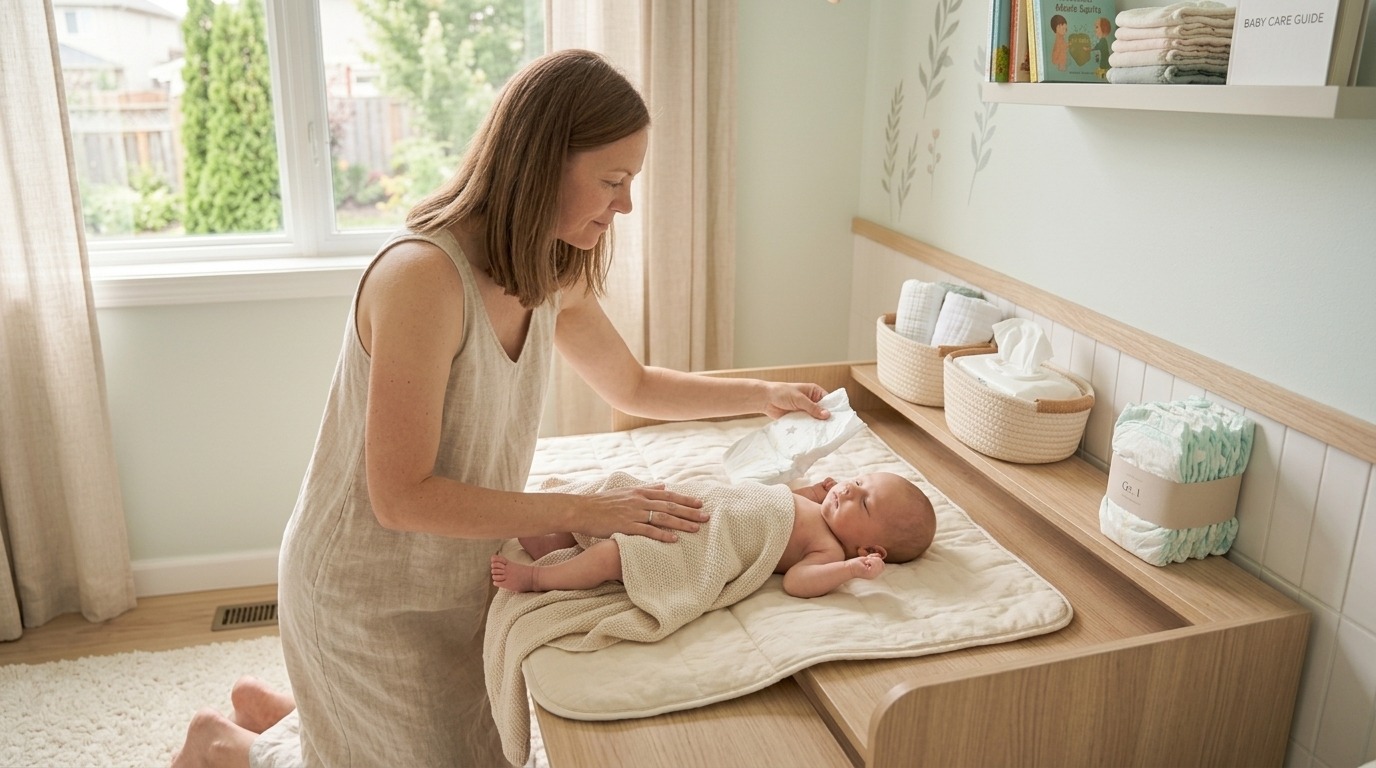
Step 1: Prepare everything first. Set out your bowl of water, cotton wool, towel, fresh nappy and clean clothes within arm's reach before you undress your baby. Newborns should never be left unattended on a changing table, bed or any other raised surface, so having everything ready means you won't need to step away once you've started.
Step 2: Make sure the room is warm. Newborns lose heat quickly, so aim for a comfortably warm room rather than turning the heating up excessively. Keep your baby wrapped in a towel or muslin and only uncover the area you're currently washing.
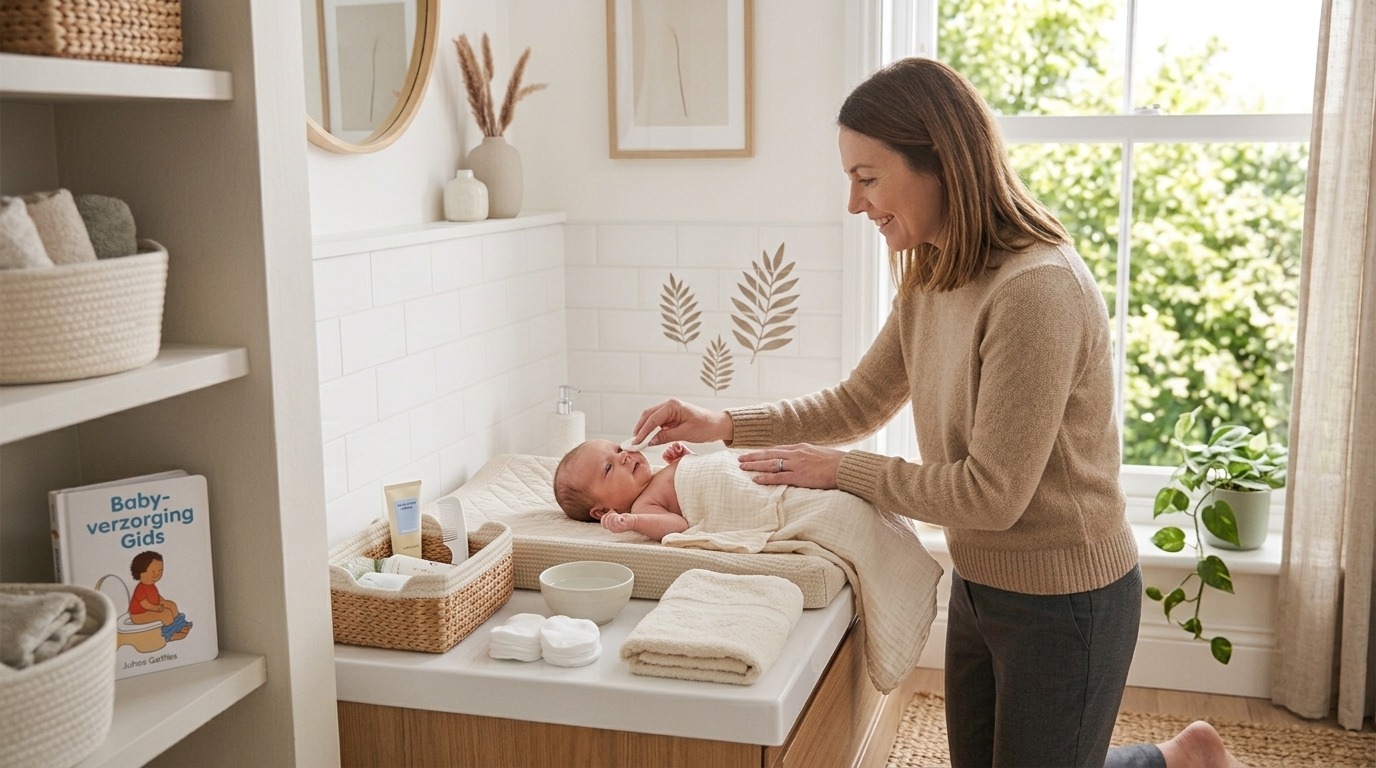
Step 3: Clean the baby's face. Using a piece of cotton wool dipped in warm water and squeezed out so it's just damp, gently wipe your baby's forehead, cheeks, around the mouth and chin. Use light, gentle movements rather than rubbing, and pat rather than scrub at any dried milk.
Step 4: Clean the baby's eyes. Eyes can be a little sticky in the early days. Dip a fresh piece of cotton wool in warm water and wipe gently from the inner corner outward, using a new piece for each eye. This helps avoid transferring any discharge or infection from one eye to the other. If discharge is persistent, thick, or the eye looks red or swollen, it's worth mentioning to your health visitor or GP.
Step 5: Clean the baby's ears. You only need to clean the outer part of the ear — the fold and the area just behind it. Never put cotton buds or anything else inside a newborn's ear canal, as this can cause injury.
Step 6: Clean the neck and skin folds. Milk, dribble and general moisture often collect in the folds under the chin and around the neck, which can lead to soreness if left. Wipe gently through each fold, then dry the area thoroughly before moving on — dampness left in a fold is often what causes irritation, more than the mess itself.
Step 7: Clean the hands. Newborns tend to keep their hands curled and often bring them up near their mouth, so fluff and residue can build up between the fingers. A gentle wipe with a fresh piece of cotton wool is usually all that's needed.
Step 8: Clean the nappy area — the "tail". Remove the nappy and clean your baby's bottom with fresh cotton wool and warm water, or a fragrance-free baby wipe suitable for newborns.
- For girls: wipe from front to back to help avoid spreading bacteria toward the genital area.
- For boys: clean the penis and surrounding area gently from the outside. Do not try to retract the foreskin — in newborn boys it's naturally non-retractable and will separate on its own over time, so forcing it can cause pain and damage.
Step 9: Dry the skin gently. Pat rather than rub, paying particular attention to the neck folds, groin, other skin folds and the nappy area. Keeping these areas properly dry helps reduce the chance of soreness or nappy rash.
Step 10: Put on a fresh nappy and clothes. Finish by dressing your baby in a clean nappy and comfortable clothing, and make sure the room stays at a comfortable temperature while you settle them.
How Often Should You Top and Tail a Newborn?
There's no strict schedule to follow — top and tailing can happen as often as your baby needs it, rather than at fixed times each day.
In practice, most parents find themselves cleaning:
- The face as needed, particularly after feeds or spit-up
- The neck and skin folds when they're damp or have milk trapped in them
- The hands when visibly dirty
- The nappy area at every single nappy change, since this happens regardless of bathing
- Other areas only when they actually need it
Some parents top and tail once a day as part of a settling routine, particularly in the evening, while others do it more informally whenever their baby needs cleaning up. Either approach is fine — what matters is that the areas prone to trapping moisture or mess are kept reasonably clean and dry, not that you're following a rigid timetable.
Top and Tailing vs Bathing a Newborn
Top and tailing and bathing aren't competing methods — many families use both at different points, and moving between them is entirely normal.
| Top and Tailing | Full Bath |
|---|---|
| Cleans specific areas (face, neck, hands, bottom) | Cleans most of the body |
| No need to immerse the baby in water | Baby is placed in water |
| Useful for everyday hygiene between baths | Can be part of a regular bathing routine once you're both ready |
| Usually quicker, a few minutes | Requires more preparation and a warm, safe setup |
| Doesn't replace all bathing needs | Provides more thorough whole-body washing |
Newborns don't need a bath every day, and many parents find top and tailing works well in between less frequent baths. As your baby gets a little older and you both feel more confident, you may naturally start bathing more often and top and tailing less — there's no fixed point at which you're expected to switch.
How Is Top and Tailing Different From a Sponge Bath?
The terms used for newborn washing aren't always applied consistently, which can be confusing. "Top and tailing" specifically refers to cleaning the face, neck, hands and nappy area while the baby stays dressed or wrapped for the rest of the routine. "Sponge bathing" and "strip washing" are sometimes used to describe a similar approach, but they can also refer to wiping down the baby's entire body with a damp cloth rather than focusing on specific areas — for example, this is often recommended in the days before the umbilical cord stump has healed, when full immersion baths aren't advised.
If a healthcare professional mentions one of these terms, it's worth asking exactly what they mean by it, since the details can vary between sources and countries.
What About the Umbilical Cord?
Caring for the umbilical cord stump is usually straightforward. The main principle is to keep the area clean and dry while it heals and eventually falls off, which typically happens within one to two weeks of birth.
- Fold the top of the nappy down below the stump so it isn't covered or rubbed against urine or nappy material.
- Clean around the base gently with water only if it looks sticky or has any discharge on it — the stump itself doesn't need active washing.
- Pat the area dry afterwards rather than rubbing.
- Avoid antiseptics, powders or other products on the stump unless a healthcare professional has specifically advised them.
- Let the stump come away on its own — never pull it off, even if it's only just hanging on.
A little oozing or a slightly unpleasant smell during healing isn't unusual. However, contact your midwife, health visitor or GP if you notice increasing redness or swelling around the base, pus or persistent discharge, bleeding that doesn't stop, or if your baby seems unwell or distressed when the area is touched.
Do You Need to Use Baby Soap or Body Wash?
For most newborns, plain water is enough for everyday top and tailing. Newborn skin is thin, delicate and still developing its natural barrier, so it can be more easily irritated by fragranced soaps, bubble baths or heavily perfumed products than adult skin.
If you do want to use a cleanser — for the nappy area, for example, or once you move on to full baths — choose something fragrance-free and specifically designed for babies, and use it sparingly rather than at every wash. If your baby has a diagnosed skin condition such as eczema, follow the specific product guidance given by your GP, health visitor or dermatologist rather than general advice, since their needs may differ.
Common Mistakes to Avoid When Top and Tailing a Newborn
A few habits are worth avoiding, even though most are easy fixes once you know about them:
- Leaving the baby unattended on a raised surface, even for a moment
- Using water that's too hot — always test it first
- Using the same piece of cotton wool across different areas of the body
- Rubbing the skin instead of gentle patting or wiping
- Putting cotton buds or anything else inside the ear canal
- Using heavily fragranced soaps or products on delicate skin
- Forgetting to dry skin folds thoroughly, leaving them damp
- Wiping from the nappy area toward the face, rather than the other way round
- Trying to forcibly retract a baby boy's foreskin
- Using antiseptics or other products on the umbilical cord without medical advice
- Overcomplicating the routine when a simple wipe with water would do
How to Make Top and Tailing Easier at Night
Night-time nappy changes and top-and-tail sessions can be quick and calm with a bit of preparation.
- Keep a small bowl, cotton wool and a towel ready near the changing area so you're not fetching supplies half-asleep.
- Use soft, dim lighting rather than bright overhead lights, which can make it harder for your baby to settle again afterwards.
- Keep the room at a comfortable, steady temperature so you're not battling the cold with an undressed baby.
- Have fresh nappies and a spare set of clothes within reach in case of a bigger mess.
- Keep the whole process brief and calm, with minimal talking or stimulation, to help signal that it's still sleep time.
Top and Tailing a Newborn: Safety Tips
- Never leave your baby unattended on a changing table, bed or any raised surface.
- Always check the water temperature on your wrist before using it.
- Have every item you need within reach before you begin.
- Support your baby's head and neck if you're holding rather than laying them down.
- Keep cotton buds and other objects away from the ear canal.
- Never force a baby boy's foreskin back.
- Avoid harsh soaps, antiseptics or unnecessary products on delicate skin.
- Keep your baby warm throughout, uncovering only the area you're currently cleaning.
- Follow any specific advice from your midwife, health visitor or GP if your baby has a particular medical need.
When Should You Speak to a Healthcare Professional?
Everyday newborn hygiene doesn't usually raise concerns, but a few signs are worth flagging to your midwife, health visitor or GP rather than waiting to see if they settle on their own:
- Increasing redness, swelling or warmth around the umbilical cord
- Pus or an unusual discharge from the cord area
- Bleeding from the cord that doesn't stop
- A baby who seems unusually unsettled, lethargic or generally unwell
- A fever in a young baby
- Skin irritation that's severe or worsening quickly rather than settling
- Persistent eye discharge or swelling around the eye
None of these are things to diagnose yourself at home, if something doesn't look or feel right, it's always reasonable to get it checked.
Simple Newborn Top-and-Tail Checklist
- Warm room
- Bowl of warm water
- Clean cotton wool or soft cloths
- Fresh towel
- Clean nappy
- Clean clothes
- Clean face
- Clean eyes (fresh cotton wool per eye)
- Clean neck and folds
- Clean hands
- Clean nappy area
- Dry skin folds gently
- Never leave baby unattended
For more on keeping your baby comfortable between washes, Moise's guides on nappy rash prevention and how often to change a newborn's nappy cover the nappy-area side of newborn hygiene in more depth.