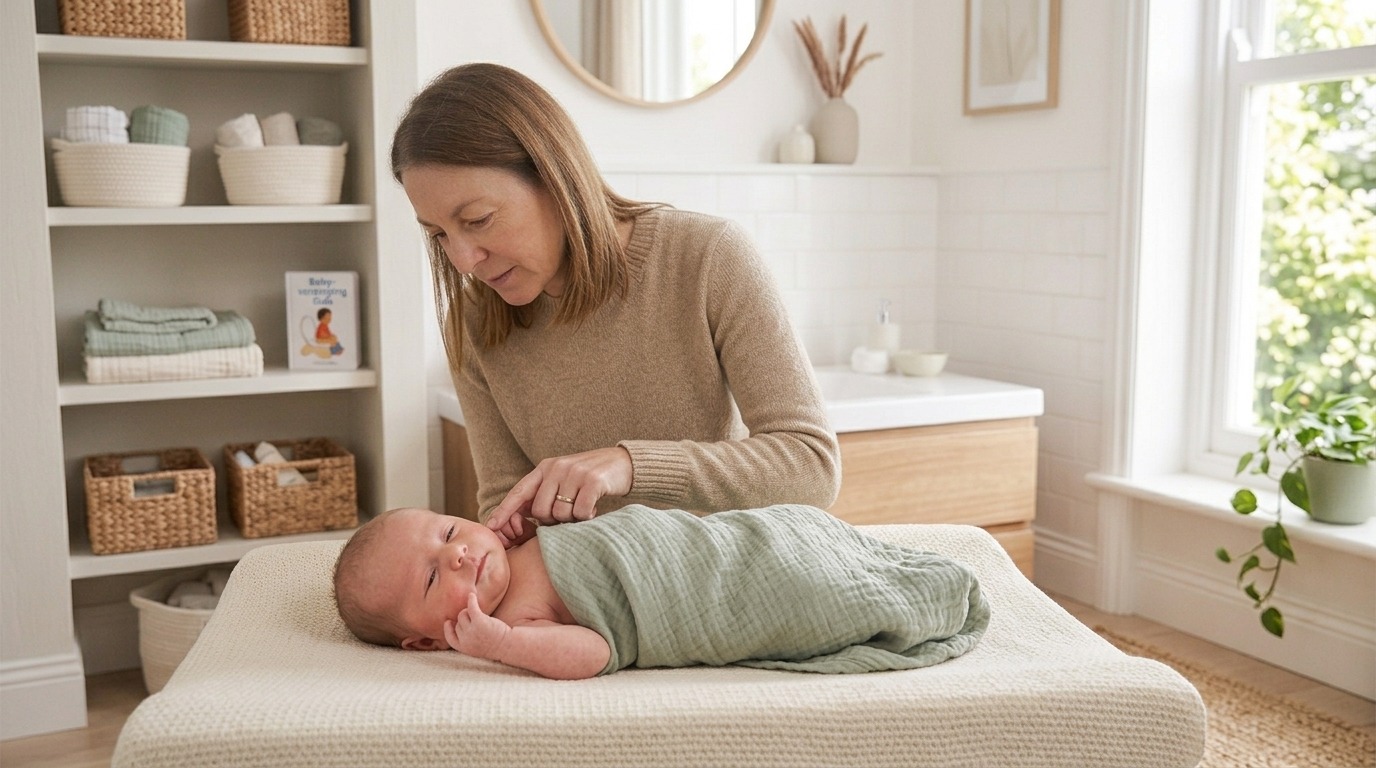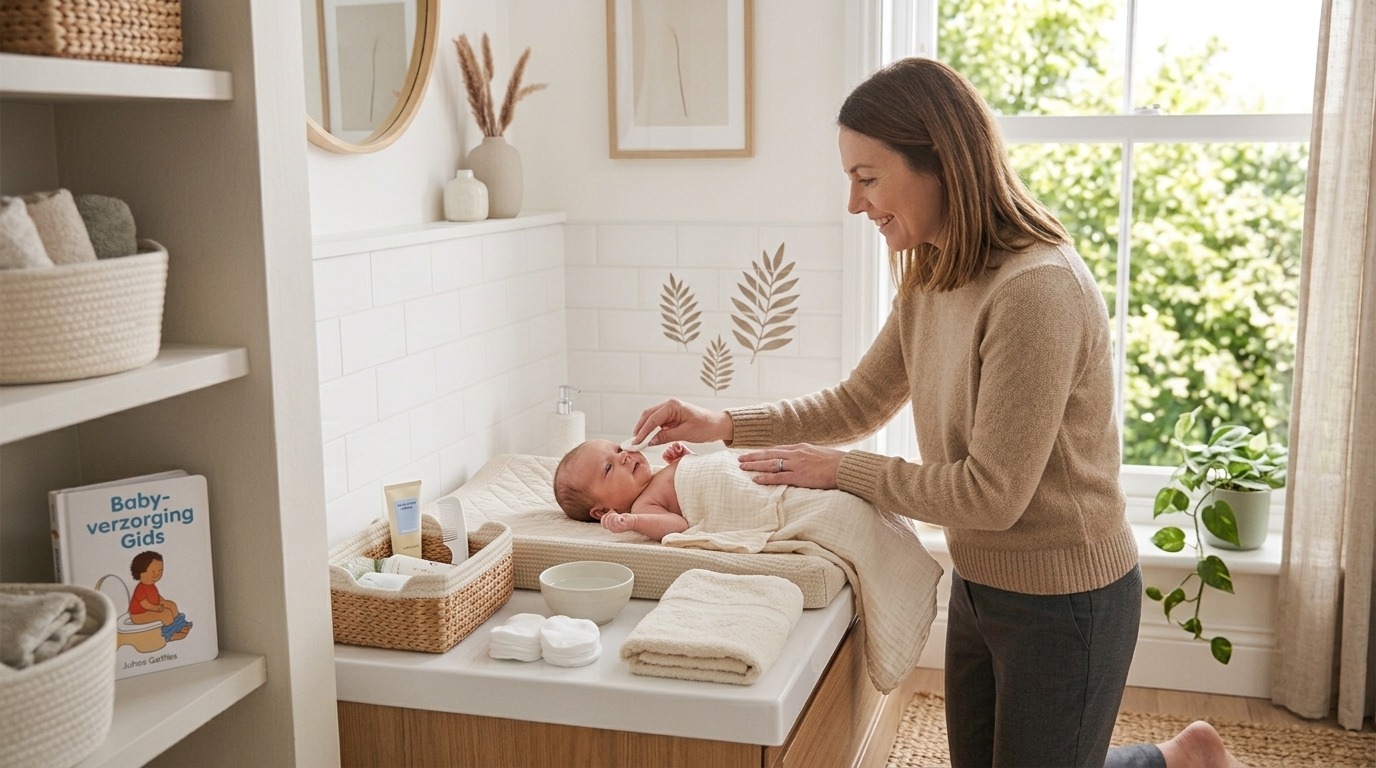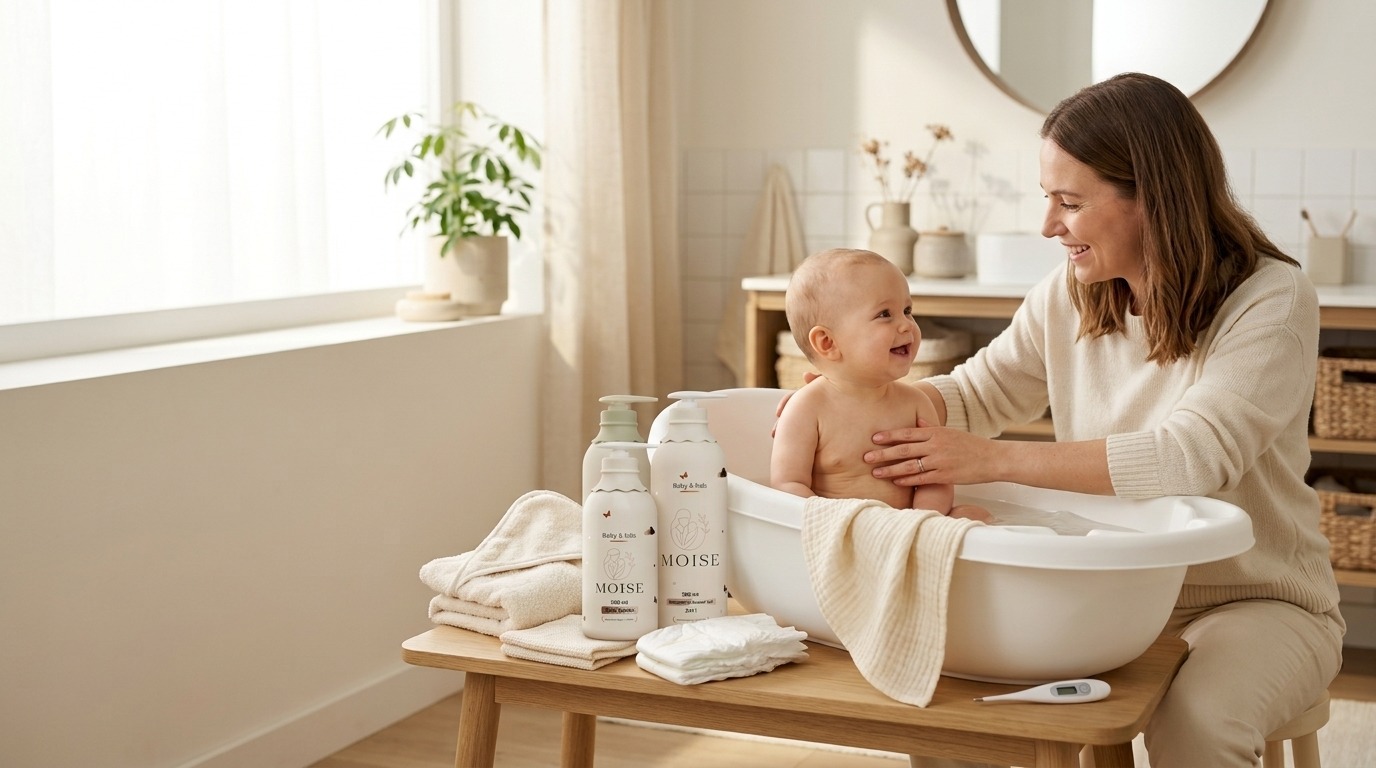
Most babies need far fewer bath products than the baby aisle suggests. Warm water, a soft cloth, a clean towel and, later on, a small amount of gentle cleanser are usually enough. Everything else is either optional or only useful for some babies.
Walk into any pharmacy and you'll see shelves of baby wash, shampoo, bubble bath, bath oils, lotions, creams, powders, wipes and scented sprays. It's easy to assume a good bath routine needs all of them. It doesn't.
NHS guidance says plain water is best for your baby's skin in the first month, and dermatologists recommend keeping baby skincare simple. The right products depend on your baby's age, their skin and how it responds.
This guide sorts baby bath products into four groups:
- Essential: what almost every bath needs
- Useful or optional: helpful for some babies, some of the time
- Use with caution: products that may irritate sensitive skin
- Best avoided: products or practices with a clear safety concern
What Baby Bath Products Do You Actually Need?
A basic baby bath needs very little: warm water, a safe place to bathe, a soft cloth, a towel, and a clean nappy and clothes for afterwards. A mild cleanser and a moisturiser can be added later if your baby's skin needs them.
A simple bath setup looks like this:
- Warm bath water (warm, not hot)
- A baby bath, a clean washing-up bowl or another stable, safe bathing space
- A soft washcloth or cotton wool
- One or two clean, soft towels
- A gentle, baby-suitable cleanser, only if needed
- A plain moisturiser, only if your baby's skin is dry
- A clean nappy and clothes, ready before you start
In the first few weeks, plain water is often all you need. The NHS advises not adding liquid cleansers to the bath water during the first month. After that, you can use just water or add a small amount of a cleanser that's suitable for babies.
You don't need to buy any particular brand. What matters is safety, gentleness and how your baby's skin reacts. If you're still building your newborn kit, our guide to newborn nappy essentials covers the changing side of things.
Baby Bath Products Checklist
Use this baby bath products checklist as a starting point, not a shopping list. "Essential" depends on your baby's age and needs.
| Product | Essential? | What to know |
|---|---|---|
| Baby bath or safe bathing setup | Usually useful | Stability and safety matter more than features |
| Soft washcloth or cotton wool | Useful | Wipe gently; never scrub |
| Gentle cleanser | Optional, use when needed | Not needed in the first month; choose a mild, baby-suitable formula |
| Baby shampoo | Often optional | Many babies don't need regular hair washing |
| Moisturiser | Optional | Useful for some dry or sensitive skin |
| Baby oil | Optional | Not needed for routine bathing; makes surfaces slippery |
| Bubble bath | Usually unnecessary | Foaming, fragranced products may irritate sensitive skin |
| Fragranced products | Not essential | Fragrance can irritate some babies' skin |
| Powder | Usually unnecessary | Best avoided because of the risk of breathing it in |
Do Newborns Need Soap or Baby Wash?
No, newborns don't need soap or baby wash in the first month. Plain warm water is enough. After that, a small amount of mild, baby-suitable cleanser can be used where it's actually needed.
Newborn skin is still settling into life outside the womb. It's thin and can lose moisture easily. NHS guidance recommends plain water for at least the first month to protect it. Some NHS neonatal guidelines add that products introduced later should be free from colours and perfumes, have a neutral pH and be used sparingly.
This doesn't mean all soap is harmful. It means that too much cleansing, too often, can strip away natural oils and leave skin feeling dry. A little goes a long way.
It helps to know the difference between two types of product:
- Traditional bar soap is often alkaline and can feel drying on delicate skin.
- Mild baby cleansers and body washes are usually designed to be gentler and closer to the skin's natural pH.
When you do start using a cleanser, apply it only to areas that need it. The American Academy of Dermatology suggests focusing on dirty areas such as neck creases and the nappy area, then rinsing well. Always follow the product's age guidance and instructions.
How to Choose a Baby Body Wash
Choose a baby body wash that is mild, clearly labelled as suitable for babies, and has a short, understandable ingredient list. Fragrance-free options are often a sensible choice for sensitive skin.
When you're comparing products, look for:
- A gentle formulation designed for baby skin
- Clear age suitability, such as "suitable from birth" or a stated minimum age
- Fewer unnecessary extras, such as added colours or strong perfume
- Fragrance-free or sensitive-skin formulas, especially if your baby's skin reacts easily
- A full ingredient list that is easy to find and read
- A reputable manufacturer with clear contact and safety information
One label to treat with care is "natural". A natural product is not automatically safer. Plant extracts and essential oils can irritate skin too. The formula as a whole matters more than one word on the front of the bottle.
If your baby's skin looks red, dry or irritated after using a new wash, stop using it. See whether the skin settles with plain water. Change one product at a time, so you can tell what's causing a reaction.
Does a Baby Need Shampoo?
Most young babies don't need shampoo. Their hair can usually be cleaned with plain water during a normal bath. A drop of mild baby shampoo can help once your baby is older or has thicker hair.
The NHS suggests washing a young baby's hair with plain water while supporting them over the bowl. NHS Inform notes that babies with longer hair may need a drop of mild shampoo, lathered and rinsed off.
A few practical points:
- Hair washing and bathing don't have to happen at the same frequency.
- Use your hand or a soft cloth, and massage the scalp gently.
- Cup your hand across your baby's forehead so water and suds run away from the eyes.
- If cleanser gets into the eyes, wipe them with a cloth and plain, lukewarm water.
Some babies develop greasy, yellowish, scaly patches on the scalp, known as cradle cap. The American Academy of Pediatrics describes it as a harmless condition that many babies outgrow. Gentle washing is usually enough, but ask your health visitor or GP if it spreads or looks inflamed.
Are Baby Bubble Baths Safe?
Bubble bath isn't dangerous for every baby, but it is unnecessary. It adds no cleaning benefit your baby needs, and foaming, fragranced products can irritate sensitive or dry skin.
Bubble bath works by adding detergents and, often, perfume to the bath water. Your baby then sits in that water for the whole bath. For some babies, that's fine. For others, especially those with dry skin or eczema, it can leave skin tight, red or itchy.
NHS eczema guidance for families advises avoiding products that lather, including bubble bath, because they can dry the skin. That advice is aimed at babies with eczema, but it also shows why bubbles aren't a helpful default.
If your baby has healthy skin and you'd like the occasional bubbly bath when they're older, choose a product made for their age and use a small amount. Stop if you notice redness or dryness. For newborns and babies with sensitive skin, plain water is the simpler choice.
Does a Baby Need Baby Lotion or Moisturiser After a Bath?
Not every baby needs moisturiser after every bath. A plain, fragrance-free moisturiser can help if your baby's skin looks or feels dry.
Many newborns have some dry or peeling skin in the first weeks, and this often settles on its own. If dryness continues, the American Academy of Dermatology suggests applying a fragrance-free moisturiser or bathing your baby less often.
If you do use one:
- Pat the skin dry first, rather than rubbing.
- Apply a thin layer while the skin is still slightly damp.
- Focus on dry areas instead of covering the whole body out of habit.
- Choose a simple product with a short ingredient list.
- Try a new product on a small area first and watch how the skin responds.
Moisturiser supports comfortable skin, but it isn't a cure-all. It won't prevent or treat every skin condition. If dryness is severe, keeps returning or comes with a rash, speak to your health visitor, GP or paediatrician.
What About Baby Oil?
Baby oil is optional, not essential. Your baby doesn't need it for routine bathing, and some babies' skin does better without it.
Oils have long been used for baby massage and dry skin. The evidence on plant oils is still limited. A small pilot trial led by the University of Manchester found that olive and sunflower oil applied twice daily for four weeks delayed the development of newborns' skin barrier compared with no oil. It was a pilot study, so more research is needed, but it's a good reason not to reach for kitchen oils by default.
If you choose to use a baby oil:
- Pick a product designed for babies, and check the age guidance.
- Use a small amount, and keep it away from your baby's face, eyes and mouth.
- Stop if the skin looks red or irritated.
- Remember that oil makes skin, baby baths, bath mats and floors slippery.
That last point matters. An oily baby is harder to hold. Take extra care when lifting your baby in or out of the water. Oil is never a substitute for safe bathing practices.
What Baby Bath Products Should You Avoid?
The main products to avoid are those that are harsh, heavily fragranced, not designed for babies, or carry a clear safety risk, such as loose powders. Not every non-essential product is dangerous. Some are simply unnecessary, some may irritate sensitive skin, and a few are best avoided altogether.
Unnecessary (skip unless there's a reason):
- Too many products at once. Layering wash, shampoo, bubble bath, oil and lotion in one bath gives your baby's skin more to react to, and makes it harder to spot the cause if it does.
- Antiseptic products added to bath water. Healthy babies don't need them for everyday bathing. Use them only if a healthcare professional advises it.
Potentially irritating (use with caution):
- Heavily fragranced washes, lotions and bubble baths. Fragrance is a common cause of skin irritation. If your baby's skin reacts, switch to fragrance-free.
- Harsh cleansers and traditional bar soap. These can leave skin feeling dry and tight.
- Adult skincare products. Adult shower gels, shampoos and body lotions aren't formulated with baby skin in mind and often contain more fragrance.
- Products with unclear ingredients. If you can't find a full ingredient list or age guidance, choose something else.
Best avoided:
- Talcum powder and other loose powders. The American Academy of Pediatrics notes that breathing in baby powder can irritate a baby's airways, and this applies to cornstarch powders too. Babies rarely need powder at all.
- Essential oils applied directly to the skin or added to the bath. Essential oils are highly concentrated. Children's Hospital of Philadelphia advises limiting aromatherapy to children over 3 and never applying pure oils to the skin.
- Homemade skincare mixtures. DIY recipes aren't tested for safety, preservation or strength, and can irritate or contaminate delicate skin.
Most babies won't be harmed by the occasional scented product. The aim isn't fear. It's to keep things simple, notice how your baby's skin responds, and adjust.
Fragrance-Free vs Unscented: What's the Difference?
"Fragrance-free" usually means no fragrance ingredients have been added. "Unscented" means the product has little or no smell, which can sometimes be achieved by adding a masking fragrance. For sensitive skin, "fragrance-free" is generally the more useful label.
The terms sound the same, but they describe different things:
- Fragrance-free: no perfume or fragrance ingredients added. The product may still have a faint natural smell from its other ingredients.
- Unscented: made to smell of little or nothing. Some unscented products contain ingredients that neutralise or cover other odours.
- Parfum: the term used for fragrance on ingredient lists in the UK and EU. If you see "parfum" or "fragrance", the product contains added scent.
Labels can still be confusing. Some products called "fragrance-free" contain plant extracts or essential oils that have their own scent. Reading the full ingredient list is more reliable than reading the front of the pack.
Fragrance-free doesn't guarantee a product will never irritate your baby's skin. Babies can react to other ingredients too. But it removes one common trigger, which is why dermatologists often recommend fragrance-free products for babies with sensitive skin.
Are Natural or Organic Baby Bath Products Better?
Natural or organic baby bath products aren't automatically safer or gentler. How a product is formulated matters more than how it's marketed.
"Natural" and "organic" describe where ingredients come from. They don't tell you whether a product suits your baby's skin. Plant-based ingredients can still cause irritation or allergic reactions. Essential oils are a good example: natural, but potent.
When you're choosing between products, look at:
- The intended age of use
- Whether fragrance or essential oils are included
- How long and clear the ingredient list is
- How your baby's skin responds over a few days
There's nothing wrong with choosing natural or organic products if you prefer them. Just judge them by the same standards as any other baby bath product.
Baby Bath Products for Dry or Sensitive Skin
For dry or sensitive baby skin, fewer products usually work better than more. Short, warm baths, gentle cleansing only where needed and a plain moisturiser afterwards are a good place to start.
Practical steps that often help:
- Use fewer products. Stick to one mild cleanser and one plain moisturiser, or plain water alone.
- Keep the water warm, not hot. Hot water can dry the skin further. Check it with your elbow or a bath thermometer.
- Keep baths short. A few minutes in the water is plenty for a young baby.
- Cleanse gently. Use cleanser only on areas that need it, such as skin folds and the nappy area.
- Pat dry. Rubbing with a towel can irritate sensitive skin.
- Moisturise if needed. Apply a thin layer of fragrance-free moisturiser to dry areas after the bath.
- Watch and wait. Change one product at a time and give the skin a few days to respond.
Not every red patch is dryness. Warm weather and overdressing can cause tiny red spots too. Our guide to heat rash in babies explains how to tell the difference. If dryness is persistent, severe or getting worse, talk to your GP, health visitor or paediatrician.
Baby Bath Products for Babies With Eczema
Babies with eczema, or suspected eczema, often need an individual skincare routine agreed with a healthcare professional. This usually centres on gentle bathing and regular use of emollients.
Eczema makes skin dry, itchy and inflamed. Only a GP, health visitor or specialist can diagnose it, so if you think your baby might have it, get it checked.
General NHS guidance for dry and eczema-prone skin includes:
- Avoiding products that lather, such as soap, shower gels and bubble bath, as these can dry the skin
- Using a leave-on emollient as a soap substitute, which cleans the skin without foaming
- Applying emollient after bathing, when the skin most needs moisture
- Avoiding known irritants, including heavily fragranced products
A few safety points are worth knowing. Emollients make baths, floors and your baby slippery, so take extra care. Many emollients contain paraffin, which can make fabrics soaked in them more flammable, so keep them away from open flames.
Avoid unverified remedies, homemade creams and essential oils on eczema-prone skin. No commercial bath product can treat eczema on its own. If your baby's eczema is widespread, weeping, crusted or not improving, or if they seem unwell, see your GP promptly.
How Often Should You Use Baby Bath Products?
You don't need to use cleanser every time you bath your baby. For many babies, a mild cleanser a few times a week, used only where needed, is plenty.
Bathing and product use are two separate decisions. The NHS says you don't need to bath your baby every day. The American Academy of Dermatology suggests bathing two to three times a week is enough, as long as the nappy area is cleaned well at every change.
On the days in between, a quick top and tail keeps your baby fresh without extra products. Clean the face, neck folds, hands and nappy area with warm water and cotton wool. You can learn the method step by step in our guide to top and tailing a newborn.
If your baby's skin looks dry, try using less cleanser, bathing less often, or both. For a fuller look at bath timing, read how often should you bathe a baby?
How to Set Up a Simple Baby Bath Routine
A simple baby bath routine takes about ten minutes and needs only a handful of products. Here's a calm, step-by-step approach.
- Prepare everything before the bath. Lay out the towels, cloth, any cleanser or moisturiser, a clean nappy and clothes. Choose a time when your baby is awake and content, not straight after a feed or when hungry.
- Check the water temperature. Run the cold water first, then add hot. Test with your elbow: it should feel warm, not hot. Mix the water well to avoid hot spots.
- Keep your baby within arm's reach. Hold your baby securely, supporting their head and shoulders. Keep their head clear of the water.
- Use plain water or a suitable gentle cleanser when needed. In the first month, plain water is enough. Later, a small amount of mild cleanser on dirty areas is plenty.
- Wash gently. Wipe the face first with plain water. Then wash the body, folds and nappy area last. Never scrub.
- Rinse. If you've used cleanser, rinse it off with clean water.
- Lift your baby out safely. Support their head and hold them firmly. Wet skin is slippery, and even more so with oil or emollient.
- Pat the skin dry. Pay attention to the creases in the neck, arms, legs and behind the ears. It's also a good moment to notice any changes in your baby's skin colour or texture.
- Apply moisturiser if appropriate. Only if the skin is dry, and only a thin layer.
- Put on a clean nappy and clothes. Then enjoy a cuddle.
Never leave your baby unattended in or near bath water, even for a moment. If the doorbell or phone rings, ignore it, or wrap your baby in a towel and take them with you.
At Moise.care, we like to think of baby care as "just enough": not too little, never too much. A calm routine with a few well-chosen products usually does the job.
Common Mistakes Parents Make With Baby Bath Products
Nearly every new parent buys something they didn't need. That's normal. These are the most common mistakes, and they're easy to fix.
- Buying too many products. Start small. You can always add something if your baby's skin needs it.
- Assuming every baby needs shampoo. Plain water is enough for many babies' hair.
- Using cleanser at every bath. Frequent cleansing can contribute to dryness in some babies.
- Choosing on "natural" or "organic" labels alone. Check the ingredient list and age guidance instead.
- Using heavily fragranced products on sensitive skin. Try fragrance-free if you notice redness or dryness.
- Borrowing adult products. Adult shower gels and lotions aren't designed for baby skin.
- Using loose powder. It isn't needed and can be breathed in.
- Putting essential oils in the bath or on the skin. They can irritate a baby's skin and airways.
- Changing several products at once. If the skin reacts, you won't know which product caused it.
- Ignoring skin irritation that doesn't settle. Persistent redness, dryness or rash deserves a check-up.
When Should You Speak to a Healthcare Professional?
Speak to your GP, health visitor or paediatrician if your baby's skin problem is persistent, severe, spreading or accompanied by signs of illness. Trust your instincts. You know your baby best.
Get advice if you notice:
- Dry or irritated skin that doesn't improve with a simpler routine
- A severe or widespread rash
- Broken, cracked or bleeding skin
- Signs of infection, such as warmth, pus or increasing redness
- Significant swelling
- Oozing, weeping or crusting
- A rash that keeps coming back
- A suspected allergic reaction after using a product
- Concerns about eczema or another skin condition
Seek urgent medical help if your baby seems unwell, has a high temperature, is unusually drowsy or floppy, has swelling of the face, lips or tongue, or has any difficulty breathing. Call 999 in an emergency, or 111 for urgent advice.
This article offers general information only. It can't diagnose your baby's skin condition or replace advice from a healthcare professional.
Baby Bath Products: Essential vs Optional vs Avoid
This summary shows how most babies' needs break down. Individual skin varies, so treat it as a guide, not a medical rule.
| Product | Essential | Optional | Use with caution / avoid |
|---|---|---|---|
| Clean, warm water | ✓ | ||
| Soft washcloth or cotton wool | ✓ | ||
| Gentle baby cleanser | ✓ (from about one month, when needed) | ||
| Baby shampoo | ✓ | ||
| Moisturiser | ✓ (for dry skin) | ||
| Baby oil | ✓ | Slippery around the bath | |
| Bubble bath | Often unnecessary | ||
| Strongly fragranced products | May irritate sensitive skin | ||
| Loose powder, including talc | Avoid: risk of breathing it in | ||
| Essential oils | Avoid direct use unless professionally advised | ||
| Adult skincare products | Generally unsuitable for babies |