A newborn needs far less than most shopping lists suggest. For the first month, the essentials are a safe place to sleep, nappies and changing supplies, a small stack of soft clothes, whatever your feeding method requires, a simple way to wash your baby and a car seat for any journeys. Almost everything else can wait until you know what your baby, and your household, actually needs.
If preparing feels overwhelming, that is completely understandable. Shops, baby fairs and social media are full of "must-have" lists, and many run to dozens of items. Plenty of those products are nice to have. Very few are necessary in week one.
This newborn essentials checklist is built around what care really looks like in the first four weeks: lots of feeds, lots of nappy changes, short sleeps and not much else. It covers sleep, nappies, clothing, feeding, bathing, skincare, health, travel and night-time care. Each section separates what is essential from what is optional, so you can prepare well without overspending.
One thing to keep in mind throughout: every family is different. Your list will depend on how you feed your baby, the season, your home, whether you choose disposable or reusable nappies, and whether your baby arrives early or needs extra care. Treat this as a starting point, not a rulebook.
What Does a Newborn Actually Need?
A newborn actually needs eight things: a safe sleep space, nappies and changing supplies, weather-appropriate clothing, feeding supplies, basic bathing items, very simple skincare, a correctly fitted car seat, and a household that is ready for round-the-clock care.
In practice, that means:
- A safe sleep space: a cot, crib or Moses basket with a firm, flat, waterproof mattress, kept clear of loose items.
- Nappies and changing supplies: newborn-size nappies, a way to clean your baby, a changing mat and a way to dispose of used nappies.
- Appropriate clothing: a handful of bodysuits and sleepsuits, plus layers suited to the season.
- Feeding supplies: this depends on whether you breastfeed, formula feed or combine the two.
- Basic bathing and hygiene items: warm water, a bowl or baby bath, soft towels and cotton wool.
- Simple skincare: in the first month, mostly plain water and a barrier cream if needed.
- Safe transport: a rear-facing car seat suitable for a newborn if you will travel by car.
- Parent and household preparation: easy meals, key phone numbers and a few comforts for whoever is doing the night feeds.
Not every baby needs every product on a typical newborn shopping list. Many items are genuinely useful for some families and unnecessary for others.
Newborn Essentials Checklist at a Glance
The table below gives a quick overview of what each category really requires in the first month.
| Category | Essential? | What You Actually Need | Optional Extras |
|---|---|---|---|
| Sleep | Yes | Cot, crib or Moses basket; firm, flat, waterproof mattress that fits; fitted sheets; lightweight blankets or a baby sleeping bag | Room thermometer, bedside crib, travel cot |
| Nappies | Yes | Newborn-size nappies (or reusables with covers and liners) | Nappy bin, overnight nappies later on |
| Changing | Yes | Changing mat or towel, cotton wool and warm water or fragrance-free wipes, barrier cream, nappy bags | Changing table, wipe warmer (rarely needed) |
| Clothing | Yes | Bodysuits, sleepsuits, a warm layer, a hat for outdoors in cold weather | Scratch mitts, special-occasion outfits |
| Feeding | Yes | Supplies that match your feeding method, plus muslin cloths | Feeding pillow, bottle prep machine |
| Bathing | Yes | Baby bath or clean washing-up bowl, 2 soft towels, cotton wool | Bath support, hooded towel |
| Skincare | Minimal | Plain water; barrier cream for the nappy area if needed | Mild baby cleanser after the first month |
| Travel | Yes, if using a car | Rear-facing car seat suitable from birth, correctly installed | Pram or buggy, baby carrier |
| Health and safety | Yes | Digital thermometer, GP, midwife and health visitor contact details | Baby nail file or clippers |
| Laundry | Yes | Enough clothes and cloths to cover a day or two between washes | Separate laundry basket for baby items |
Newborn Sleep Essentials
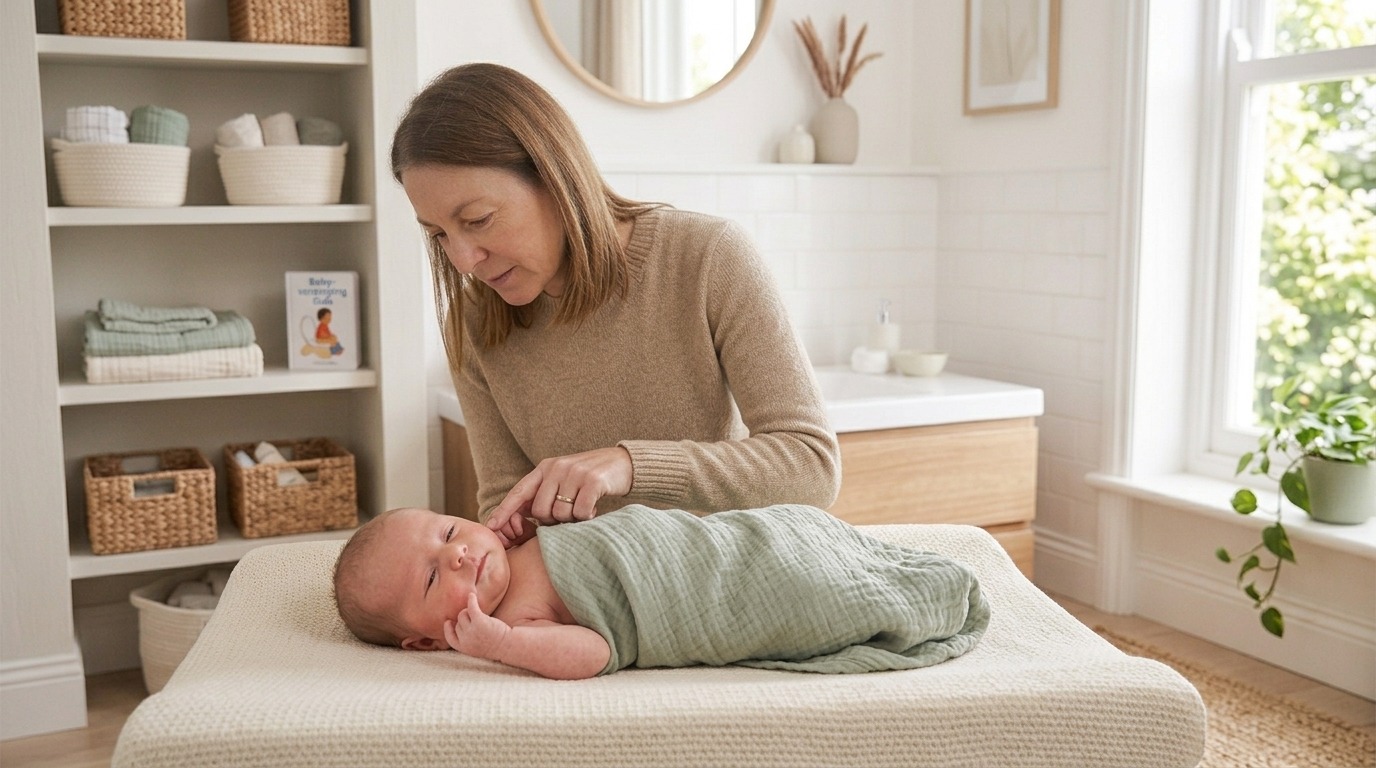
The only sleep essentials a newborn needs are a separate, clear sleep space with a firm, flat, waterproof mattress, and lightweight bedding or a well-fitting baby sleeping bag. The Lullaby Trust puts it simply: a clear cot is the safest cot.
Here is what that looks like in practice.
- A separate sleep space. A cot, crib or Moses basket works. The Lullaby Trust recommends that your baby sleeps in their own clear, flat, firm sleep space in the same room as you, for every sleep, day and night, for at least the first six months.
- A firm, flat, waterproof mattress that fits. There should be no gaps around the edges, and your baby's head should sink no more than a few millimetres. If you use a second-hand mattress, make sure it is clean, in good condition and fits snugly.
- Fitted sheets. Two or three means you always have a clean one while another is in the wash.
- Lightweight blankets or a baby sleeping bag. Blankets should be firmly tucked in no higher than your baby's shoulders, with their feet at the foot of the cot. If you use a sleeping bag, choose the right size for your baby's weight so their head cannot slip down inside.
- A room at a comfortable temperature. Aim for roughly 16 to 20°C. Overheating is a known risk factor for sudden infant death syndrome (SIDS). A simple room thermometer can help, though it is optional.
Always lie your baby on their back to sleep, and keep the space smoke-free.
What to keep out of the sleep space
The following items are not recommended for newborn sleep, even though some are still widely sold:
- pillows and duvets
- cot bumpers
- soft toys and comforters
- loose, weighted or bulky bedding
- sleep positioners, wedges or straps designed to hold a baby in one position
- pods, nests or anything soft placed on top of the mattress
- inclined sleepers or products that keep a baby sleeping at an angle
It can feel strange to leave a cot looking so bare. But in the first month, simple really is safest.
Newborn Nappy Essentials
For nappy changes, you need newborn-size nappies, a way to clean your baby, a changing mat or towel, barrier cream if your baby's skin needs it, and somewhere to put used nappies. You do not need a dedicated changing table.
The NHS lists the following for each change:
- a changing mat or towel
- cotton wool and a bowl of warm water, or fragrance-free and alcohol-free baby wipes
- a bag or bucket for the used nappy and cotton wool or wipes
- barrier cream to protect your baby's skin
- a clean nappy (plus liner and cover if you use reusable nappies)
- clean clothes nearby, because leaks happen
Many parents use cotton wool and water in the very early days. Others prefer wipes for convenience. If you are weighing the two, our guide to water wipes vs baby wipes explains the difference.
How many nappies will you need?
In the early weeks, the NHS says to expect around 10 to 12 nappy changes a day, falling to roughly 6 to 8 as your baby gets older. That means a newborn can easily use 70 or more nappies in a week.
A sensible starting point is two or three packs of newborn-size nappies. That covers the first week or two without overstocking. Babies grow at different rates, and some move out of newborn size within weeks. Buying more once you see how quickly your baby is growing avoids ending up with packs they have outgrown.
If you use reusable nappies, plan for enough to cover roughly two days of changes between washes. Some families combine both, using disposables at night or when out.
For a deeper look at what goes into a changing kit, see Newborn Nappy Essentials: What You Actually Need.
Do you need a changing table?
No. A changing mat on the floor or on a bed with you beside it works well, and the floor is the safest option. If you do use a raised changing table, keep one hand on your baby and never step away, even for a moment.
Newborn Clothing Checklist
Newborns need a small, practical wardrobe: bodysuits, sleepsuits and a couple of warm layers. Because babies grow quickly and every home is different, it is better to start small and top up than to buy a full wardrobe in one size.
A practical newborn clothes checklist:
- Bodysuits or vests: the base layer your baby will wear most days.
- Sleepsuits: all-in-one outfits that work day and night in the first weeks.
- A cardigan or light jacket: an easy extra layer for cooler days.
- A hat: useful outdoors in cold weather. Indoors, and especially when sleeping, babies should not wear hats, as they release heat through their heads.
- Socks or booties: helpful if sleepsuits do not have feet.
- Weather-appropriate outerwear: a snowsuit or pramsuit in winter if you go out in a pram. Remove bulky outerwear before strapping your baby into a car seat.
What to look for:
- Easy fastenings. Poppers down the front or envelope necklines make changes quicker, especially at 3am.
- Soft, breathable fabrics. Cotton is a common choice. Wash new clothes before use.
- Mixed sizes. Many babies outgrow newborn size quickly, and larger babies may skip it. Having some 0 to 3 month clothes ready is sensible.
- Seasonal layering. A useful guide is that babies generally need one more layer than you are comfortably wearing, then check their chest or the back of their neck. Avoid overheating: if your baby feels hot or sweaty, remove a layer.
Newborn Feeding Essentials
The feeding essentials you need depend on how you plan to feed your baby. Breastfeeding needs very little equipment. Formula feeding needs bottles, formula and a way to clean and sterilise everything. Many families combine both, and plans often change in the first weeks, which is completely normal.
Whatever you choose, a few muslin cloths are useful for everyone. They catch milk, wipe small spills and protect your shoulder during winding.
Breastfeeding
If you plan to breastfeed, most products are optional. Items many parents find helpful include:
- nursing bras or soft, stretchy bras that are easy to open
- breast pads for leaks
- comfortable tops that give easy access
- muslin cloths
- a water bottle and easy snacks within reach of your usual feeding spot
A breast pump, feeding pillow or nipple cream can be useful for some parents but are not essential for everyone. It is often worth waiting to see what you need. Your midwife, health visitor or a breastfeeding supporter can help if feeding feels difficult.
Formula feeding
If you plan to formula feed, you will need:
- bottles and teats suitable for newborns
- a first infant formula suitable from birth
- a bottle brush and a clean area for washing
- sterilising equipment, such as a steam, microwave or cold-water steriliser
The NHS advises sterilising all feeding equipment until your baby is at least 12 months old. Always prepare and store formula exactly as the NHS and the formula manufacturer advise. Preparation steps matter for your baby's safety, so follow the official guidance rather than shortcuts.
Neither feeding method makes you a better or worse parent. The right essentials are simply the ones that match how your family feeds.
Newborn Bathing Essentials
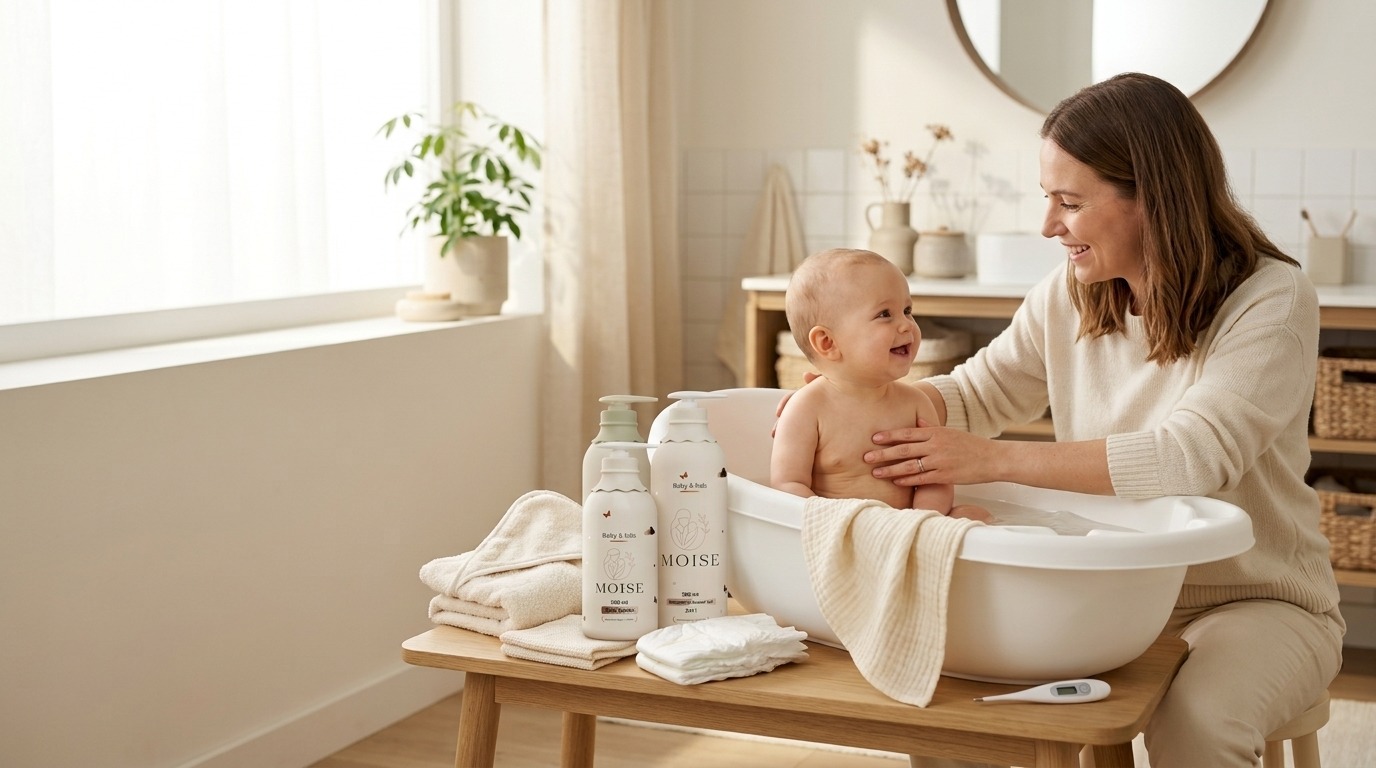
Newborns need very few bath essentials: warm water, a baby bath or clean washing-up bowl, two soft towels, cotton wool, a clean nappy and clean clothes. In the first month, the NHS advises plain water only, with no soap or liquid cleansers added.
That is the whole list for most families. A baby bath is convenient but not required. A clean washing-up bowl or sink works too.
Safety tips for bath time:
- Get everything ready before you start, so you never need to reach away.
- Warm the room first, as babies lose heat quickly.
- Run cold water first, then add hot, and mix well to remove hot patches.
- Fill to around 8 to 10cm.
- Check the temperature with your elbow or wrist. It should feel warm, not hot.
- Never leave your baby alone in the bath, not even for a second.
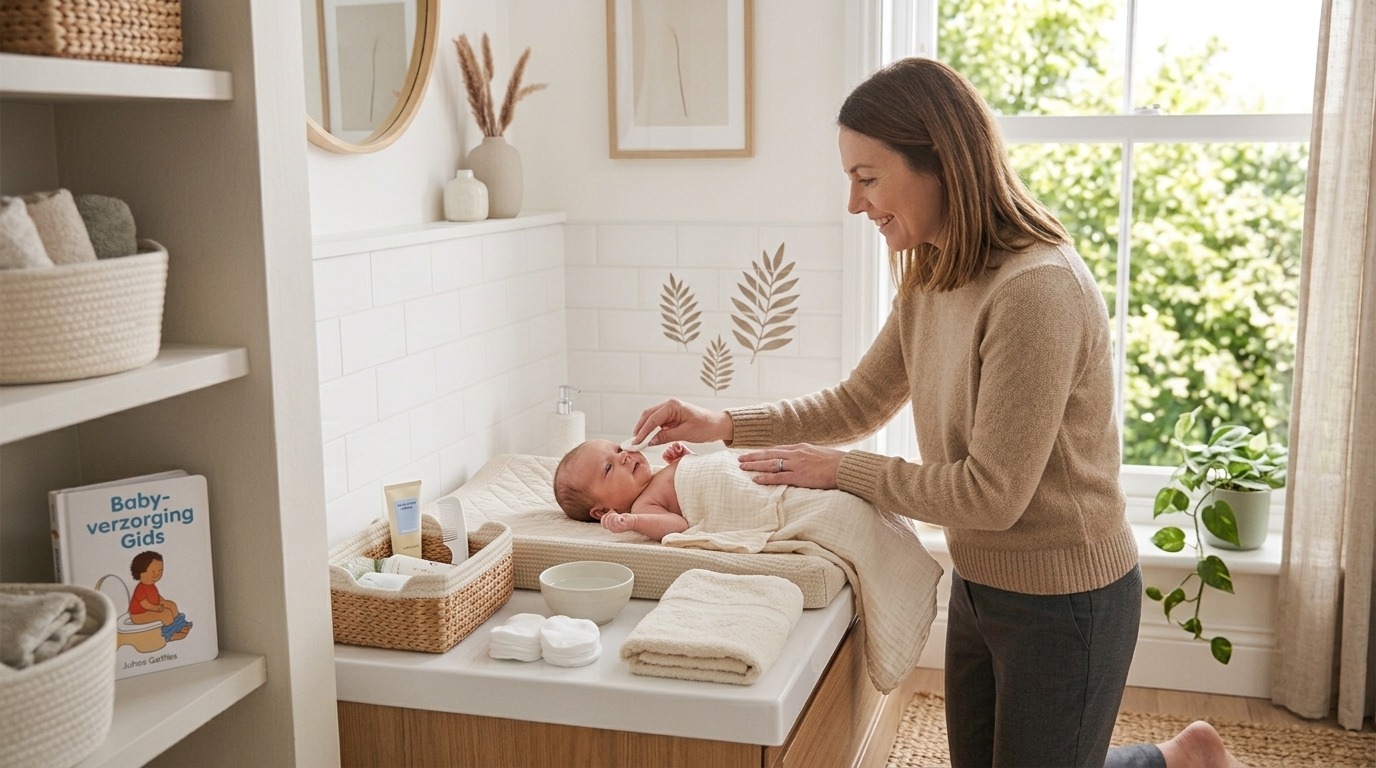
Newborns do not need a bath every day. Many parents top and tail between baths, which means washing the face, neck, hands and bottom with warm water and cotton wool. Our guide to top and tailing a newborn walks through it step by step, and How Often Should You Bathe a Baby? covers how often to bathe as your baby grows.
Newborn Skincare Essentials
Newborn skincare should be simple. In the first month, plain water is usually all your baby's skin needs, along with a barrier cream in the nappy area if it is needed. The NHS recommends avoiding lotions and oils until your baby is at least one month old.
Your baby's skin is still developing its natural protective barrier in these early weeks. That is why the general advice is to keep things minimal.
Here is how common products fit in:
- Baby wash and shampoo: not needed in the first month. After that, a mild cleanser made for babies can be introduced if you want one. Many babies still need very little.
- Moisturiser: not routinely needed in the first month. Some newborn skin looks dry or peels in the first weeks, which is common and usually settles on its own. If you are concerned, speak to your midwife, health visitor or GP.
- Baby oil: best avoided in the first month, in line with NHS advice.
- Barrier cream: useful to protect the nappy area if your baby's skin gets red or sore.
- Fragranced products: not necessary for newborns. Many parents choose fragrance-free products for young babies.
- Talcum or baby powder: not recommended. Powder can be breathed in.
- Essential oils: not recommended for routine newborn care.
"Natural" or "organic" labels do not automatically mean a product is gentler or safer. What matters more is using fewer products, choosing ones designed for babies, and watching how your baby's skin responds. For a closer look once your baby is older, see Baby Bath Products: What to Use and What to Avoid.
Newborn Health and First-Aid Essentials
The health essentials for a newborn are short: a digital thermometer, the contact details of your GP, midwife and health visitor, and your baby's health record. You do not need a cupboard full of baby medicines. When a newborn seems unwell, the right step is to get professional advice, not to treat at home.
A simple health kit:
- A digital thermometer. The NHS advises taking a baby's temperature under the armpit.
- Key phone numbers. Save your GP surgery, midwife, health visitor and NHS 111 in your phone and write them down somewhere visible.
- Your baby's health record (the "red book" in much of the UK), with birth details and any notes from your midwife.
- Soft baby nail clippers or an emery board, as some babies are born with long nails.
- Medicines only when specifically advised. The NHS says not to give paracetamol to babies under 2 months or ibuprofen to babies under 3 months unless a health professional tells you to.
When to get medical help
Newborns can become unwell quickly, so trust your instincts. Call 111 or your GP urgently if your baby is under 3 months old and has a temperature of 38°C or higher, or if you think they have a high temperature.
Also seek urgent advice if your baby:
- is feeding poorly or refusing feeds
- has fewer wet nappies than usual or other signs of dehydration, such as a dry mouth
- is very sleepy, floppy or hard to wake
- has a weak, high-pitched or unusual cry
- is vomiting repeatedly
Call 999 or go to A&E if your baby:
- is struggling to breathe, grunting, or breathing with long pauses
- looks blue, grey, very pale or blotchy, especially around the lips
- will not wake or stay awake
- has a fit (seizure)
- has a rash that does not fade when you press a glass against it
- feels unusually cold, with a temperature below 36°C
You will never be wasting anyone's time by asking about a newborn. Health professionals would always rather check.
Newborn Travel Essentials
If you will travel by car, the one non-negotiable travel essential is a rear-facing car seat suitable from birth, correctly installed. Have it fitted before your due date so it is ready for the journey home.
Car seat basics:
- Choose a seat that is suitable for newborns and meets current UK safety standards.
- Fit it rear-facing, exactly as the manufacturer's instructions say. Many retailers offer fitting checks.
- Never put a rear-facing seat in a front passenger seat with an active airbag.
- Remove bulky coats or snowsuits before buckling in, and use a blanket over the straps instead.
- Car seats are for travelling, not for sleeping at home. Babies should not sleep in a car seat for long periods, and if your baby slumps forward, stop and reposition them. Move them to a flat, clear sleep space when you arrive.
Other useful travel items:
- a pram or pushchair suitable for newborns, which should let your baby lie flat, if you will walk a lot
- a changing bag with spare nappies, cleaning supplies, a portable changing mat and nappy bags
- a spare outfit (sometimes two)
- muslin cloths
- feeding supplies suited to your feeding method
A baby carrier or sling is optional. If you use one, follow sling safety advice so your baby's face stays visible and their airway clear.
Newborn Essentials for Night-Time
Night-time care is easier when everything you need is within arm's reach of where you actually feed and change your baby. A small, organised station saves you walking around the house half asleep.
A practical night-time checklist:
- a safe sleep space in your room
- nappies and cotton wool or wipes
- a changing mat
- a spare sleepsuit and bodysuit
- a muslin cloth or two
- feeding supplies for your method
- a dim light or low lamp, so you can see without fully waking your baby
- a water bottle and snacks for you
Always put a fresh nappy on at bedtime, as your baby will wear it for longer. As your baby grows and sleeps for longer stretches, night-time leaks can become more common. Our guide to overnight nappies explains how to deal with them when the time comes.
If you are feeding at night, try to avoid falling asleep with your baby on a sofa or armchair, where the risk of SIDS is much higher. If you think you might fall asleep, put your baby back in their own sleep space first.
What You Don't Actually Need for a Newborn
Many products marketed as newborn must-haves are optional. They may suit some families, but most babies manage perfectly well without them in the first month. Consider waiting on:
- Elaborate changing furniture. A changing mat on the floor does the same job.
- A large wardrobe of newborn outfits. Your baby may outgrow newborn size within weeks, and many outfits end up worn once or not at all.
- A shelf of skincare products. In the first month, plain water and possibly a barrier cream cover most needs.
- Specialised gadgets, such as wipe warmers, bottle prep machines or smart monitors. Some families love them. Many never miss them.
- Lots of bath products. Newborns need no soap or cleanser in the first month.
- A pile of toys. Newborns are most interested in your face and voice.
- Shoes. Babies do not need shoes until they start walking.
- Decorative nursery items. A beautiful room is lovely, but it is not needed for good care. Keep decorative items away from the sleep space.
Some products are best avoided altogether for newborn sleep, including cot bumpers, pillows, pods, nests and sleep positioners, as covered in the sleep section.
A helpful approach: buy the essentials, then wait. You will quickly find out what your family actually needs, and many gaps can be filled with a quick shop or a borrowed item.
How Many Newborn Essentials Do You Really Need?
Most families need enough supplies to last a day or two between washes and shops. The figures below are rough starting points, not targets.
| Item | Approximate Starting Amount | Why It Varies |
|---|---|---|
| Disposable nappies | 2 to 3 packs of newborn size | Around 10 to 12 changes a day early on; babies change size at different rates |
| Reusable nappies | Enough for about 2 days between washes | Wash frequency and whether you mix with disposables |
| Bodysuits or vests | 6 to 8 | Leaks, spit-up and how often you do laundry |
| Sleepsuits | 6 to 8 | Same as above; season matters too |
| Muslin cloths | 6 to 10 | Babies who bring up a lot of milk use more |
| Towels | 2 to 3 | Two per bath, with one in the wash |
| Fitted sheets | 2 to 3 | Leaks and spit-up overnight |
| Barrier cream | 1 tube | Only needed if skin gets red or sore |
Your needs may be higher or lower depending on:
- how often you wash clothes
- your baby's size and growth
- whether your baby brings up a lot of milk
- their nappy habits
- the season and how warm your home is
- whether you use reusable nappies
- whether your baby was born early and needs smaller sizes
First-Month Newborn Checklist
Use this printable newborn checklist for the first month. Tick items off as you go, and leave anything you are unsure about until after your baby arrives.
Sleep
- Cot, crib or Moses basket
- Firm, flat, waterproof mattress that fits snugly
- 2 to 3 fitted sheets
- Lightweight blankets or a correctly sized baby sleeping bag
Nappy changing
- Newborn-size nappies (or reusable nappies, liners and covers)
- Cotton wool, or fragrance-free and alcohol-free wipes
- Changing mat or towel
- Barrier cream, if needed
- Nappy bags or a bin
Clothing
- Bodysuits or vests
- Sleepsuits
- A cardigan or light jacket
- Weather-appropriate outerwear and a hat for outdoors
Feeding
- Supplies suited to your feeding method
- Muslin cloths
Bathing
- Baby bath or clean washing-up bowl
- 2 soft towels
- Cotton wool or a soft washcloth
Health
- Digital thermometer
- GP, midwife and health visitor contact details
- Baby nail file or clippers
Going out
- Rear-facing car seat suitable from birth, correctly fitted
- Changing bag
- Spare nappies, cleaning supplies and a change of clothes
How to Prepare Your Home Before the Baby Arrives
The most useful preparation is practical, not decorative. Set up your home around where care actually happens.
- Prepare the sleep space. Put the cot, crib or Moses basket in your bedroom, away from radiators, heaters and direct sunlight. Keep it clear.
- Set up a changing area. A mat on the floor with nappies, cotton wool or wipes, barrier cream and nappy bags in a basket beside it is enough. If you live on more than one floor, a small second kit downstairs saves a lot of stairs.
- Wash newborn clothes and bedding. Wash everything before first use and put a few outfits somewhere easy to reach.
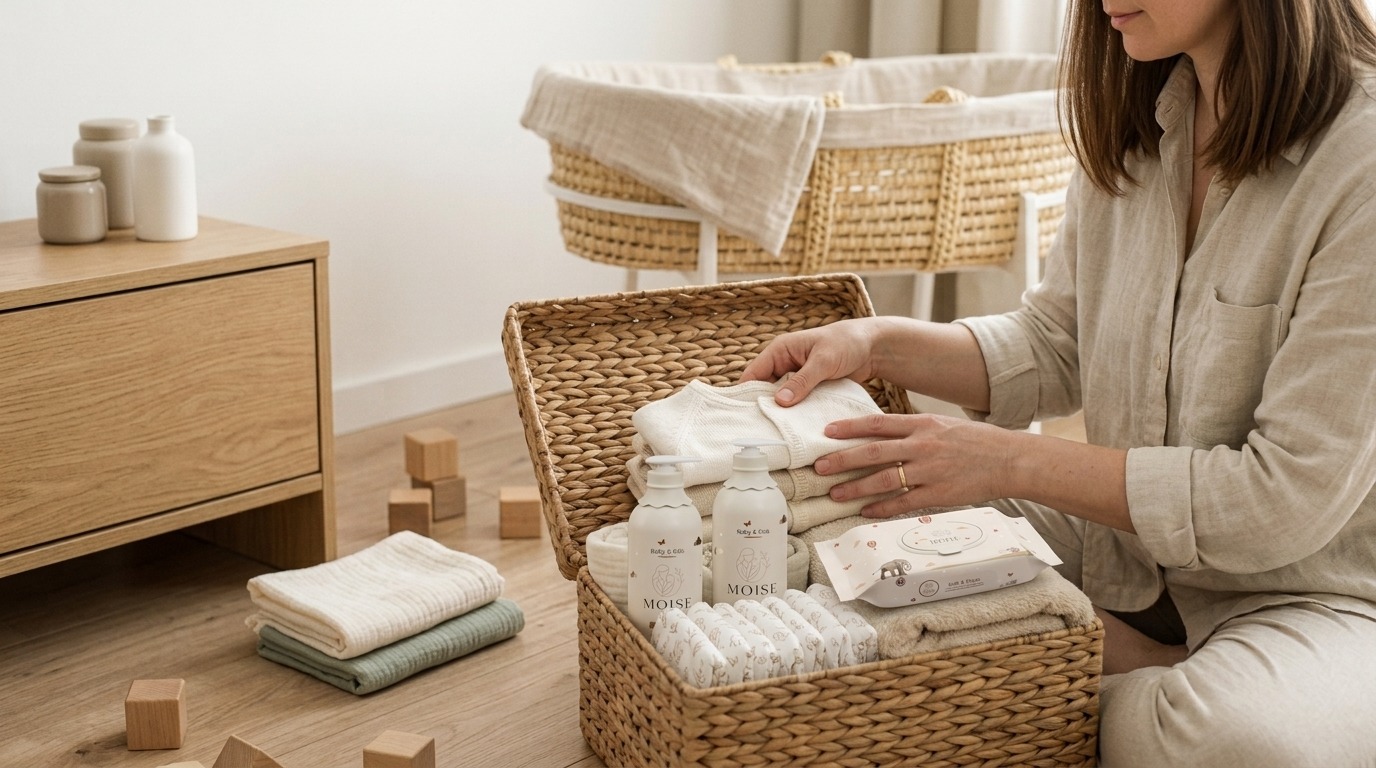
- Organise nappies. Keep one pack open near each changing spot and the rest stored nearby. If you would rather not think about running out, a nappy subscription, such as the one Moise offers, can take one job off your list.
- Prepare feeding supplies. For formula feeding, wash and sterilise bottles in advance. For breastfeeding, set up a comfortable chair with a water bottle nearby.
- Create a simple night-time station. Group nappies, a spare sleepsuit, muslins and a low light next to where you will feed at night.
- Look after yourself too. Stock the freezer with easy meals, save key phone numbers and accept offers of practical help.
Common Newborn Preparation Mistakes
Most preparation mistakes come from wanting to be ready for everything. That is a very natural instinct, and every one of these is easy to fix.
- Buying too much, too early. It is hard to know what you need until your baby arrives. Start with the basics.
- Buying lots of newborn-size clothes. Many babies outgrow them within weeks. Mix in some 0 to 3 month sizes.
- Buying products before understanding your needs. Feeding plans, for example, often change in the first weeks.
- Adding soft items to the sleep space. Bumpers, pillows and soft toys can look cosy but increase risk. Keep the cot clear.
- Stocking up on skincare. Newborns need very little in the first month.
- Forgetting supplies for the parent. Comfortable clothes, easy food and a water bottle matter too.
- Not checking the car seat fitting. Practise fitting the seat before the birth and check it against the manual.
- Keeping everything in one room. Put supplies where you actually feed, change and settle your baby.