Before a baby arrives, it's easy to end up with a spreadsheet-length list of "must-have" products, half of which you'll never actually use. When it comes to changing a newborn's nappy specifically, though, the essentials are a lot simpler than the shopping lists suggest.
For most newborns, the basic setup comes down to four things: suitable nappies, somewhere safe and comfortable to change your baby, a way to clean the nappy area, and a practical way to deal with used nappies afterwards. Everything else can be genuinely useful, but it isn't strictly necessary. Exact needs shift a little depending on whether you're using disposable or reusable nappies, and how your home is set up, but the core list stays short.
What Do You Actually Need for Newborn Nappy Changes?
Here's the overview before we go into detail on each item:
| Item | Essential? | Why you may need it |
|---|---|---|
| Newborn nappies | Yes | For everyday nappy changes |
| Changing mat or safe changing surface | Yes | Provides a stable, hygienic changing area |
| Wipes or a suitable cleaning method | Yes | For cleaning the nappy area at each change |
| Clean cloths/cotton wool | Useful alternative | Depending on your cleaning preference |
| Nappy disposal solution | Useful | For managing used nappies practically |
| Barrier cream | Optional, situation-dependent | May help for some babies, not needed at every change |
| Nappy bag | Useful for outings | Convenient once you're out of the house |
| Dedicated changing table | Optional | Depends on your home setup and preference |
The genuine essentials sit in the first three rows. Everything below that makes life easier, but none of it is required to change a newborn's nappy safely and hygienically.
Newborn Nappies
Newborns go through nappies quickly, which catches a lot of first-time parents off guard. Frequent feeding means frequent urination, plus regular bowel movements in the early weeks, so nappy changes happen often — generally many times a day in the first few weeks.
It's worth knowing that newborn sizing isn't standardised across brands. A "newborn" nappy from one manufacturer might fit differently, or cover a different weight range, than another brand's newborn size. Because of this, it's sensible to avoid buying a huge stock of any single size before you know how your baby's actual weight and the specific brand's fit work together — some newborns move into the next size within days if they're born on the larger side, while others stay in newborn sizing for several weeks.
How Many Newborn Nappies Do You Actually Need?
Newborns typically need somewhere in the region of 10–12 nappy changes a day in the first weeks, though this varies from baby to baby based on feeding pattern, urine output, bowel movements, and your own changing routine — for instance, whether you tend to change before or after feeds.
As a rough planning guide:
| Planning period | Approximate supply |
|---|---|
| First few days | Around 30–40 nappies |
| First week | Around 70–90 nappies |
| First 2 weeks | Around 150–180 nappies |
These are approximate planning estimates, not a precise formula — treat them as a general starting point rather than an exact target. It's generally more practical to buy enough to cover the first couple of weeks comfortably, then reassess once you know your baby's actual usage pattern and whether the newborn size is still fitting well. Buying a full year's supply of newborn-size nappies in advance rarely makes sense, since most babies will have moved up at least one size, sometimes several, well before then.
A Safe Changing Surface
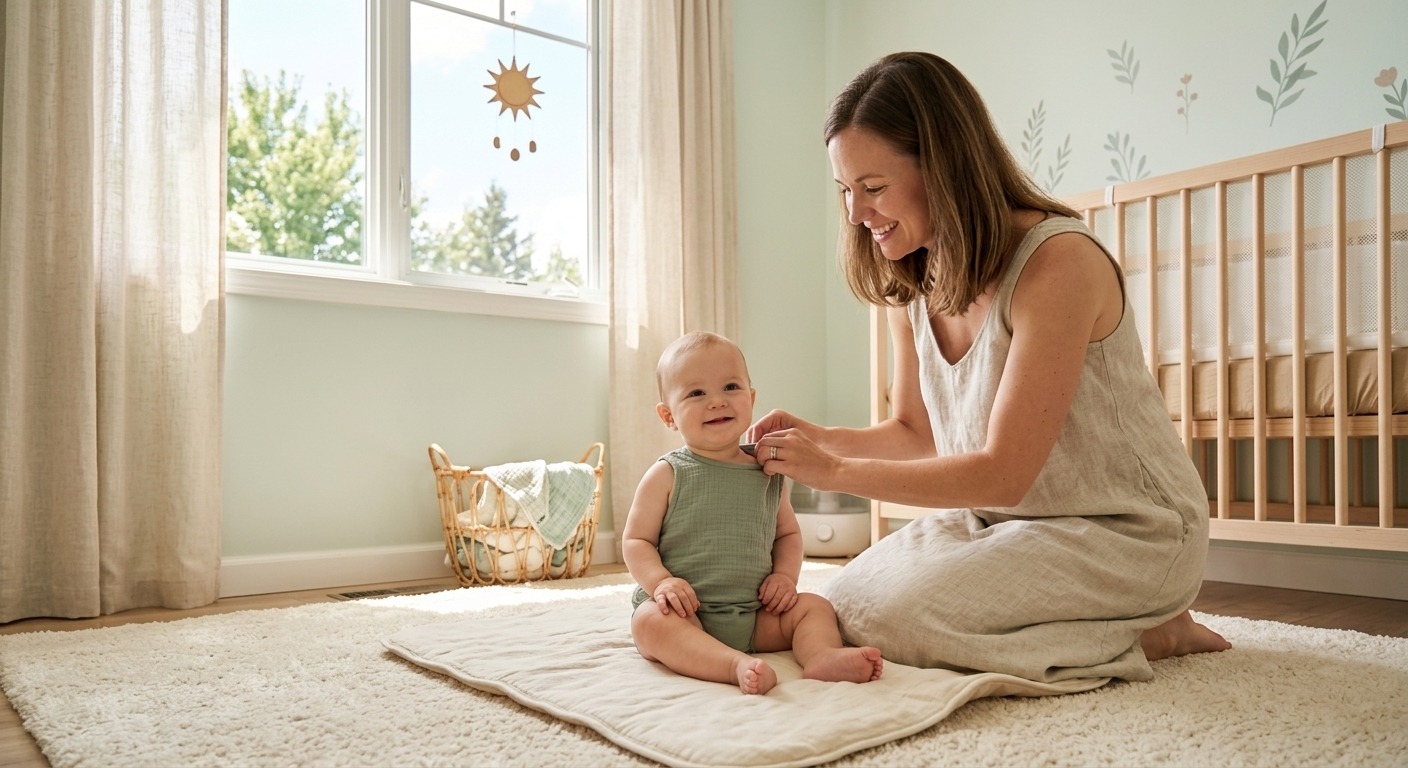
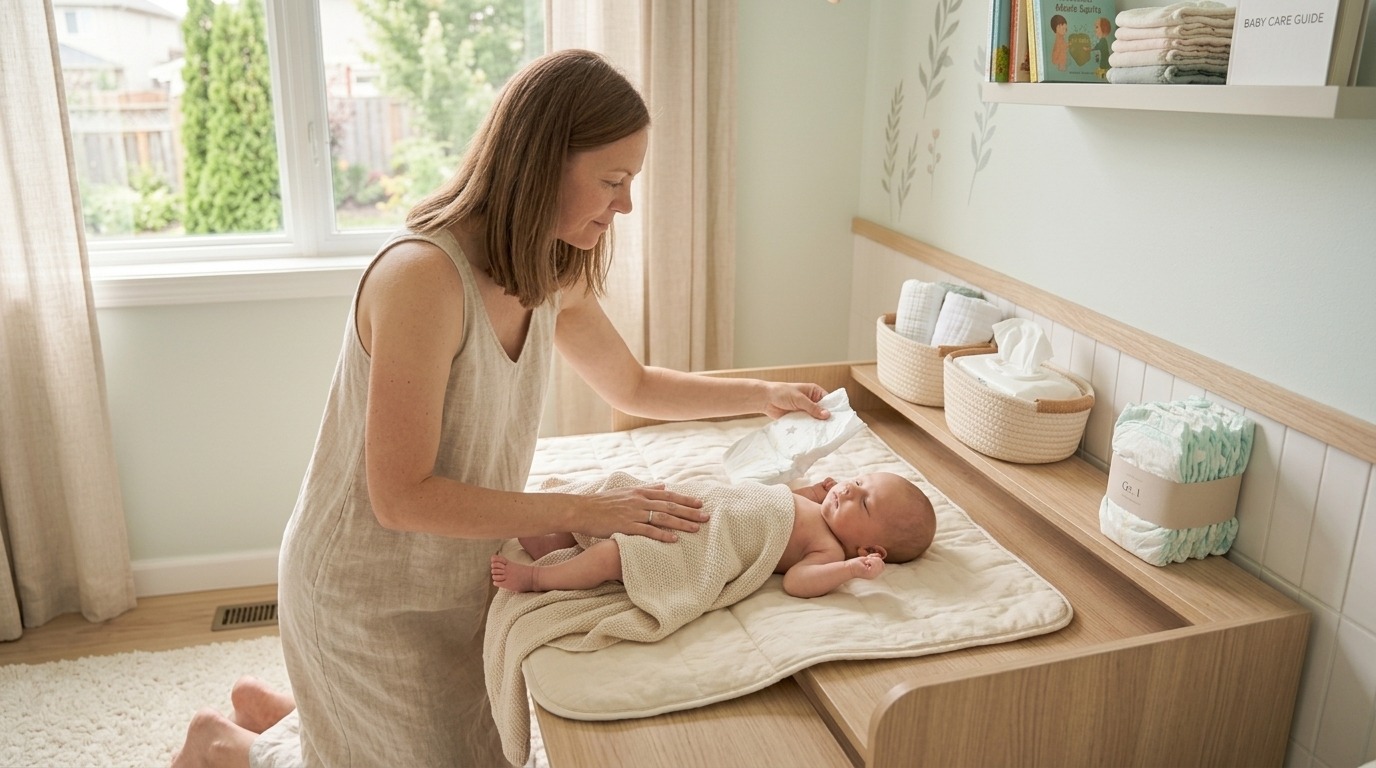
You need somewhere stable and comfortable to change your baby — this matters more than what that surface actually is. Options include a dedicated changing mat on a table, dresser or other flat surface, a changing mat placed directly on the floor, or a towel on a bed for a quick change, provided you're right there the whole time.
The one rule that applies regardless of setup: never leave a newborn unattended on an elevated changing surface, even for a moment, even if they seem too small to roll. Babies can move more than expected, and falls from changing tables are a genuine, avoidable risk. If you need to reach for something out of arm's length, take your baby with you rather than stepping away, or change them on the floor instead, where a fall simply isn't possible.
Wipes, Cotton Wool or Water — What Do You Need?
There are a few genuinely valid options here, and none of them is universally "correct" — it comes down to your baby's skin and your own preference.
Baby wipes are convenient and widely used, and a fragrance-free, alcohol-free formulation is generally the sensible choice for newborn skin specifically.
Cotton wool and warm water is a simple, minimal option many parents choose for the first few weeks, particularly for a newborn's more delicate skin.
Soft, clean cloths with water work similarly to cotton wool and are a reusable alternative some parents prefer.
Whichever you choose, gentle technique matters more than the specific product: clean front to back, pat rather than scrub, and pay attention to skin folds without excessive rubbing. If you notice any redness or irritation with a particular product, switching to a simpler option — cotton wool and water, or a different fragrance-free wipe — is a reasonable first step.
Do You Need Nappy Rash Cream for a Newborn?
Not necessarily at every change, no. Barrier creams aren't required for routine nappy changes, and using one at every single change isn't generally necessary for a baby with no signs of irritation. That said, plenty of parents keep one on hand, since nappy rash is common enough that having something available when it happens is genuinely useful.
Nappy rash prevention mostly comes down to the basics rather than a specific product: changing nappies promptly, particularly after a bowel movement, cleaning gently, and letting the skin dry properly before putting on a fresh nappy. If a rash does develop and doesn't improve within a few days of consistent, gentle care, or looks unusual or is causing your baby significant discomfort, that's worth getting checked by your health visitor, pharmacist or GP rather than relying on cream alone.
Do You Need a Changing Table?
No, a dedicated changing table isn't essential. It's a convenience, and a genuinely useful one for many parents' backs, but plenty of families manage perfectly well without one.
A dedicated changing table offers a consistent, comfortable-height setup with built-in storage, but takes up space and costs money.
A changing mat on an existing surface — a dresser, a table, a section of worktop — achieves the same result without the extra furniture.
A floor-based setup removes any risk of a fall from height entirely and works well for many families, particularly in smaller spaces.
Whichever you choose, safety comes down to supervision and stability, not the specific piece of furniture underneath the mat.
Do You Need a Nappy Bin?
A dedicated nappy bin (the kind that seals each nappy individually) is a convenience, not a necessity. An ordinary household bin with a secure lid, emptied regularly, works perfectly well for many families.
Things worth weighing up: dedicated nappy bins can help manage smell between empties, but they need their own liners or cartridges, which is an ongoing cost. An ordinary bin needs emptying more often to avoid smell building up, but has no extra running cost. Either way, it's worth checking your local council's guidance on nappy waste disposal, since requirements can vary by area.
What About Nappy Bags?
Nappy bags — small, scented or unscented bags for individually wrapping a used nappy — are useful rather than essential, particularly for travel, changes away from home, or temporarily storing a used nappy until you reach a bin. At home, they're less necessary if you're using a bin you empty reasonably often.
For disposal generally, used nappies should go in general household waste rather than being flushed or disposed of in ways not intended for them — this applies whether or not you're using a nappy bag.
Newborn Nappy Changing Station Checklist
Must-have
- Nappies
- A safe changing surface
- Cleaning supplies (wipes, or cotton wool and water)
- Clean clothes nearby, in case of a mid-change mishap
Useful
- A changing mat, if not using a dedicated table
- Nappy bags
- A small storage basket for supplies
- Spare muslin cloths
Optional
- A dedicated changing table
- A nappy bin
- A changing accessory organiser
- Specialised changing gadgets
What You Probably Don't Need
A few things marketed heavily to new parents are worth thinking twice about before buying:
- Expensive specialised changing furniture. A stable surface and a mat achieve the same safety outcome as a premium changing unit.
- Multiple types of nappy cream. One suitable barrier cream is generally enough; you don't need a rotating collection for different scenarios.
- Talcum powder. This isn't recommended for the nappy area, since it isn't necessary for skin health and can be inhaled if it becomes airborne during use.
- Heavily fragranced products. Newborn skin doesn't need fragrance, and it's a common source of irritation.
- Large quantities of newborn-size nappies. As covered above, most babies move up a size before you'd get through a bulk stockpile.
- Excessive changing accessories. Warmers, specialist organisers, and similar add-ons can be nice-to-haves, but they don't change how well or safely you can care for your baby.
None of this means these products are bad choices if you want them — it's simply that they sit in the "nice if you want it" category rather than "genuinely needed."
Newborn Nappy Essentials for Night-Time Changes
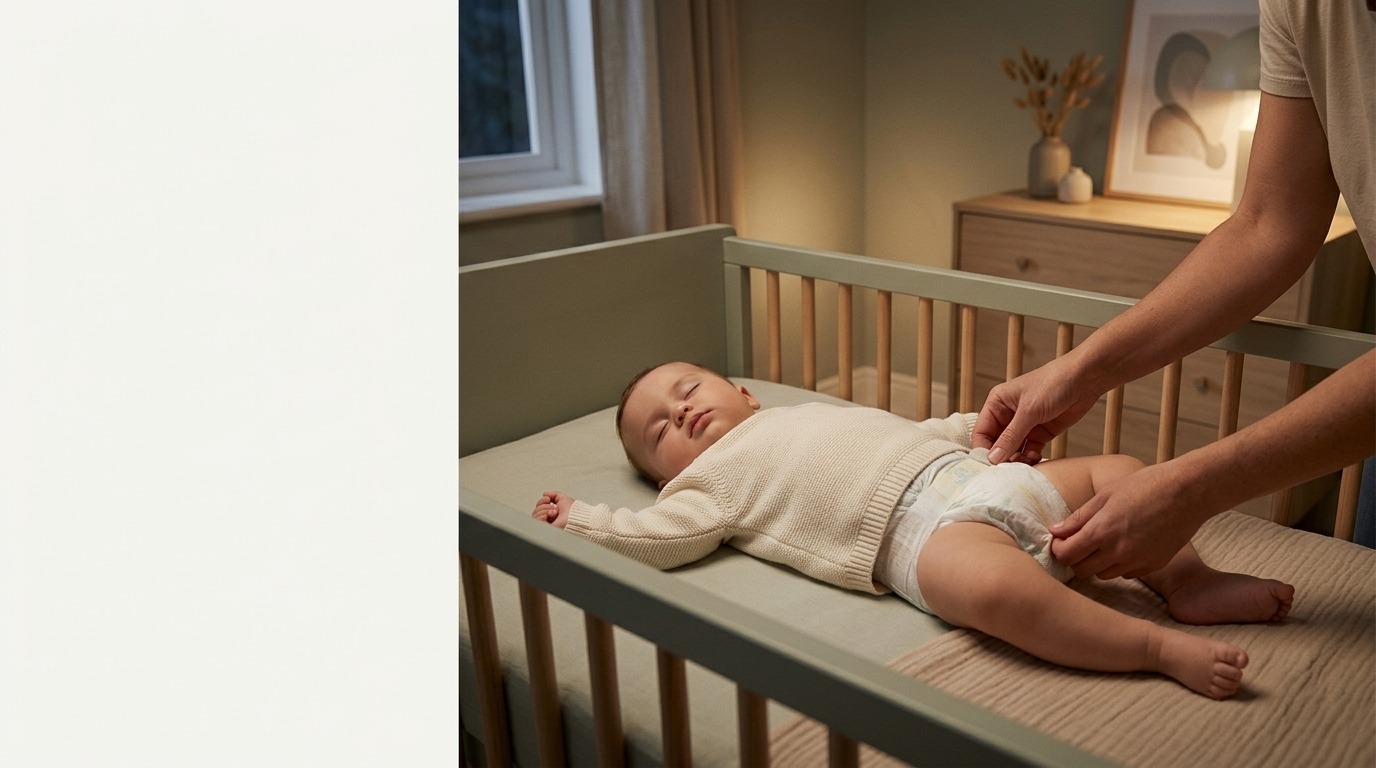
A few small adjustments make overnight changes noticeably easier on everyone:
- Keep supplies within easy reach of wherever you'll be changing your baby at night, so you're not hunting for wipes in the dark
- Use low, dim lighting rather than bright overhead lights, to avoid fully waking your baby (or yourself) more than necessary
- Have a clean nappy ready and unfolded before you start, rather than fumbling with packaging mid-change
- Keep your baby comfortably warm during the change without overdressing them afterwards for sleep — follow current safe sleep guidance on room temperature and bedding, avoiding loose blankets, pillows or soft toys in the cot
- Keep a spare set of clothes nearby in case of a leak or larger mess
Newborn Nappy Essentials for Going Out
A simple, practical nappy bag checklist:
- Nappies (a couple more than you think you'll need)
- Wipes or your usual cleaning supplies
- A portable changing mat
- A spare set of baby clothes
- A muslin cloth
- A bag or pouch for used nappies
- Barrier cream, if you normally use one
How much you pack genuinely depends on how long you'll be out — a quick trip to the shops needs far less than a full day out or overnight travel. There's no need to pack for every conceivable scenario every single time; adjusting the quantity to the actual outing keeps the bag manageable.
Disposable vs Reusable Nappies for Newborns
| Feature | Disposable nappies | Reusable/cloth nappies |
|---|---|---|
| Convenience | Very convenient, no washing required | Requires regular washing and drying |
| Washing required | None | Yes, ongoing |
| Initial setup | Minimal — buy as you go | Higher upfront cost for a starter set |
| Storage | Standard nappy stock, replaced regularly | Requires a larger ongoing storage/rotation system |
| Travel | Simple — dispose and replace | Needs a wet bag and a plan for washing on return |
Neither option is universally better, it depends on your household's practicality, budget, laundry capacity, and personal preference. Plenty of families also mix the two, using reusables at home and disposables for travel or nursery, rather than committing entirely to one system.
How to Organise a Simple Newborn Changing Station
- Choose a safe changing location — stable, comfortable height (or floor-level), away from anything that could fall or be pulled down.
- Keep nappies within easy reach, ideally a couple of sizes' worth if your baby is due a size change soon.
- Keep cleaning supplies nearby — wipes, or cotton wool and a small bowl or bottle of water.
- Have clean clothing available close by, for the inevitable mid-change surprises.
- Keep waste and disposal supplies accessible, whether that's a bin, bags, or both.
- Keep the area uncluttered, so you can reach what you need without letting go of your baby.
The underlying principle throughout: everything you need should be within arm's reach before you start, so you're never tempted to leave your baby unattended to grab something you forgot.
The Simple Checklist
Before baby arrives:
- Newborn nappies
- Changing mat or safe changing surface
- Wipes/cleaning supplies
- Soft cloths/muslins
- Spare baby clothes
- Nappy disposal solution
- Optional barrier cream
- Portable changing mat for outings
You probably don't need:
- Huge newborn nappy stockpile
- Multiple nappy creams
- Talcum powder
- Lots of specialised changing gadgets
- Expensive changing furniture, unless you want it
Conclusion
Getting ready for newborn nappy changes doesn't need to mean working through an endless shopping list. A stock of newborn nappies, a safe place to change your baby, a way to clean them gently, and somewhere sensible to put used nappies covers the genuine essentials, everything else is there to make your life a bit easier, not because your baby needs it.
If you're stocking up ahead of your baby's arrival, Moise's nappies and wipes are worth considering as part of that simple starting setup, check current sizing and ingredient information to see whether they suit what you're looking for.