You've seen the posts. "Out of nappies in a weekend!" A friend swears it worked for her daughter. So you start wondering: could your toddler really learn to use the potty in just three days?
Here's the honest answer. 3-day potty training can give some children a strong, fast start, especially if they're already showing signs of readiness. But it isn't a guarantee. Many toddlers make real progress in three days and then need weeks to become reliable. Some aren't ready at all, and that's fine too.
Think of the three days as a focused beginning rather than a finish line. Accidents and wobbles afterwards are normal. In this guide we'll explain how the method works, what the evidence actually says, how to tell if your toddler is ready, and give you a flexible three-day plan you can adapt to your own child.
What is the 3-day potty training method?
The 3-day potty training method is an intensive, all-in approach. Instead of introducing the potty bit by bit over weeks, you clear your diary and focus on toilet learning for a few days in a row.
Most versions share the same basic ingredients:
- Staying at home with your toddler for around three days, so you can respond quickly
- Keeping the potty close by, in the room where your child is playing
- Offering lots of chances to sit, especially after waking, around meals and before going out
- Watching closely for the signs your child needs a wee or poo, like going quiet, wriggling or holding themselves
- Positive encouragement, praising attempts rather than scolding accidents
- Swapping daytime nappies for pants or training pants, so your child can feel when they're wet
The idea goes back to a 1970s book by two American psychologists, Nathan Azrin and Richard Foxx, called Toilet Training in Less Than a Day. Their original programme was quite strict: frequent pants checks, extra drinks to create more chances to practise, and consequences for accidents.
Most modern "3-day" plans are much gentler and look quite different. There are many versions online and in books, and none of them is a single, medically established programme. So when someone says "3-day potty training", it's worth asking which version they mean.
Does 3-day potty training really work?
For some children, yes, at least as a start. For others, not in three days. The research is thinner than the internet suggests.
In 2006, a US government agency (AHRQ) carried out the first big systematic review of toilet training methods. It found that both the intensive Azrin and Foxx approach and the gentler child-led approach can lead to quick, successful toilet training. But it also found limited information on how well the results last. A later review in American Family Physician rated the evidence for any method as limited and concluded that all methods seem equally able to work in healthy children, so families should pick what suits them.
There's another catch. The studies looked at the original, strict programme. Today's popular three-day plans haven't really been studied. So there's no strong evidence that every child can be fully potty trained in exactly three days.
Why do some toddlers take to it so quickly? Usually because they were nearly there already. They could feel the urge, say "wee" and manage their trousers. The three days simply joined the dots.
Others need longer. They might not yet notice the feeling in time, get absorbed in play, or feel unsure about the potty. That's not failure. It just means their body and brain need more practice.
Two more things to keep in mind:
- Daytime dryness doesn't mean night-time dryness. Staying dry overnight depends on bladder size and a hormone that reduces wee at night. You can't train that in three days.
- Don't judge success by accident-free days alone. If your toddler now sits happily, tells you sometimes and gets a few wees in the potty, that's real progress.
Is your toddler ready for 3-day potty training?
Readiness matters even more with an intensive method. Three days of constant potty focus is a lot for a child who isn't ready yet, and it can end in tears on both sides.
Common potty training readiness signs include:
- Staying dry for an hour or two at a time
- Noticing, or telling you, when their nappy is wet or dirty
- Showing interest in the toilet, the potty or what you do in the bathroom
- Letting you know they need a wee or poo, through words, gestures or a particular look
- Following simple instructions, like "fetch your shoes"
- Sitting comfortably on a potty for a minute or two
- Showing at least some willingness to give it a go
Your child doesn't need to show every sign. But if most are missing, or your toddler is firmly against the idea, a gradual approach is likely to be kinder than a three-day push. The UK continence charity ERIC also suggests preparing children step by step, with plenty of practice sitting on the potty before nappies come off for good.
Want to compare your child against a fuller checklist? Our step-by-step guide to starting potty training goes into more detail.
How to prepare for 3-day potty training
A bit of preparation makes the three days much calmer. Use this checklist:
- Pick a quiet stretch. A long weekend or a few days of leave, with no big plans.
- Avoid big changes. Not the week you move house, start nursery or bring home a new baby.
- Get the kit. A stable potty, a child's toilet seat and a small step for the big toilet.
- Stock up on spares. Several sets of pants, trousers and socks, plus towels, a bucket and cleaning spray.
- Choose easy clothes. Elasticated waists only. Some families let toddlers go bare-bottomed at home for the first day.
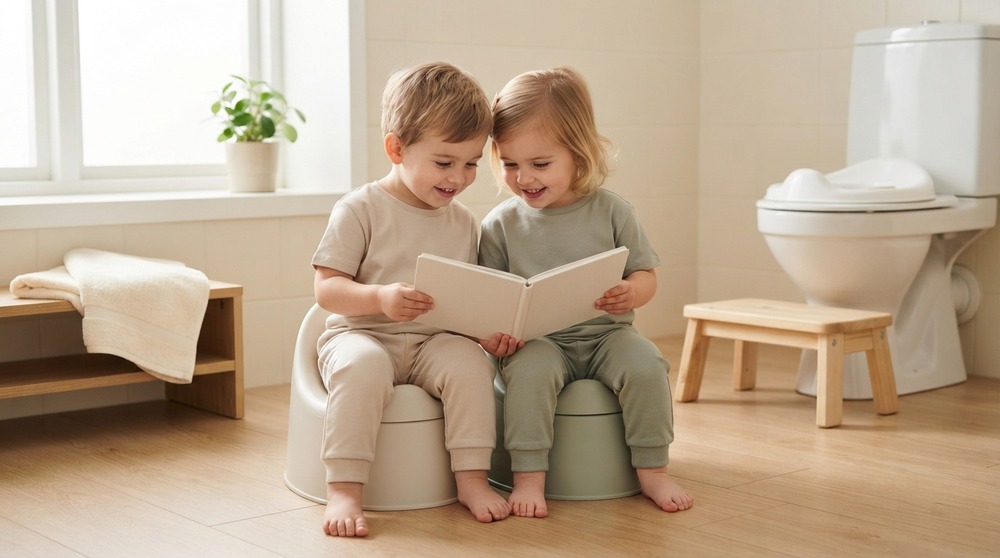
- Talk about it beforehand. Read a potty book together, let a teddy "use" the potty, and explain in simple words what's going to happen.
- Get everyone on the same page. Partners, grandparents and nursery staff should use the same words and the same calm approach.
- Plan your reaction to accidents. Decide now that you'll say "Oops, wee goes in the potty" and move on.
And if staying in for three whole days just isn't practical, that's fine. Short trips to the park or the shops are possible. A calm parent matters more than a perfect plan.
A simple 3-day potty training schedule
This is a flexible example, not a strict timetable. Adjust it to your child's pace and your household.
Day 1: introduce the potty and build awareness
- Start the day by putting pants or training pants on (or going bare-bottomed at home) and showing your child where the potty lives.
- Let them explore it: sit on it, carry it, put a toy on it.
- Offer the potty at natural moments: after waking, before and after meals and drinks, before and after naps, and whenever you see their "I need to go" signs.
- Offer normal drinks through the day. There's no need to push extra fluids, but don't cut back either, as thirsty children get grumpy and restricting drinks doesn't help the bladder learn.
- Watch and learn. Many toddlers have a pattern, such as a wee a little while after a drink.
- Respond calmly to accidents and guide them to the potty to finish if you can.
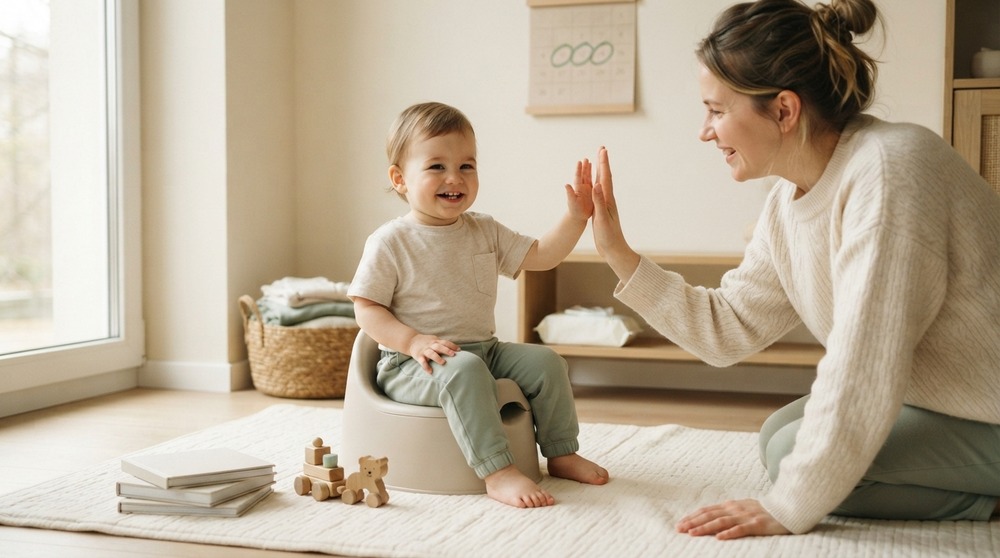
- Celebrate every attempt. A sticker, a high five or a little dance is plenty.
Expect lots of accidents today. That's how children connect the feeling with what happens next.
Day 2: practise and build confidence
- Keep offering the potty at the same natural points.
- Help your child tune into their body: "Your tummy feels full, shall we try?"
- Give a little more independence, like letting them pull their own pants down or walk to the potty themselves.
- Keep the potty near their play area so getting there is quick.
- Try not to ask "Do you need a wee?" every ten minutes. Too many questions can turn into pressure, and many toddlers start answering "no" on autopilot.
Some children click on day 2. Others still have plenty of accidents. Both are normal.
Day 3: encourage consistency
- Carry on with the routine and notice what's going well.
- Encourage your toddler to tell you, or go to the potty, without being prompted.
- Practise stopping play for a potty break and coming back to it.
- If they're doing well and seem keen, try a short outing, like a 20-minute walk. Offer the potty just before you leave and take a travel potty or spare clothes.
- At the end of the day, look at what they've learned rather than whether they're "done".
Remember: three days is a guide, not a deadline. If your toddler becomes upset, frightened or overwhelmed, slow down or pause. You can stretch the plan over a week, or come back to it in a month.
What if your toddler has accidents after three days?
Most will. Potty training accidents are a normal part of learning, not a sign the method failed.
They happen for lots of reasons. Your child might be absorbed in play, tired, unwell, excited, in a new place or simply not yet fast enough at noticing the signal. Poos can take longer to master than wees, too.
When an accident happens:
- Stay calm and keep your voice neutral
- Clean up without blame, involving your child a little if they're happy to help
- Remind them gently: "Wee goes in the potty. Let's try next time."
- Look for patterns, such as after drinks or during a favourite programme, and offer the potty just before
Avoid punishment, shaming or comparing them to a sibling or friend. That tends to make children anxious and more likely to hold on, which creates new problems.
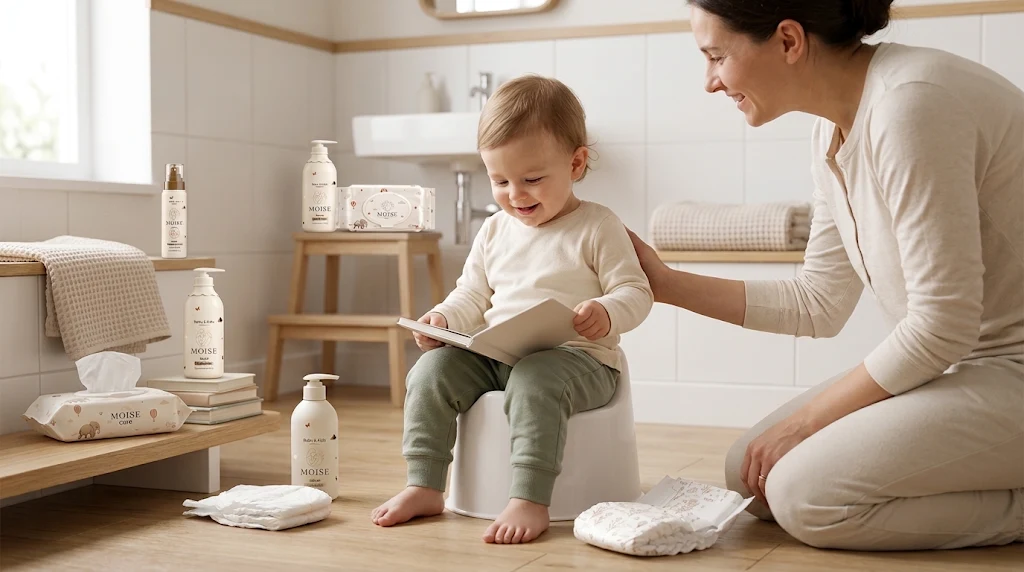
If accidents are still happening most of the time after a couple of weeks, or your toddler seems unhappy, it's fine to take a break of a few weeks and try again. If the skin in the nappy area gets sore from frequent accidents, gentle cleaning with water wipes and letting the skin dry well before putting on fresh pants can help.
Common mistakes to avoid during 3-day potty training
- Starting before your toddler is ready. It usually leads to more accidents and frustration for everyone.
- Expecting instant results. Three days is a start, not a promise.
- Forcing them to sit. Holding a child on the potty can create fear.
- Showing frustration after accidents. Toddlers pick up on it quickly.
- Too many reminders. Constant "Do you need to go?" can feel like nagging.
- Rewards that pile on pressure. Big prizes for dry pants can backfire. Keep rewards small and focus on effort.
- Making them feel embarrassed. Never tease or punish accidents.
- Inconsistency between carers. Different words or rules at home, nursery and grandparents' houses confuse children.
- Assuming they'll be dry at night too. Night-time is a separate milestone.
Should you stop using nappies during the three days?
Approaches vary, so choose what works for your child and your home. Most 3-day plans drop daytime nappies, because a nappy soaks everything up and your child can't feel the connection between "I'm weeing" and "I'm wet". But that doesn't mean nappies have to disappear completely.
- Daytime pants or training pants. Ordinary cotton pants let your child feel wetness straight away, which helps learning. Thicker training pants catch a bit more and save your sofa, but some children can't tell as easily when they've had an accident.
- Naps and night-time. Keeping a nappy or nappy pants for sleep is completely normal. Night-time dryness usually comes later and is down to your child's body, not effort.
- Longer journeys and outings. Early on, some parents use pull-ups for car journeys. That's a practical choice, not a step backwards. Just explain it calmly and go back to pants afterwards.
- No shame about nappies. Avoid calling nappies "for babies" or making your child feel bad about needing one. A relaxed attitude keeps the potty positive.
If a nappy at night or on a long trip makes life easier, use one.
When should you pause or try a different approach?
An intensive method isn't right for every child or every moment. Consider stopping and going back to a slower, gentler approach if you notice:
- Ongoing distress, crying or strong resistance
- Real fear of sitting on the potty or toilet
- Your child holding in wees or poos
- Big changes in behaviour, sleep or mood
- A stressful time at home, like illness, a new sibling or a house move
- Repeated unsuccessful attempts that seem to be knocking their confidence
Pausing isn't giving up. Put the potty away for a few weeks, go back to nappies without fuss, and reassure your child that they're doing well. When you try again, you might prefer a gradual approach: sitting on the potty at set times each day, without any pressure, until they're more confident.
Some things need a professional's view rather than a break. Speak to your health visitor or GP if your child has:
- Pain or stinging when weeing
- Hard, painful or infrequent poos
- Ongoing constipation
- Blood in their poo or wee
- Significant withholding of wee or poo
Constipation in particular is common during potty training and can make children afraid of the potty. ERIC notes that it doesn't usually get better on its own, so it's worth getting checked.
Conclusion: a good start, not a magic solution
3-day potty training can be a really helpful kick-start for some families. Three focused days give your toddler lots of practice, help you learn their signals and can make the whole thing click faster.
But it isn't magic, and the research doesn't promise a fully trained child in 72 hours. Your toddler's readiness, confidence and comfort matter much more than finishing by a deadline.
So celebrate the small wins: the first wee in the potty, the first time they tell you, the first dry trip to the park. Stay patient through the accidents. And if the intensive approach doesn't suit your child right now, a slower, gentler route is just as valid. They'll get there in their own time.
Frequently asked questions
Some toddlers make huge progress in three days, especially if they were already nearly ready. But complete, reliable potty training in three days isn't guaranteed, and many children need weeks to get confident.
Readiness matters more than age. Many children start somewhere between 18 months and 3 years, but there's no single right age. Look for readiness signs and pick a calm time.
Most plans swap daytime nappies for pants. It's completely fine to keep using nappies or nappy pants for naps, night-time and long journeys.
Offer it at natural moments, such as after waking, around meals, before going out and when you spot signs they need to go. A strict timer and constant reminders can turn into pressure.
Stay calm and don't force it. Try again later in the day, make it playful, or take a break of a few weeks if refusal continues.
Yes, the approach is the same. Boys can start by sitting down to wee. Readiness, comfort and personality matter far more than gender. Read more in our guide to potty training boys vs girls.
Keep early outings short. Pack spare pants, trousers and socks, a bag for wet clothes, travel-size wipes and a travel potty if it helps. Offer the potty just before you leave.
It varies a lot. Three days might get you started, but building reliable daytime habits often takes weeks or a few months, with occasional accidents for a while after.
No. Night-time dryness develops separately and often much later. It depends on your child's body, so it shouldn't be forced. Keep using a nappy at night until you see regular dry mornings.