Before you had a baby, packing for a holiday probably took half an hour.
Now there's a small person who needs nappies, wipes, milk, a safe place to sleep and at least three changes of clothes a day. No wonder the suitcase feels like it's multiplying.
The good news is that a baby doesn't need everything from home. They need their basics, a few familiar things and a plan for the journey. Get those right and the rest is mostly nice to have.
How much you bring depends on your baby's age, how long you're away, where you're going, the weather and what's available when you arrive. A long weekend in Cornwall with a washing machine is very different from two weeks in Spain in August.
This baby holiday packing list walks you through each category, from nappies and skincare to feeding and sleep. Further down you'll find a full checklist and a quantity guide for weekend, one-week and two-week trips.
Baby holiday packing list: what do you really need?
For a holiday with a baby you really need seven groups of things: nappy-changing kit, a few gentle toiletries, clothes, feeding supplies, a safe place to sleep, travel equipment like a car seat or pushchair, and documents plus a small first-aid kit.
When you're deciding what makes the cut, three questions help:
- Do we use it every day at home? If yes, it probably comes.
- Does it keep our routine familiar? The same nappies, wipes and sleeping bag make a new place feel less new.
- Could we buy it there if we ran out? If so, pack enough for the first couple of days and top up locally.
Anything that fails all three can usually stay at home.
Nappy changing essentials for your baby
Nappy changes don't stop for a holiday, and they rarely happen at a convenient moment. Pack a changing kit that works anywhere: a motorway services, an aeroplane toilet or a hotel bed.
What to bring:
- Nappies. Disposable or reusable cloth nappies, in the size your baby wears now. If they're close to the top of the weight range, pack a few of the next size up too.
- Fragrance-free baby wipes, plus a travel-size pack for the changing bag.
- Nappy rash or barrier cream your baby already uses.
- A portable changing mat. Baby-change facilities aren't always clean, or there at all.
- Nappy bags for dirty nappies when there's no bin nearby.
- Hand sanitiser for you, for when there's no sink.
- A spare outfit for your baby (and a clean top for you is not a bad idea).
- Two or three muslin cloths.
How many nappies for the journey?
Count the hours from leaving home to arriving, think about how often your baby usually needs changing, and then add a generous buffer. Delays happen, and a two-hour drive can turn into five. As a rule of thumb, carry enough nappies for the journey plus at least half a day extra.
Bring the whole supply or buy there?
Nappies take up a lot of space. For trips in the UK and to most of Europe, many parents pack enough for the first two or three days and buy the rest at a local supermarket or pharmacy. If your baby has sensitive skin or reacts to certain brands, or you're going somewhere remote, bringing your usual nappies for the whole trip may be worth the space. You can work out your baby's daily usage with our guide How Many Nappies Will Your Baby Use in the First Year?
Keep it within reach
Everything for a nappy change should travel in your changing bag or hand luggage, never only in the boot or the hold. A small zip pouch with two nappies, wipes, cream and a nappy bag is handy for quick changes without unpacking the whole bag.
Baby skincare and toiletries: what should you pack?
Pack the same few products your baby already uses at home, in small sizes. A holiday already brings new water, new weather and new bedding. It's not the moment to see how your baby's skin reacts to a lotion they've never had.
Baby wipes
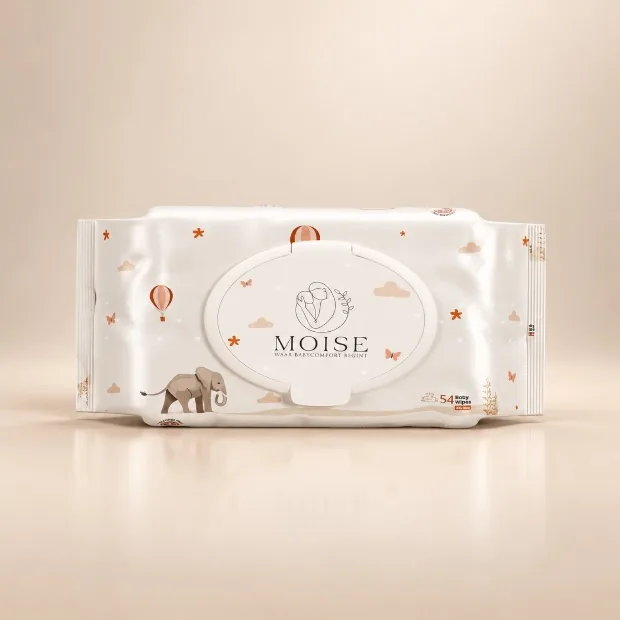
Wipes are the multitool of baby travel: nappy changes, sticky hands, a spill on the car seat, a quick wipe of the high chair. Choose fragrance-free wipes, especially if your baby has sensitive skin. Moise has XL baby wipes and water wipes if you'd like to keep things simple.
Wipes aren't your only option, though. Where you have a sink, cooled boiled or tap water with soft cotton wool or a cloth works perfectly well, particularly for very young babies.
Baby moisturiser and skincare products
Most babies don't need a moisturiser every day. If your baby has dry patches, or your destination is hot, windy or air-conditioned, a gentle, unperfumed moisturiser you already use can help. Bring that one, not a new one. Not sure what to look for on a label? Our guide How to Read a Baby Skincare Ingredients List explains it.
Nappy rash cream
Travel can upset the usual rhythm: longer stretches in a car seat, heat, a slightly different diet once solids have started. A barrier cream helps protect skin that's starting to look red. Just as important is changing nappies promptly and letting the skin dry before putting on a fresh one. If a rash spreads, blisters or doesn't settle after a few days, ask a pharmacist or GP, or a local doctor if you're abroad.
Baby wash and shampoo
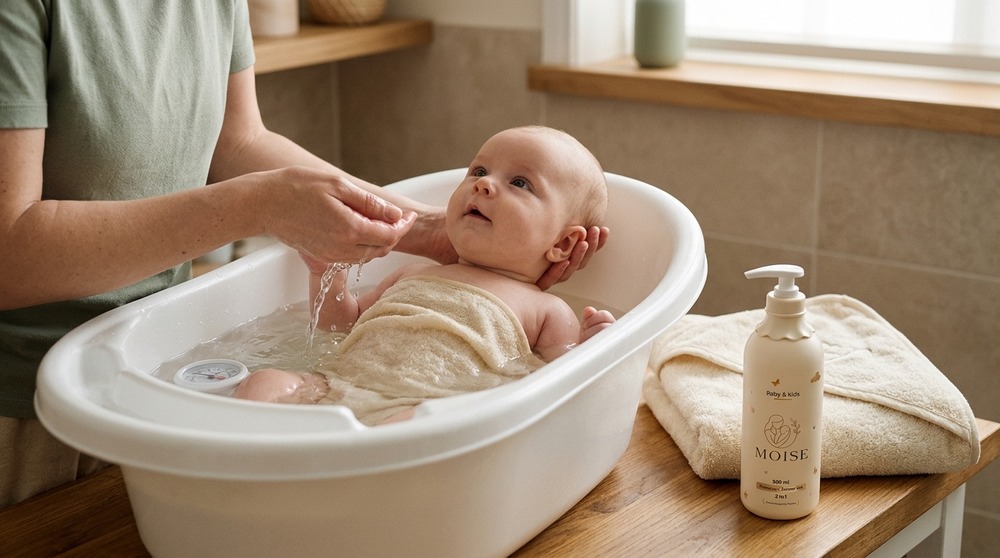
Newborns generally need nothing more than plain water in the bath. Older babies may need a mild baby wash now and then. Either way, one gentle product is plenty. A 2-in-1 wash and shampoo (like our 2-in-1 Shampoo & Body Wash) saves space. Decant it into a small travel bottle if your full-size bottle is bulky.
Sun protection
The NHS advises that babies under six months should be kept out of direct strong sunlight. For them, shade and clothing do the work: a clip-on pram parasol, loose long-sleeved clothing and a hat. Never cover the pram with a blanket or muslin, as air can't circulate and it can get dangerously hot underneath.
For older babies and children, NHS advice is to use sunscreen of at least SPF30 with at least 4-star UVA protection on uncovered skin, to cover up with suitable clothing, and to stay in the shade, particularly from 11am to 3pm. A wide-brimmed hat that shades the face, neck and ears helps too. Sunscreen is an extra layer, not a reason to spend longer in the sun.
Other baby toiletries
- Soft cotton pads or cotton wool for eyes, face and creases.
- Baby nail clippers or a nail file. Nails grow fast, even on holiday.
- A soft baby hairbrush, if your baby has enough hair for it.
- A small towel and a couple of washcloths. Hotel towels are often large and rough.
- Muslin squares, which double as a burp cloth, a changing-mat cover and a quick face wipe.
Baby clothing and accessories for a holiday
Pack clothes in thin layers you can add or take off, rather than a few thick outfits. Babies can't tell you they're too hot or too cold, and layers make it easy to adjust in a warm car, a chilly plane or an air-conditioned hotel room.
What to pack:
- Bodysuits and vests, the base layer for almost every outfit.
- Sleepsuits or pyjamas.
- Everyday outfits: soft trousers, leggings, tops or rompers.
- Socks and a hat (a warm one for cooler trips, a sun hat for sunny ones).
- A lightweight cardigan or jumper, even for summer evenings.
- Outerwear for the weather: a pramsuit or coat for winter, a light waterproof for a British summer.
- Swimwear and a sun hat, if there's a pool or beach. Older babies may also need swim nappies.
- Extra clothes for leaks and spills.
A simple rule for how much to pack: count the days, plan one to two outfits per day depending on your baby's age, then add two or three spare sets. Newborns and babies with reflux go through clothes fastest. If you'll have a washing machine, pack for three or four days and do a wash halfway through.
Feeding essentials for travelling with a baby
What you need depends on how your baby feeds. Whichever way, keep the next feed or two in your hand luggage or changing bag, not in the suitcase.
For breastfeeding parents
- A nursing cover, if you like using one
- Breast pads
- Muslin cloths
- A breast pump, if you express
- Breast milk storage bags, if needed
For formula-fed babies
- Formula milk (enough for the trip, plus a little extra)
- Sterilised bottles
- Teats and bottle accessories
- A bottle-cleaning brush
- Sterilising equipment that suits your accommodation, such as cold-water sterilising tablets or a microwave steriliser bag
- Pre-measured formula in a clean, dry dispenser
Preparing feeds safely is the part that's easiest to get wrong when you're away. The NHS advises making up feeds one at a time with water that has been boiled and left to cool for no more than 30 minutes, so it's still at least 70°C. That heat kills bacteria in the powder. Away from home, the NHS suggests two options: a clean vacuum flask of freshly boiled water, used only for your baby, or cartons of ready-to-feed liquid formula if you can't make up a feed safely.
If you do carry a made-up feed for a one-off trip, the NHS says to cool it quickly, keep it in the fridge until you leave, and carry it in a cool bag with an ice pack. Use it within 4 hours, or within 2 hours without an ice pack.
For babies starting solids
- Baby food pouches or familiar foods
- Baby bowls and spoons
- Bibs (wipe-clean ones dry quickly)
- A sippy cup or open cup
- Snacks suitable for your baby's age
For food hygiene, wash hands before preparing food, keep opened pouches or jars cool and throw away anything your baby has eaten from directly once the meal is over. In hot countries, take extra care with tap water and ice; check the government's travel advice for your destination.
Sleeping essentials for your baby
Safe sleep rules don't take a holiday. The Lullaby Trust advises following safer sleep guidance for every sleep, day or night, just as you would at home: baby on their back, in a clear, flat, firm sleep space, in the same room as you.
What to bring or arrange:
- A travel cot or other suitable sleep space. If the accommodation provides one, check it's clean, complete and has a firm, flat, waterproof mattress.
- Fitted cot sheets that fit the travel cot mattress snugly.
- A baby sleeping bag with a tog suitable for the room temperature.
- A familiar item, such as the sleeping bag your baby uses at home, so bedtime smells and feels the same. Keep soft toys out of the cot for babies.
- A baby monitor, if the layout means you'll be in another room in the evening.
- A portable blackout blind, useful for long summer evenings and early sunrises.
- A room thermometer. The Lullaby Trust recommends a room temperature of 16–20°C for sleeping babies.
Travel cot mattresses are often thinner and firmer than a normal cot mattress. That's fine. Don't add folded blankets, a duvet or pillows underneath to make it softer, and only use an extra mattress if it's made for that specific travel cot.
Babies often fall asleep in the car seat on a journey. That's expected, but the Lullaby Trust advises taking them out once you arrive and placing them on a firm, flat surface to sleep. More on the basics in Safe Sleep for Babies: The Basics Every Parent Should Know.
Travel essentials for the journey
The journey is usually harder than the holiday itself. Plan it as its own little trip, with everything you need for the hours between leaving home and unpacking.
- A correctly fitted car seat, if you're driving or using taxis or hire cars at the other end
- A lightweight pram or travel pushchair
- A baby carrier or sling, handy in airports and stations
- Your changing bag, packed with the nappy kit above
- Muslin cloths
- Spare nappies and clothes
- Feeding supplies for the journey plus a delay
- A baby blanket for use while awake or tucked in safely, never over the pram
- A few small toys and something new to look at
- Travel documents: passports (babies need their own for trips abroad), booking confirmations and travel insurance details
Travelling by plane
Under UK rules, you can take baby food, baby milk and sterilised water in your hand luggage when you're travelling with your baby, in quantities enough for the journey. GOV.UK says there's no legal limit on the amount but advises checking with your airport before you travel, and notes that liquid rules have changed at some UK airports. Breast milk is allowed in hand luggage too.
Baggage allowances for babies, pushchairs and car seats vary between airlines, and so do the rules for where a pushchair is handed over. Check your airline's current infant policy before you go. Feeding during take-off and landing can help some babies cope with the pressure change in their ears.
Travelling by car
Plan breaks every couple of hours. Safer sleep guidance advises against leaving babies in a car seat for long stretches, and regular stops give your baby time to stretch out flat. If you can, have an adult sit in the back with a young baby. A window sunshade helps on bright days.
Travelling by train
Trains are often easier with a baby, because you can walk around and change nappies on board. Not every train has a baby-changing table, though, so a portable mat is useful. Book seats near the luggage area or a space for your pram, and travel outside rush hour if you can.
Baby holiday packing checklist: everything in one place
Print this baby holiday checklist or save it to your phone and tick things off as they go in the bag. Quantities are for a one-week trip; see the next section for other lengths.
| Category | Essential items | Recommended quantity | Packed? |
|---|---|---|---|
| Nappy changing | Nappies | Daily usage × days, or 2–3 days' worth and buy there | ☐ |
| Nappy changing | Fragrance-free baby wipes | 2–3 packs + 1 travel pack | ☐ |
| Nappy changing | Barrier / nappy rash cream | 1 tube | ☐ |
| Nappy changing | Portable changing mat | 1 | ☐ |
| Nappy changing | Nappy bags | 1 roll | ☐ |
| Nappy changing | Hand sanitiser | 1 small bottle | ☐ |
| Skincare and toiletries | Usual moisturiser (if used) | 1 small size | ☐ |
| Skincare and toiletries | Mild baby wash / shampoo | 1 travel bottle | ☐ |
| Skincare and toiletries | Cotton wool or pads | 1 small bag | ☐ |
| Skincare and toiletries | Nail clippers or file | 1 | ☐ |
| Skincare and toiletries | Soft hairbrush | 1 | ☐ |
| Skincare and toiletries | Small towel and washcloths | 1 + 2–3 | ☐ |
| Skincare and toiletries | Sunscreen SPF30+ (babies over 6 months) | 1 | ☐ |
| Clothing | Bodysuits / vests | 8–10 | ☐ |
| Clothing | Sleepsuits / pyjamas | 5–7 | ☐ |
| Clothing | Everyday outfits | 7–8 | ☐ |
| Clothing | Socks | 4–5 pairs | ☐ |
| Clothing | Hats (sun hat and/or warm hat) | 1–2 | ☐ |
| Clothing | Cardigan or jumper | 1–2 | ☐ |
| Clothing | Weather-appropriate outerwear | 1 | ☐ |
| Clothing | Swimwear and swim nappies | 1–2 + pack of swim nappies | ☐ |
| Feeding | Muslin cloths | 6–8 | ☐ |
| Feeding | Formula, bottles, teats, brush, steriliser | As needed for the trip + extra | ☐ |
| Feeding | Vacuum flask (formula feeds) | 1 | ☐ |
| Feeding | Breast pads / pump / storage bags | As needed | ☐ |
| Feeding | Bowls, spoons, bibs, cup (solids) | 2 of each, 3–4 bibs | ☐ |
| Feeding | Familiar snacks or pouches | 2–3 days' worth | ☐ |
| Sleeping | Travel cot (or confirm one is provided) | 1 | ☐ |
| Sleeping | Fitted cot sheets | 2 | ☐ |
| Sleeping | Baby sleeping bag, right tog | 1–2 | ☐ |
| Sleeping | Room thermometer | 1 | ☐ |
| Sleeping | Portable blackout blind | 1 | ☐ |
| Sleeping | Baby monitor | 1 | ☐ |
| Travel equipment | Car seat | 1 | ☐ |
| Travel equipment | Travel pushchair or pram | 1 | ☐ |
| Travel equipment | Clip-on pram parasol | 1 | ☐ |
| Travel equipment | Baby carrier or sling | 1 | ☐ |
| Travel equipment | Changing bag | 1 | ☐ |
| Health and first aid | Baby thermometer | 1 | ☐ |
| Health and first aid | Infant paracetamol or ibuprofen suitable for your baby's age | 1 | ☐ |
| Health and first aid | Any prescribed medicines | As prescribed | ☐ |
| Health and first aid | Plasters and saline drops | 1 small pack | ☐ |
| Documents and misc. | Passports, booking details, travel insurance | 1 set | ☐ |
| Documents and misc. | Red book (personal child health record) or a photo of key pages | 1 | ☐ |
| Documents and misc. | A few small toys and books | 3–4 | ☐ |
| Documents and misc. | Plastic bags for wet or dirty clothes | 3–4 | ☐ |
Always read the label on any medicine and check that it's suitable for your baby's age and weight. If in doubt, ask a pharmacist before you go.
How many nappies, wipes and clothes should you pack?
The easiest way to work out quantities is to start from your baby's normal day. Count how many nappies, outfits and muslins you get through at home over a couple of days, then multiply by the length of your trip and add a buffer for the journey.
The table below is a starting point for a baby who uses around 8 nappies a day, with no washing machine on a weekend trip and one available on longer holidays.
| Item | Weekend (2–3 days) | One week | Two weeks |
|---|---|---|---|
| Nappies | 25–30 | 60–65, or 25–30 and buy the rest there | 25–30 and buy the rest there |
| Baby wipes | 1 pack + 1 travel pack | 2–3 packs + 1 travel pack | 2–3 packs, top up there |
| Bodysuits | 6–8 | 8–10 | 8–10 (with washing) |
| Sleepsuits | 4–5 | 5–7 | 5–7 (with washing) |
| Muslin cloths | 4–5 | 6–8 | 8–10 |
| Everyday outfits | 3–4 | 7–8 | 7–8 (with washing) |
Adjust for your baby:
- Newborns often need 10 to 12 nappies a day and more changes of clothes, so add to every row.
- Older babies usually need fewer nappies but get messier at mealtimes, so pack extra bibs and outfits.
- No laundry? Pack for the full trip, plus two or three spare sets of clothes.
- Remote destination or sensitive skin? Take the full supply of the nappies and wipes your baby is used to.
Tips for packing light when travelling with a baby
- Write the list first. Packing from a list stops the "just in case" items creeping in.
- Go travel-sized. Decant wash and moisturiser into small bottles, and use travel packs of wipes for the changing bag.
- Choose items that do several jobs. A muslin is a burp cloth, a changing-mat cover, a face wipe and a nursing cover.
- Bring only the skincare you already use. One wash, one cream, one barrier cream is usually enough.
- Ask the accommodation whether they provide a cot, high chair or baby bath, and what condition they're in.
- Check what's sold locally. Supermarkets and pharmacies across the UK and Europe stock nappies, wipes and formula, though brands and sizes may differ.
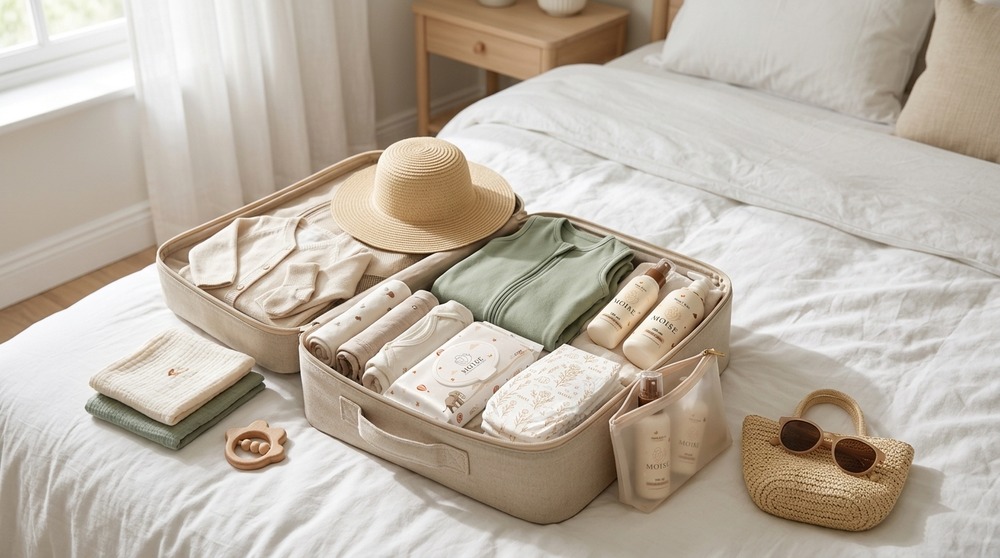
- Use packing cubes or bags for each category, so you can find a sleepsuit at 2am without emptying the suitcase.
- Keep the journey kit separate: nappies, wipes, a spare outfit and feeds within reach.
- Pack a small emergency kit in hand luggage, with enough for 24 hours in case a suitcase goes missing.
- Don't buy new gadgets just for the trip. Most of what you need is already in your home.
Common mistakes parents make when packing for a baby holiday
Most packing mistakes come from either bringing too much or leaving the important things in the wrong bag. These are the ones parents mention most:
- Too many skincare products. Half of them come home unopened.
- No spare clothes in the changing bag. A leaky nappy on the plane is when you'll miss them most.
- Not enough nappies for the journey. Delays turn a three-nappy trip into a six-nappy one.
- Trying new skincare on holiday. If your baby's skin reacts, you won't know whether it's the new lotion, the heat or the water.
- Forgetting sun protection. A pram parasol, hats and long sleeves matter more than sunscreen for young babies.
- Not checking airline rules. Pushchair, car seat and liquid rules differ between airlines and airports.
- Overlooking safe sleep. A sofa, an adult bed with pillows or a cot with extra padding isn't a safe substitute for a proper sleep space.
- Putting every baby essential in checked luggage. If the bag is delayed, so are the nappies and milk.
- Ignoring the forecast. "Summer" in the Lake District and in southern Spain need different suitcases.
Final thoughts: enjoy your holiday with the right baby essentials
A good baby holiday packing list comes down to a handful of things: enough nappies and wipes for the journey and the first few days, the skincare your baby already uses, clothes in layers, a reliable way to feed, and a safe place to sleep. Keep the journey kit in your hand luggage and the rest can follow in the suitcase.
You don't need to pack for every possible scenario. Most places have shops, and most problems can be solved with a muslin, a spare bodysuit and a bit of patience.
Every baby is different, so adjust the list to yours. If something about your baby's skin, feeding or health worries you before or during the trip, speak to your health visitor, pharmacist or GP, or a local doctor when you're abroad.
Then close the suitcase and enjoy it. The first holiday with a baby is rarely relaxing in the old sense, but it's full of firsts: first time on a beach, first plane, first bath in a hotel sink. Those are the bits you'll remember.
If leaks on the road are a worry, have a look at Nappy Leaking at the Legs or Back: Causes and Fixes before you go.
Frequently asked questions
The essentials are nappies and wipes, a changing mat, barrier cream, a gentle wash, clothes in layers, feeding supplies, a safe sleep space such as a travel cot, a car seat or pushchair, sun protection suited to your baby's age, a small first-aid kit and travel documents.
Work out your baby's daily usage and multiply by the number of days, then add a buffer for the journey. Many parents pack two or three days' worth and buy the rest at their destination. A baby using 8 nappies a day needs roughly 60–65 for a week.
In most of the UK and Europe, yes: supermarkets and pharmacies stock them. Brands and sizing may differ, so bring enough of your usual ones to cover the first few days.
Only what you use at home: fragrance-free wipes, a barrier cream, a mild wash, and a moisturiser if your baby needs one. Add sunscreen for babies over six months. Travel sizes save space.
Wipes are usually fine. Creams generally count as liquids at security, so containers need to meet the liquid rules at your departure airport. These have changed at some UK airports, so check with your airport and airline before you fly.
Nappies for the flight plus extras for delays, wipes, a changing mat, nappy bags, barrier cream, two spare outfits, muslins, feeds for the journey, a small toy and a top for you.
Around one to two outfits per day plus two or three spares: roughly 8–10 bodysuits, 5–7 sleepsuits and 7–8 everyday outfits. With a washing machine you can pack less.
The NHS advises keeping babies under six months out of direct strong sunlight. Use shade, a clip-on parasol, a hat and loose clothing that covers the arms and legs. For older babies, add sunscreen of at least SPF30 with 4-star UVA protection and stay in the shade between 11am and 3pm.
A travel cot or other firm, flat, waterproof sleep surface, fitted sheets, a sleeping bag with the right tog, and ideally a room thermometer. Keep the cot clear of pillows, extra padding and soft toys.
Yes, and it's the best choice. Familiar products mean one less change for your baby's skin. Decant them into small bottles if the originals are too big.