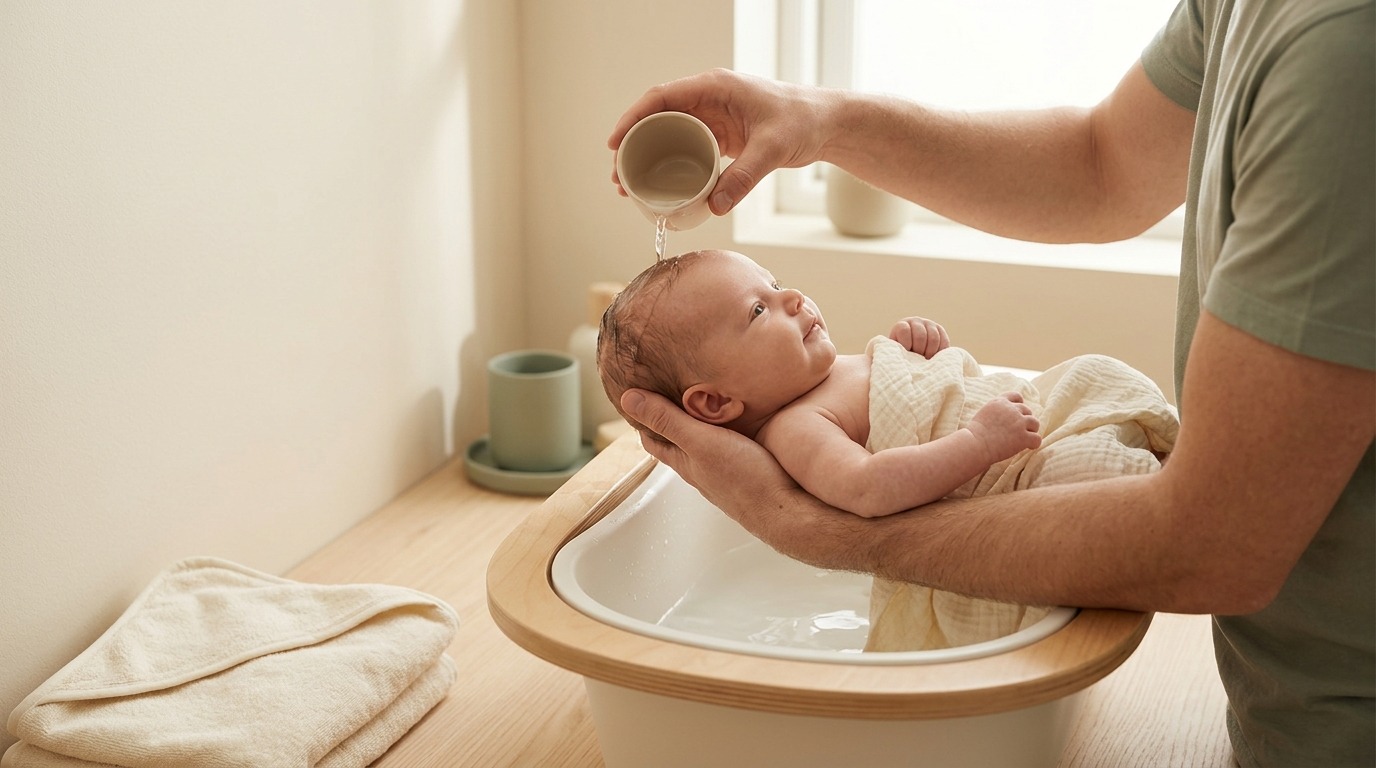
When you're caring for a new baby, even something as simple as washing their hair can raise questions.
Are you doing it too often? Not often enough? Is that flaky patch a sign you've missed something?
Here's the short answer: babies generally don't need their hair washed with shampoo every day. For many babies, shampooing around once or twice a week is plenty, with a gentle rinse of plain water in between if the hair or scalp needs freshening up. Paediatric care guidance commonly suggests washing a baby's hair one or two times a week, and shampooing only as needed.
Think of this as a starting point, not a rule. Some babies need a little more cleansing, others need less. Rinsing the scalp with water during bath time is also quite different from lathering up with shampoo, and your routine can change as your baby grows.
The right rhythm for your baby usually depends on:
- Age – a newborn's scalp needs different care from that of an active 10-month-old.
- Scalp condition – dryness, flaking or cradle cap all affect how you wash.
- Hair type and thickness – fine, thick, curly or coily hair behaves differently.
- Sweating and activity – warm weather, a hat or a busy day can make a difference.
- Visible dirt or residue – milk, food or product build-up may need washing out.
- Skin sensitivity – some babies react to frequent washing or to certain products.
This guide walks you through each of these, so you can build a simple routine that suits your baby.
How Often Should You Wash Baby Hair by Age?
Your baby's hair-care needs shift gradually over the first year. The table below offers a general guide, not a medical schedule. Let your baby's scalp, rather than the calendar, have the final say.
| Baby's age | General guidance | What to consider |
|---|---|---|
| Newborn to 4 weeks | Keep washing gentle and limited to when needed; plain water is often enough | Delicate skin, any remaining vernix and the healing umbilical area |
| 1–3 months | Shampoo occasionally, when needed | Scalp condition, milk residue, sweat and dryness |
| 3–6 months | Adjust the routine to your baby's needs | Hair growth, activity and scalp condition |
| 6–12 months | Continue a gentle routine and wash when needed | More movement, food residue, sweating and individual hair type |
How Often Should You Wash a Newborn's Hair?
A newborn's hair and scalp need gentle care rather than frequent shampooing. In the early weeks, many parents simply wet a soft cloth with lukewarm water and wipe the scalp, or rinse the hair gently while supporting their baby over a baby bath or bowl. The NHS suggests washing your baby's hair with plain water as part of bath time, supporting them over the bowl.
A mild baby shampoo can be useful if there's milk, sick or greasy build-up that water alone doesn't shift. A tiny amount is usually enough.
A few points to keep in mind:
- Be gentle. Use soft, slow movements rather than vigorous rubbing.
- The soft spot is fine to wash. The fontanelle (the soft area on top of your baby's head) is protected by a tough membrane. You don't need to avoid it; just touch it lightly, as you would the rest of the scalp.
- Mind the cord. Until the umbilical stump has dropped off and healed, follow your midwife's or health visitor's advice on bathing. Many parents top and tail during this time, washing the hair separately without submerging the baby.
Never put off necessary cleaning because the fontanelle feels delicate. Gentle washing is part of normal newborn care.
How Often Should You Wash a Baby's Hair at 3–6 Months?
Around this age, some babies grow noticeably thicker hair, sweat more on the back of the head or spend longer lying on a playmat. You might find the hair needs a little more attention than it did in the newborn weeks.
Even so, getting older isn't a reason on its own to shampoo more often. If once or twice a week keeps the scalp clean and comfortable, there's no need to change. If the hair looks greasy, smells sweaty or has milk residue, add an extra wash or a plain-water rinse. If the scalp starts to look dry, ease back.
How Often Should You Wash a Baby's Hair at 6–12 Months?
The second half of the first year brings rolling, crawling, sitting up and, very often, food in the hair. Purée and yoghurt have a way of ending up everywhere.
You may find you need to rinse or wash your baby's hair more often during this stage, particularly after messy mealtimes, hot days or time outdoors. Many messes can be dealt with using water and a soft cloth. Save shampoo for when the hair genuinely needs it.
At this stage, let your baby's scalp guide you, rather than their age alone. A clean, comfortable scalp with no dryness or irritation suggests your routine is working well.
Is It Okay to Wash a Baby's Hair Every Day?
Rinsing your baby's hair with plain water every day is usually fine if it's needed, for example after a hot day or a messy meal. Daily shampooing, on the other hand, is generally unnecessary for most babies.
Why hold back on shampoo? Frequent washing can strip away some of the natural oils that help protect the skin. Paediatric advice notes that lots of bathing can leave skin dry and irritated in some children. Not every baby reacts this way, but if your baby has a dry or sensitive scalp, fewer shampoos may help.
That said, there's no need to stick rigidly to a schedule. If your baby has sweated heavily, had food smeared through their hair or got sick in it, it makes sense to wash it out. Leaving visible dirt or irritating residue on the scalp just to keep to a twice-weekly plan wouldn't be helpful either.
How you wash matters just as much as how often. A small amount of mild shampoo, lukewarm water, gentle fingertips and a thorough rinse will be kinder to the scalp than an occasional but heavy-handed wash.
How to Wash a Baby's Hair Safely: Step-by-Step Guide
Washing your baby's hair gets easier with practice. This simple routine works for most babies, whether you wash their hair during a bath or on its own.
1. Prepare Everything Before You Begin
Have a soft towel, a washcloth, a mild baby shampoo (if you're using one), a clean nappy and fresh clothes within reach before you start. Make sure the room is warm. Pick a time when your baby is awake and content, rather than straight after a feed or when they're hungry or tired.
Never leave your baby alone in water or on a raised surface, even for a second. If you need to step away, wrap your baby in a towel and take them with you.
2. Use Lukewarm Water
The water should feel comfortably warm, not hot. The NHS recommends running the cold water first, then adding hot, and checking the temperature with your wrist or elbow. Mix it well so there are no hot patches. Keep the water temperature steady so your baby isn't startled by sudden changes.
3. Wet the Hair Gently
Cradle your baby with one forearm under their back and your hand supporting their head and neck. Tilt the head slightly backwards over the bath or bowl. Using your free hand, a soft cloth or a small cup, wet the hair from the forehead backwards so the water runs away from the eyes and face.
4. Use a Small Amount of Baby Shampoo When Needed
If the hair needs more than a rinse, use a small amount of mild shampoo made for babies, roughly a pea-sized drop for most little heads. If your baby has sensitive skin, a fragrance-free option is a sensible choice. Avoid adult shampoos and strongly scented products, which aren't designed for a baby's delicate skin.
5. Massage the Scalp Gently
Use the pads of your fingertips, not your nails, to massage the shampoo over the scalp in slow, circular movements. Include the soft spot, touching it lightly. Don't scratch, scrub or try to pull off any flakes or scales.
6. Rinse Thoroughly
Rinse the hair well, again pouring water from front to back while keeping your baby's head supported. Leftover shampoo can leave the hair looking greasy and may irritate the scalp, so take your time. A damp washcloth can help clear the hairline and behind the ears.
7. Dry the Hair and Scalp Gently
Pat your baby's hair and scalp dry with a soft towel rather than rubbing. Pay attention to the creases behind the ears and at the back of the neck. Keep your baby comfortably warm, without overheating, until they're dressed.
Avoid using a hairdryer. The hot air and noise aren't suitable for a baby, and a towel is all a baby's hair needs.
Do You Need Shampoo for a Newborn?
Not always. For routine cleaning in the early weeks, plain water is often enough. The NHS notes you can bathe a baby with just water, or add a liquid cleanser that's suitable for babies. A mild baby shampoo becomes useful when the hair or scalp needs more than a rinse, for example if there's greasy build-up, dried milk or sick.
If you do use shampoo:
- Choose a product formulated for babies. Adult shampoos are designed for adult hair and skin.
- Avoid harsh soaps and strongly fragranced products. Fragrance-free is a good choice for sensitive skin.
- Use only a small amount. A little goes a long way on a baby's head.
- Rinse thoroughly so no residue is left behind.
- Stop using a product if your baby's scalp seems to react with redness, dryness or irritation after washing.
It's worth knowing that labels such as "natural", "organic" or "tear-free" don't guarantee a product will suit every baby. Natural ingredients can still irritate sensitive skin. Tear-free formulas may be gentler on the eyes, but you still need to keep water and lather away from your baby's face. For more on reading labels and choosing products, see our guide to baby bath products: what to use and what to avoid.
In short, shampoo isn't essential at every bath, and water alone isn't always enough for every scalp. Use whichever your baby's hair needs on the day.
How Often Should You Wash a Baby's Hair If They Have Cradle Cap?
Cradle cap is a common, harmless skin condition in babies. It shows up as patches of greasy, scaly skin, often white or yellow, on the scalp and sometimes the face, eyebrows or nappy area. According to the NHS, it isn't itchy or painful, doesn't bother your baby and usually clears up by itself within a few months. Its exact cause isn't clear, and it can't be caught from other babies.
Importantly, cradle cap isn't caused by poor hygiene, and washing the hair more often won't necessarily make it go away. A regular, gentle routine is usually enough.
What can help, based on NHS guidance:
- Loosen the scales first. Lightly massaging an emollient (a plain moisturiser) or coconut oil into the scalp can help soften scales.
- Brush, then wash. Gently brush the scalp with a soft baby brush, then wash it with baby shampoo.
- Avoid certain products. The NHS advises against olive oil, peanut oil (due to the allergy risk), soap, adult shampoos and products with fragrance or perfume.
- Don't pick or scratch. Picking at the crusts can increase the chance of infection. Let the scales come away on their own.
Don't worry if a few hairs come away with the scales. The NHS says this is normal and the hair will grow back.
Avoid frequent, vigorous scrubbing. It won't speed things up and may irritate the skin. A pharmacist can also recommend a suitable emollient or unperfumed baby shampoo.
Speak to a GP if the cradle cap doesn't improve after a few weeks of gentle care, spreads widely over the body, or if the crusts bleed, leak fluid or the area looks swollen. These can be signs of infection or another condition, such as eczema.
Not every flaky scalp is cradle cap, either. Dry skin, eczema and other conditions can look similar. You can read more in our article on cradle cap: causes, treatment and when to worry, and our guide to the best baby shampoo for cradle cap and sensitive scalps.
What If Your Baby Has a Dry or Sensitive Scalp?
A baby's scalp can sometimes look dry, feel slightly rough or appear a little pink after washing. Often, small changes to your routine help. Your baby's skin acts as a protective layer, sometimes called the skin barrier, which keeps moisture in and irritants out. Gentle care helps that barrier do its job.
Try these adjustments:
- Shampoo less often if frequent washing seems to make dryness worse. Plain water rinses can fill the gaps.
- Keep the water lukewarm. Hot water can dry the skin further.
- Choose gentle, baby-appropriate products, ideally fragrance-free.
- Avoid strongly scented products, including bubble baths and perfumed oils.
- Pat the scalp dry rather than rubbing it.
- Watch how your baby responds. If a new product seems to coincide with redness or flaking, stop using it and see whether things settle.
Be cautious about treating every symptom as simple dryness. Persistent redness, obvious itching (such as rubbing the head against the mattress), swelling, broken skin, oozing or symptoms that get worse need a closer look. Speak to your GP, health visitor or pharmacist if things don't improve or your baby seems uncomfortable.
If dryness affects more than the scalp, our guides to dry skin in babies and the signs of sensitive baby skin may help.
Does Hair Type Affect How Often You Should Wash Your Baby's Hair?
Yes, to some extent. Babies are born with all sorts of hair, from a light fuzz to a full head of curls, and there's no single routine that suits them all. Hair type is one factor to weigh, but your baby's scalp condition should remain your main guide.
Fine or Sparse Baby Hair
Fine or sparse hair usually needs very little shampoo. A water rinse or a wipe with a damp cloth often keeps it clean, with a small amount of shampoo when it looks greasy or has residue in it.
Thick or Longer Baby Hair
Thicker hair can hold on to more sweat, milk or food, especially at the back of the head. It may need a more thorough rinse to make sure water and shampoo reach the scalp and wash out fully. That doesn't mean it needs shampooing every day; it just takes a little more care when you do wash it.
Curly or Coily Baby Hair
Curly and coily hair can be more prone to dryness and tangling, because natural oils don't travel along the hair as easily. Many parents find these babies do well with less frequent shampooing. Handle the hair gently, avoid rubbing with a towel and detangle slowly with your fingers or a wide-toothed comb. Use only products suitable for babies, and avoid adult styling products.
Whatever your baby's hair type, avoid setting a rigid schedule based on texture alone. Watch how the scalp and hair respond, and adjust.
Common Baby Hair-Washing Mistakes to Avoid
Every parent learns as they go, and most of these are easy to fix once you know about them.
- Shampooing more than needed. If the hair looks and smells clean, a water rinse is often enough.
- Using adult shampoo or heavily scented products. Stick to mild products made for babies, ideally fragrance-free for sensitive skin.
- Using too much shampoo. A small amount lathers well and rinses out more easily.
- Scrubbing or using fingernails. Gentle fingertip massage cleans just as well without irritating the scalp.
- Pulling off cradle cap flakes. Soften scales and let them lift naturally instead.
- Leaving shampoo in the hair. Residue can cause greasiness or irritation, so rinse thoroughly.
- Using water that's too hot. Check the temperature with your wrist or elbow every time.
- Using a hairdryer. A soft towel is all your baby needs.
- Stepping away during bath time. Babies should never be left alone in water, even briefly.
- Assuming a flaky scalp means poor hygiene. Cradle cap and dry skin are common and usually have nothing to do with how often you wash.
When Should You Ask a Healthcare Professional About Your Baby's Scalp?
Most hair-washing questions can be answered with gentle, everyday care. However, some signs are worth getting checked by your GP, health visitor or pharmacist.
Seek medical advice if:
- The scalp becomes increasingly red, swollen or painful.
- There are open sores, pus, bleeding, significant weeping or other signs of infection.
- Flaking is persistent, widespread or getting worse despite gentle care.
- Hair loss appears in distinct patches or comes with changes to the skin.
- Your baby seems unusually uncomfortable, irritable or unwell.
- A rash spreads beyond the scalp or comes with other symptoms that worry you.
A healthcare professional can help tell the difference between cradle cap, eczema, infection and other scalp conditions, and advise on any treatment. Avoid using medicated shampoos or creams on your baby without clinical advice.
If your baby seems very unwell, trust your instincts and get urgent medical help (in the UK, call NHS 111 or, in an emergency, 999).
Final Thoughts: Keep Your Baby's Hair-Care Routine Simple
Washing your baby's hair doesn't need to be complicated. The key points to remember:
- Most babies don't need shampoo every day.
- Once or twice a week is a reasonable starting point for many babies, adjusted to your baby's needs.
- Gentle washing and thorough rinsing matter more than sticking to a rigid schedule.
- Cradle cap and dry scalp need soft, patient handling, not vigorous scrubbing.
- Persistent or worrying scalp symptoms are worth checking with a healthcare professional.
Trust what you see. A clean, comfortable scalp tells you your routine is working. If you'd like to see how hair care fits into your baby's wider care, take a look at our baby skincare routine by age, from newborn to 12 months.
Disclaimer: This article provides general information about baby hair and scalp care. It doesn't replace personalised medical advice. If you're concerned about your baby's skin, scalp or general health, speak to your GP, health visitor, midwife or pharmacist.
Frequently asked questions
You can rinse your newborn's hair with lukewarm water daily if it needs it, for example after spit-up or sweating. Daily shampooing, though, is generally unnecessary and may dry out some babies' scalps. For most newborns, plain water is enough for everyday freshening, with a small amount of mild baby shampoo only when there's build-up that water won't shift.
Either works. Some parents wash the hair first, while the baby is wrapped and warm, as the NHS describes. Others wash it near the end of the bath, so the baby doesn't sit with a wet head for long. Choose whichever keeps your baby comfortable, warm and safely supported, and dry the hair promptly afterwards.
Yes. Water alone is often enough for routine cleaning, especially for newborns and babies with fine or sparse hair. A mild baby shampoo can help when the hair looks greasy, has dried milk or food in it, or smells sweaty. Water may also not be enough on its own if your baby has cradle cap, where gentle washing with baby shampoo is part of NHS advice.
There's no single best shampoo for every baby. Look for a mild product made specifically for babies, ideally fragrance-free if your baby has sensitive skin, with a short ingredient list. Avoid adult shampoos, soaps and strongly perfumed products. Use only a small amount, rinse thoroughly and stop using any product that seems to cause redness or irritation.
Gentle washing with baby shampoo can help keep the scalp clean and lift loosened scales, but it won't necessarily make cradle cap disappear. The condition usually clears up on its own within a few months. Softening scales with an emollient and brushing gently can help. Never scrape, pick or force scales off, as this may increase the risk of infection.
Yes. All babies have soft spots on their heads, and gentle washing is perfectly safe. The fontanelle is protected by a strong membrane. Wash and massage the area lightly with your fingertips, just as you would the rest of the scalp. Avoiding it altogether can let oil and scales build up there.
Greasy-looking hair after a wash is often down to shampoo that hasn't been fully rinsed out, or using more product than needed. Natural scalp oils can also make fine baby hair look slightly greasy. Cradle cap tends to look greasy and scaly too. Try using less shampoo and rinsing more thoroughly. If greasiness comes with scales or redness, ask your health visitor.
There's no fixed age you need to wait for. Many parents use water alone in the early weeks, then introduce a mild baby shampoo when the hair needs it. Always check the product's age guidance and follow any advice from your midwife or health visitor. If your baby has sensitive skin or a scalp condition, ask for advice before introducing new products.