Standing in front of a shelf of baby wipes for the first time can feel oddly overwhelming. Every pack promises something: "pure", "natural", "99% water", "hypoallergenic", "dermatologically tested". When you are about to care for a newborn, you want to get even the small decisions right.
Newborn skin is still adjusting to life outside the womb, and some babies are more prone to redness and irritation than others. That makes the choice feel important. Yet the words on the front of a pack do not, on their own, tell you whether a wipe will suit your baby.
This guide explains what actually matters. You will learn which features to prioritise, how to read an ingredient list without panicking, what common label claims do and do not mean, and when plain water and cotton wool might be the better choice. It does not rank brands. Instead, it gives you a simple framework you can apply to any pack on any shelf.
What Are the Best Baby Wipes for Newborns?
The best baby wipes for newborns are fragrance-free, alcohol-free wipes that the manufacturer states are suitable from birth, with a short, fully listed ingredient list, a soft texture and enough moisture to clean without rubbing. Beyond that, the right choice is the one your own baby tolerates well. No single product is automatically best for every baby.
The NHS lists fragrance-free and alcohol-free baby wipes as an option for nappy changes, alongside cotton wool and warm water. That gives you a sensible baseline. When comparing packs, prioritise:
- Newborn suitability: a clear statement that the wipes can be used from birth.
- No fragrance: look for "fragrance-free" and check that "parfum" is absent from the ingredient list.
- A transparent ingredient list: every ingredient printed on the pack or the product page.
- A soft, non-abrasive wipe: strong enough not to tear, gentle enough not to drag.
- Balanced moisture: wet enough to lift soiling easily, without leaving a sticky film.
- Good packaging: a resealable lid or flap that keeps wipes clean and stops them drying out.
- Your baby's response: the final test is whether the skin stays calm after use.
"Best" also depends on your budget, what you can buy reliably near you and your family's preferences. A higher price does not mean a gentler wipe. A modestly priced, fragrance-free wipe your baby tolerates is a perfectly good choice.
Are Baby Wipes Safe for Newborns?
Yes, suitable baby wipes can be used from birth, provided the manufacturer says they are suitable for newborns and you follow the directions on the pack. NHS guidance on changing a nappy presents cotton wool and warm water, or fragrance-free and alcohol-free wipes, as alternatives rather than ranking one above the other.
The research is reassuring too. A randomised controlled trial of 280 healthy, full-term newborns in Manchester compared an alcohol-free baby wipe with cotton wool and water on the nappy area over the first weeks of life. Skin hydration was equivalent in both groups, and the authors concluded the findings offer reassurance to parents who choose wipes. Bear in mind this trial tested one specific wipe formulation, so the result does not automatically apply to every product on the market.
Some local NHS resources are more cautious. One regional NHS parent guide suggests avoiding wipes when preventing nappy rash, and using alcohol- and fragrance-free wipes if you do use them. The common ground across sources is clear: if you use wipes, keep them free from fragrance and alcohol.
It also helps to separate everyday cleaning from treating a skin problem. A good wipe is a cleaning tool. It is not a treatment for nappy rash, eczema or infection, and a product labelled "for newborns" cannot guarantee your baby will never react. Many parents prefer water and cotton wool for the first few weeks, or whenever the skin looks sore, and that is a perfectly reasonable choice.
What to Look for in Baby Wipes for Sensitive Skin
For sensitive skin, the best baby wipes combine five things: no fragrance, a short and complete ingredient list, a soft texture, the right moisture level and clear age guidance. Here is what each means in practice.
Fragrance-Free Rather Than Merely "Unscented"
"Fragrance-free" means no fragrance has been added to make the product smell a certain way. "Unscented" is less precise: it usually means the product has no noticeable smell, which can sometimes involve ingredients that mask the odour of the base formula. The quickest check is the ingredient list. In the UK and EU, added fragrance appears as "parfum".
The NHS names fragranced baby wipes as a possible source of irritation in nappy rash, which is why fragrance-free is a sensible starting point. That said, fragrance is not the only ingredient that can bother sensitive skin, so it is one check among several.
A Simple, Transparent Ingredient List
Read the full ingredient list, not just the front of the pack. A shorter list is easier to assess and makes it simpler to spot something your baby has reacted to before.
Most wipes contain preservatives, and that is normal. Any product that contains water can grow bacteria, yeasts and moulds once opened. Preservatives keep the wipes clean between the first and last use. Their presence alone does not make a product unsafe; in the UK and EU, permitted preservatives and their maximum levels are set by cosmetics regulations.
A Soft, Gentle Texture
A soft, durable wipe lets you clean with light strokes rather than scrubbing. Thin wipes that tear easily can mean using more of them and more friction. Technique matters as much as the product: gentle pressure, a fresh wipe when one is soiled and thorough cleaning of skin folds. Our guide to cleaning your baby's nappy area for girls and boys walks through the steps.
Suitable Moisture and Low Residue
Wipes should be moist enough to lift poo off the skin in a few gentle passes. Wipes that dry out quickly encourage rubbing. Wipes that feel sticky or leave a film may not suit every baby. There is no single ideal moisture level, so judge by how easily the wipe cleans and how the skin looks afterwards.
Clear Suitability Information
Check whether the manufacturer explicitly states the wipes are suitable from birth or for newborns. If the pack or product page does not say, choose one that does, or contact the manufacturer before using it on a very young baby.
Baby Wipe Ingredients: What Should Parents Know?
The whole formula matters more than any single ingredient. Online lists of "toxic" ingredients rarely reflect how much of a substance is used, how it is regulated or how skin actually responds. A calmer approach is to know what each group of ingredients does and which ones deserve a closer look for sensitive skin.
- Fragrance (parfum): adds scent but no cleaning benefit. Fragrance is a recognised cause of skin reactions, so fragrance-free wipes are a practical first choice for newborns and sensitive skin.
- Preservatives: protect water-containing wipes from microbial growth. They are regulated and necessary. Regulation also changes as evidence emerges: for example, the EU banned the preservative methylisothiazolinone in leave-on products, explicitly including wet wipes, after expert review linked it to rising contact allergy. That is a reason to trust regulated, clearly labelled products, not a reason to fear preservatives in general.
- Cleansing agents (surfactants): help lift dirt and grease. Wipes use them at different strengths and in different combinations, so tolerability depends on the complete product rather than the presence of a surfactant.
- Alcohol: the word covers very different substances. Drying alcohols such as ethanol (often listed as "alcohol" or "alcohol denat.") are the ones the NHS advice is concerned with. Fatty alcohols such as cetyl or cetearyl alcohol behave differently and are often used to soften skin. Check the exact name rather than avoiding anything containing the word.
- Essential oils and botanical extracts: plant-derived does not mean gentler. Some plant extracts and essential oils contain natural fragrance compounds that can irritate or sensitise skin. On a newborn, simpler is usually better.
- Ingredients linked to previous reactions: if your baby has reacted to a product before, note the ingredient list and check new products against it. For a known allergy or repeated reactions, ask your GP or health visitor, who can refer you to a dermatologist for testing if needed.
Avoiding one ingredient will not guarantee your baby never gets nappy rash. Nappy rash has several causes, and most of them have nothing to do with wipes.
Water-Based Baby Wipes: Are They Better for Newborns?
Water-based wipes can be a good fit for newborns, but "water-based" describes the main ingredient, not the whole product. Most wipes are mostly water. A wipe marketed as 99% water still contains other ingredients that make up the remainder.
That small remainder usually includes a preservative to keep the wipes clean, and may include a mild cleansing agent, an ingredient to adjust pH or something to soften the skin. These are not hidden extras; they are what make a wet product safe to store and use for weeks after opening.
A high water content is appealing because it suggests fewer additives, and a short formula is easier to check. But the percentage of water is not a reliable measure of safety or quality on its own. A 99% water wipe with fragrance is a weaker choice for sensitive skin than a fragrance-free wipe with a slightly lower water content and a simple formula.
When you see "water-based" on a pack, use it as a prompt to read on rather than as a reason to stop. Check the full ingredient list, the stated age range and, once you start using them, how your baby's skin responds.
Baby Wipes vs Water and Cotton Wool
Both are valid ways to clean a newborn's nappy area. Water and cotton wool keep ingredients to a minimum; wipes win on convenience. Neither is right for every family or every situation.
| Criterion | Baby wipes | Water and cotton wool |
|---|---|---|
| Convenience | Ready to use, one-handed | Needs a bowl of warm water to hand |
| Suitability for newborns | Fine if labelled suitable from birth, fragrance-free and alcohol-free | Suitable from birth |
| Ingredient exposure | Water plus preservative and other ingredients | Water only |
| Use when skin is irritated | Some babies tolerate them; switching to water can help | Often preferred while skin is sore |
| Portability when travelling | Easy to carry | Awkward away from home |
| Preparation and clean-up | Minimal | Fill, carry and empty a bowl; cotton wool can shed fibres |
| Relative cost and waste | Ongoing cost; most disposable wipes cannot be flushed | Low cost; cotton wool is also single-use |
Water and cotton wool is the method the NHS describes for topping and tailing a newborn, and many parents like it for the first weeks or during a flare of redness. Wipes earn their place on night feeds, outings and messy changes when you have only one free hand.
Many families do both: water and cotton wool at home, wipes in the changing bag. Choosing suitable commercial wipes is not a lesser choice, and choosing water is not old-fashioned. Pick what you can do gently and consistently.
How to Choose Baby Wipes for Different Skin Needs
The right wipe depends partly on your baby's skin. Use these as starting points, not rules.
For Babies With Generally Sensitive Skin
Start with a fragrance-free wipe with a short, transparent ingredient list and a soft texture. Try a small pack first and introduce one new product at a time, so you can tell what is causing any change. If redness or dryness seems to get worse after you start a new wipe, stop using it and go back to what worked. If your baby's skin tends towards dryness generally, our article on dry skin in babies covers common causes and gentle care.
For Babies Prone to Nappy Rash
Nappy rash has several causes. The NHS lists skin contact with wee or poo for a long time, infrequent changes, a nappy rubbing the skin and irritation from fragranced or alcohol-containing wipes. A wipe can play a part, but it cannot prevent or treat every rash on its own.
What helps most is the routine around the wipe:
- Change wet or dirty nappies promptly.
- Clean gently with water or fragrance-free, alcohol-free wipes.
- Pat dry, or give some nappy-free time when it is warm enough.
- Check the nappy fits properly.
- Ask a pharmacist about a barrier cream if the skin is red.
Seek advice if the rash does not improve, gets worse or spreads.
For Babies With Eczema-Prone Skin
Eczema-prone skin can react more easily, and the NHS notes that eczema can be made worse by irritants such as soap and detergents. Not every baby with eczema reacts to the same ingredients, though, so there is no universal "eczema wipe". Fragrance-free products and a cautious, one-change-at-a-time approach are a sensible start. If reactions keep happening, or the eczema is hard to control, ask your GP, health visitor or a dermatologist for advice tailored to your baby.
For Premature or Medically Vulnerable Babies
Premature babies and babies in neonatal care can have especially fragile skin and may need individual skin-care plans. Follow your neonatal team's instructions, including what to use for nappy changes, rather than general consumer advice. Ask them when it is fine to switch to products you buy yourself.
What Do "Hypoallergenic", "Natural" and "Dermatologically Tested" Mean?
Label claims can point you in the right direction, but none of them is a guarantee. Here is how to read the most common ones.
- Hypoallergenic: means the product has been designed to keep its allergy potential low. Under EU guidance on cosmetic claims, the term does not guarantee a complete absence of risk of an allergic reaction, and products should not imply that it does. It is a useful signal, not a promise.
- Natural: there is no single definition of "natural" for wipes. Plant-derived ingredients are not automatically gentler, and some natural extracts can irritate skin.
- Dermatologically tested: tells you the product was tested on skin, usually under a dermatologist's supervision. On its own, it does not reveal how many people took part, whether babies were included, how long the test ran or what the results were. Look for more detail from the manufacturer if this claim matters to you.
- Water-based or 99% water: describes the main ingredient. The remaining ingredients still matter.
- Suitable from birth: a helpful claim, but check it against the manufacturer's product information and directions for use, not just the front of the pack.
Treat marketing language as a starting point. A complete ingredient list and clear usage guidance tell you more.
How to Compare Baby Wipes Before Buying
Use this checklist to compare any two packs side by side.
| Buying criterion | What to check |
|---|---|
| Age suitability | Is the product explicitly suitable from birth? |
| Fragrance | Is it labelled fragrance-free, with no "parfum" in the ingredients? |
| Alcohol | Is it free from drying alcohols such as ethanol or "alcohol denat."? |
| Ingredients | Is the complete ingredient list available and understandable? |
| Texture | Is the wipe soft and strong enough for gentle cleaning? |
| Moisture | Does it stay moist without needing extra rubbing? |
| Packaging | Can the pack be resealed to stop wipes drying out? |
| Quantity | How many wipes are in the pack, and how many do you use per change? |
| Cost | What is the cost per wipe? |
| Availability | Can you reliably buy the same product again? |
| Skin response | Does your baby tolerate it without irritation getting worse? |
How to Work Out Cost Per Wipe
Divide the pack price by the number of wipes. For example, a pack of 54 wipes costing €3.95 works out at 7cents per wipe.
The lowest price per wipe is not always the best value. If thinner wipes mean you need three per change instead of two, or a pack dries out before you finish it, you may spend more overall. Price is also not a proxy for quality: an expensive wipe is not automatically gentler than an affordable one.
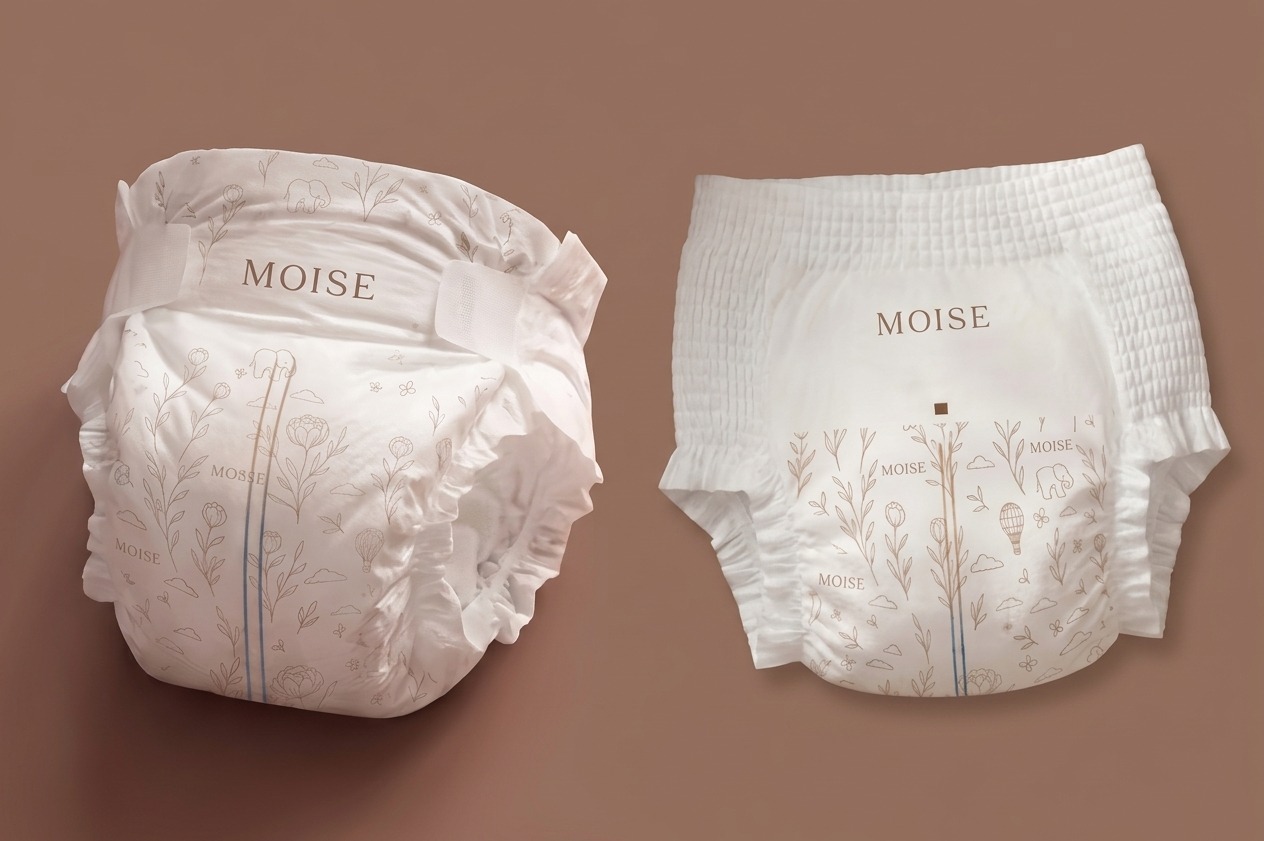
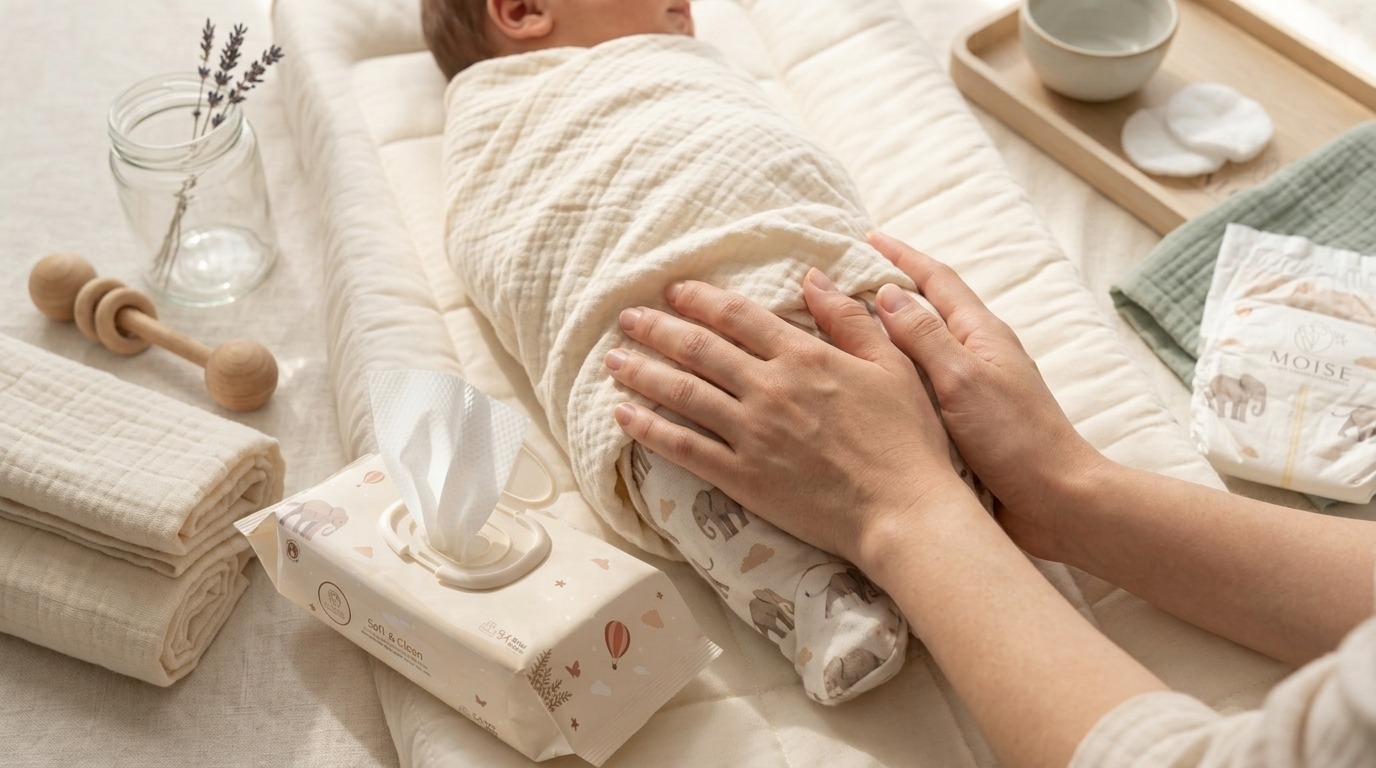
Before buying in bulk, try a single pack for a week or two. Once you know your baby tolerates a product, larger packs or a subscription can save money. If you are comparing ours, the Moise baby wipes page lists the product details so you can run the same checks.
How to Use Baby Wipes Gently and Safely
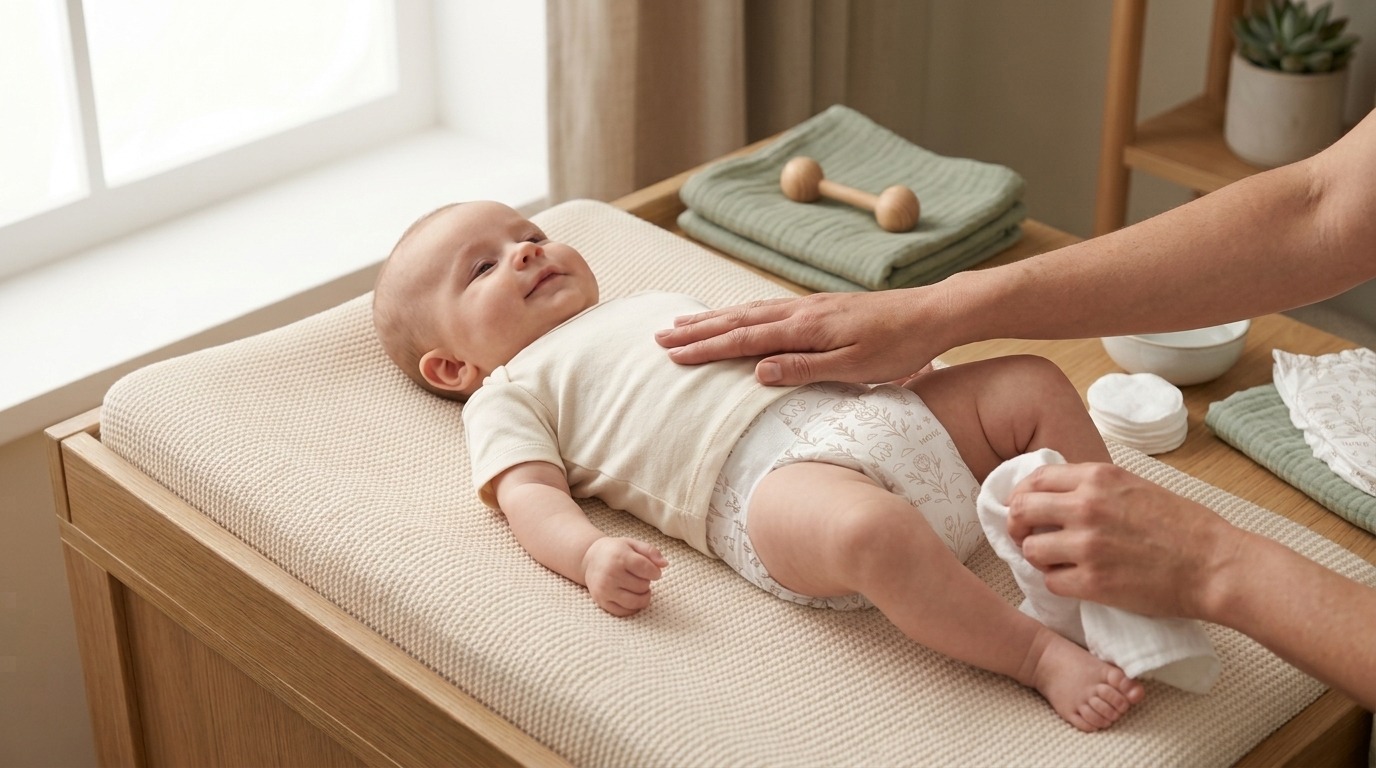
Good technique protects your baby's skin as much as a good product does. These steps follow NHS nappy-changing guidance:
- Wash your hands before you start, and have everything within reach.
- If the nappy is dirty, use the front of the nappy to remove most of the poo first.
- Clean the whole nappy area gently, including inside the skin folds, without scrubbing.
- For girls, wipe from front to back to avoid moving germs from the bottom towards the vagina.
- For boys, clean around the testicles and penis. There is no need to pull back the foreskin, and it should never be forced.
- Use a fresh wipe whenever one is soiled, rather than spreading mess around.
- Pat the skin dry with a soft cloth, or allow some nappy-free time if the room is warm, before putting on a clean nappy.
- Close the pack properly after each use and store it as the manufacturer directs, away from direct heat.
- Wash your hands again afterwards.
Wipes are for cleaning the outside of the body only. Never use them inside the vagina or any other part of the body.
Signs That Baby Wipes May Not Suit Your Baby
A wipe may not suit your baby if you notice new or worsening redness, dryness, flaking or discomfort in the areas you wipe, especially if it appears soon after starting a new product. These signs can have many other causes, though, including the nappy itself, prolonged contact with wee or poo, heat or an infection. Irritation after using a wipe does not prove the wipe is to blame.
If you suspect a product:
- Stop using it.
- Switch to warm water and cotton wool for a few days.
- Keep changes frequent and let the skin dry fully.
- Note the product name and ingredients in case you need them later.
- Speak to your health visitor or a pharmacist if the skin does not settle.
When to Get Medical Advice
Contact your GP, call NHS 111 or seek urgent help if your baby has:
- severe pain or seems very uncomfortable
- broken, raw or bleeding skin
- blisters, crusting or spots filled with pus
- redness that spreads quickly, or a bright red, moist rash that spreads into the skin folds
- a high temperature
- a rash alongside feeding less, unusual sleepiness or seeming generally unwell
Newborns and very young babies can become unwell quickly. If you are worried about a baby in the first few weeks, seek medical help promptly rather than waiting to see whether things improve. Trust your instincts: you know your baby best.
Common Mistakes Parents Make When Buying Baby Wipes
These are easy mistakes to make, and every one of them is easy to fix.
- Choosing on a "natural" label alone. Natural ingredients can still irritate. Read the ingredient list instead.
- Assuming water-based means ingredient-free. Even 99% water wipes contain a preservative and often other ingredients.
- Assuming hypoallergenic means allergy-proof. It means a lower risk, not no risk.
- Skipping the age guidance. Check that the wipes are stated as suitable from birth before using them on a newborn.
- Buying a bulk pack straight away. Test a single pack first, then stock up once you know your baby tolerates it.
- Rubbing too firmly. Light strokes and a fresh wipe work better than pressure.
- Carrying on when the skin looks worse. Pause the product and switch to water while the skin settles.
- Expecting wipes to fix nappy rash. Frequent changes, drying time and a good fit matter more than the wipe itself.
If you recognise yourself in any of these, you are in good company. Small adjustments are all it takes.
Final Verdict: How to Choose the Right Baby Wipes for Your Newborn
The best baby wipes for newborns are not a particular brand. They are the wipes that meet a few clear standards and that your baby tolerates well. To choose with confidence:
- Start with wipes the manufacturer states are suitable from birth.
- Choose fragrance-free and alcohol-free as your default for sensitive skin.
- Read the full ingredient list and judge the formula as a whole.
- Treat "natural", "water-based" and "hypoallergenic" as prompts to look closer, not as guarantees.
- Use water and cotton wool whenever you prefer, or when the skin is sore.
- Watch how your baby's skin responds, and change course if it gets worse.
- Seek professional advice for rashes that persist, recur or seem severe.
Wipes are one small part of caring for newborn skin. If you are building your wider routine, our guides to a baby skincare routine from newborn to 12 months, choosing baby bath products and the newborn essentials checklist may help.
You do not need the most expensive pack on the shelf to make a good choice. A simple, fragrance-free wipe, used gently, is a sound decision for most newborns.