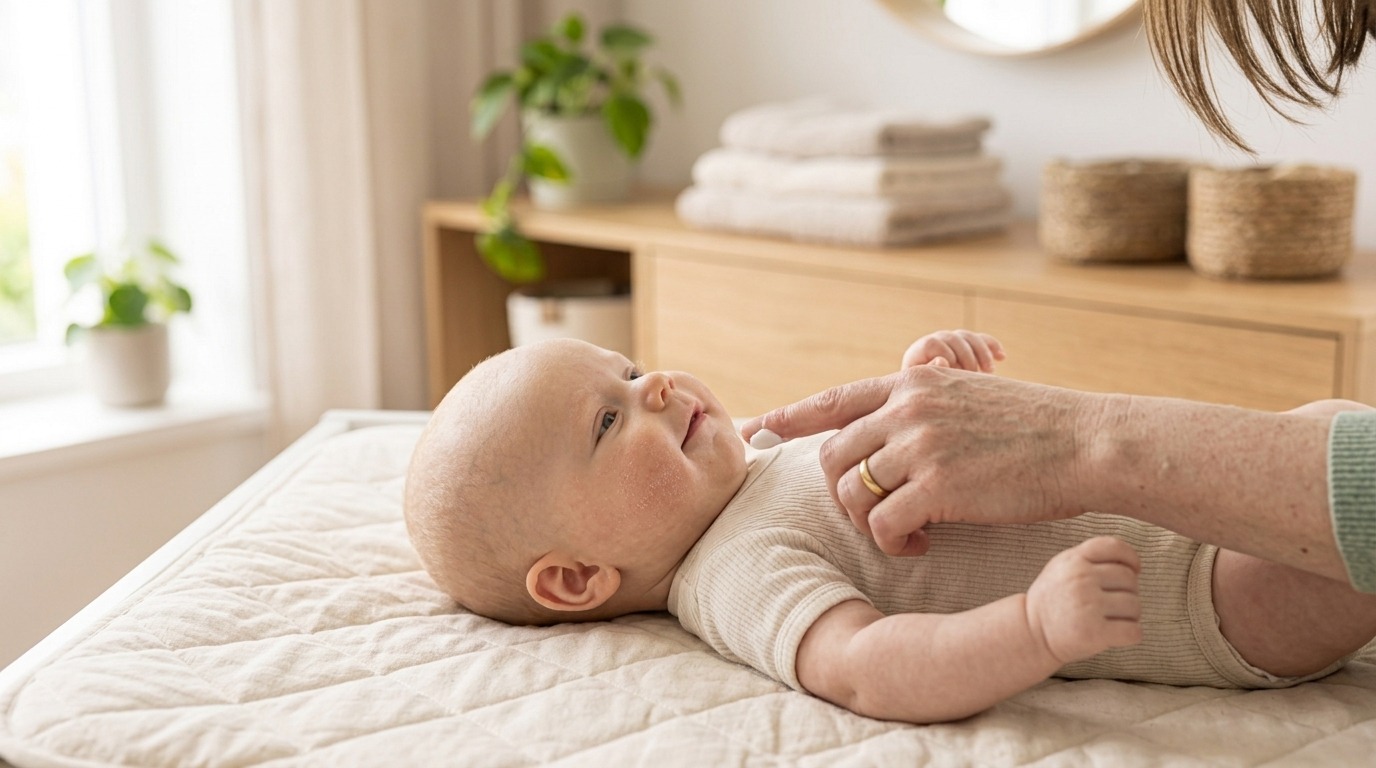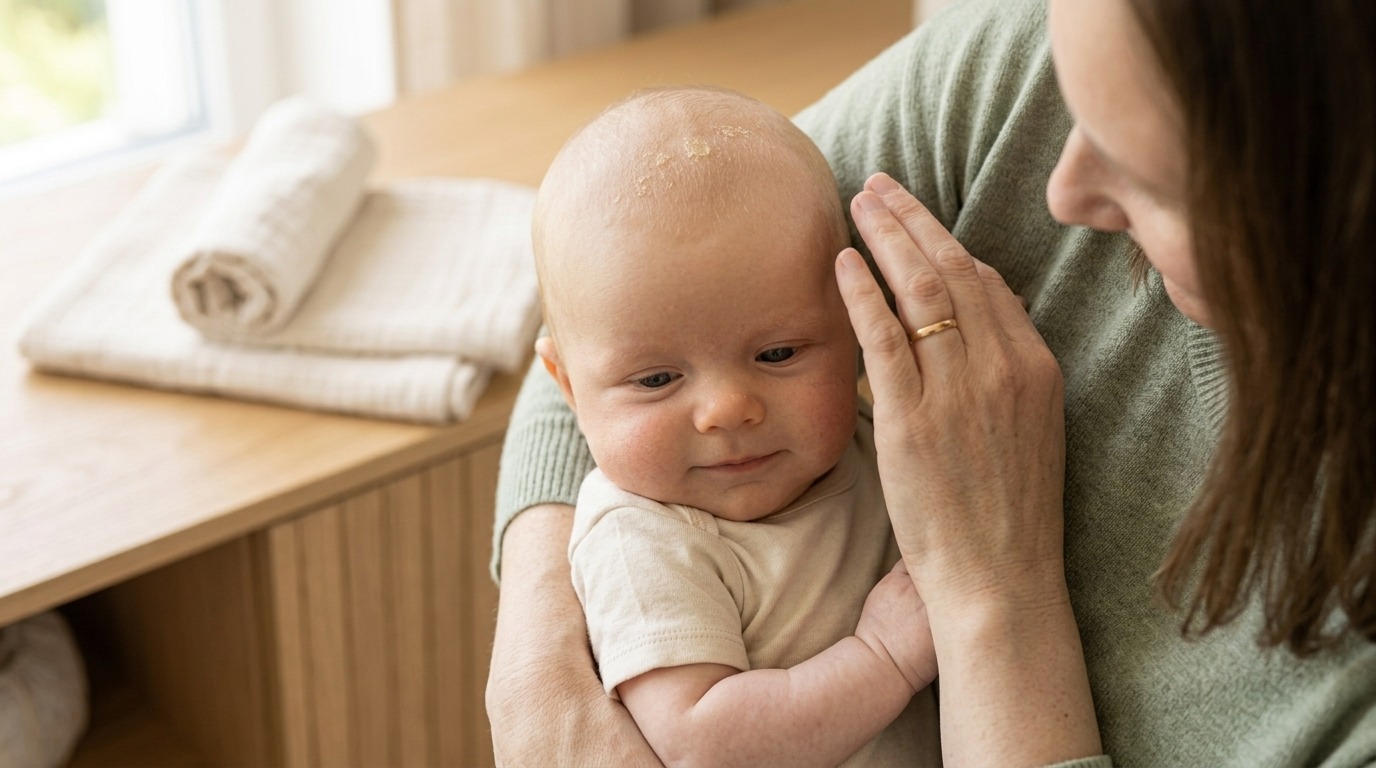
Your baby's cheeks look a little red after a feed.
There's a rough patch on their arm that wasn't there last week. Their neck folds seem pink and sore by the end of the day. If you've found yourself wondering whether this is normal or a sign of something more, you're far from alone.
So, does your baby have sensitive skin? Possibly, but there's no single test for it. "Sensitive skin" is a descriptive term rather than a medical diagnosis. It usually means skin that becomes red, dry or irritated easily, often after contact with friction, moisture, heat or certain products. The most useful clue is a pattern: irritation that keeps appearing in the same places or after the same exposures, and that settles when the trigger is removed. Redness and dryness can also have other causes, including eczema, an allergic reaction or an infection, so persistent, worsening or uncomfortable symptoms are worth checking with a health visitor, GP or pharmacist.
A baby's skin is thinner and its protective outer layer is still maturing, which can make it more prone to losing moisture and reacting to irritants. That doesn't mean every baby has sensitive skin, or that every rash signals a problem. Many skin changes in the early weeks are normal and settle on their own.
In this guide, you'll learn:
- the common signs of sensitive skin in babies
- how to tell everyday sensitivity apart from eczema, irritation and allergy
- the most likely triggers
- a simple, gentle skincare routine for newborns and older babies
- which ingredients to be cautious with
- when to seek medical advice
What Does Sensitive Skin Look Like in Babies?
Sensitive skin tends to react more readily than usual to everyday things: rubbing, dampness, temperature changes or a new product. The signs below are common, but they overlap with several other skin conditions. Appearance alone can't confirm the cause, so treat these as clues rather than answers.
On brown and black skin, redness can be harder to see. Irritated areas may instead look darker, purple, greyish or lighter than the surrounding skin, so it helps to notice texture and your baby's comfort as well as colour.
Redness and Irritation
Mild redness often shows up where the skin meets something repeatedly: the cheeks after dribbling or feeding, the chin, the neck, or skin under a vest seam or nappy edge. It may appear shortly after a bath or a new product and fade within hours.
Redness that persists for days, keeps spreading, feels warm or seems painful to your baby needs closer attention. That pattern is less typical of simple sensitivity.
Dry, Rough or Flaky Patches
Dryness can make skin feel rough or look slightly flaky, commonly on the cheeks, arms, legs and tummy. Newborns often peel in the first couple of weeks as the outer layer of skin sheds, which is normal and usually settles without treatment.
Ordinary dryness tends to respond quickly to a simple moisturiser. Patches that stay inflamed, look thickened, crack, or keep coming back despite gentle care are worth showing to a healthcare professional. For more on everyday dryness, see our guide to dry skin in babies.
Skin That Reacts to Products
Some babies develop redness, dryness or small bumps after a new soap, cleanser, wipe, lotion or laundry detergent. Often this is simple irritation: the product is too harsh or too fragranced for that baby's skin.
A reaction to a product does not automatically mean your baby is allergic to it. True allergic reactions involve the immune system and can look different, which we cover below.
Irritation in Skin Folds
The neck, armpits, groin and the creases behind the knees trap warmth, moisture, milk and dribble. Combined with skin rubbing against skin, this can make folds look pink, moist or sore.
Cleaning folds gently with lukewarm water, then drying them thoroughly but carefully, usually helps. Lift each fold, pat with a soft towel and let the skin air-dry for a moment before dressing.
Increased Irritation Around the Mouth or Nappy Area
Saliva, milk, food residue, urine and stool are all mildly irritating when they sit on the skin for long periods. Frequent wiping adds friction. That's why the skin around the mouth and in the nappy area often looks redder than the rest of the body.
Irritation confined to these areas doesn't necessarily mean your baby has sensitive skin everywhere. It often reflects what those patches of skin are exposed to, rather than how the skin behaves overall.
How Can I Tell Whether My Baby Has Sensitive Skin?
One red patch on one afternoon tells you very little. Patterns over days and weeks tell you much more. Questions worth asking yourself:
- Does dryness or irritation appear after a particular product is introduced? For example, a new cleanser, wipe or washing powder.
- Does it show up where there's rubbing, moisture or heat? Think collars, nappy edges, sleepsuit cuffs or sweaty folds.
- Does it improve when you stop using something? Skin that settles within a few days of removing a suspected irritant offers a useful clue.
- Does it keep returning to the same spots? Recurring irritation in the same areas suggests something local is involved.
- Are there other symptoms? Intense itching, swelling, weeping, crusting or widespread redness point beyond simple sensitivity.
These observations can help you identify possible triggers, but they cannot establish a diagnosis. If symptoms are persistent or recurring, your baby seems uncomfortable, or the skin is getting worse rather than better, speak to your health visitor, GP or pharmacist. Bringing photos taken over several days, and a note of any recent changes, can make that conversation easier.
Sensitive Skin, Eczema or an Allergy: What's the Difference?
These terms are often used interchangeably, but they describe different things. Knowing the difference helps you understand what a healthcare professional might be looking for. It isn't a tool for diagnosing your baby at home.
| Term | What it means | What it may look like |
|---|---|---|
| Sensitive skin | A general description, not a diagnosis | Skin that reddens, dries or stings easily |
| Eczema (atopic dermatitis) | A recognised, long-term skin condition | Dry, itchy, inflamed patches that flare and settle |
| Contact irritation | Direct damage to the skin surface from a substance or friction | Redness or soreness where the irritant touched |
| Allergic reaction | An immune-system response to a specific substance | Varies; can include hives, swelling or, rarely, breathing problems |
Sensitive Skin
"Sensitive skin" simply describes skin that becomes irritated more easily than average. It's a helpful everyday phrase, but it isn't a condition a doctor diagnoses, and it doesn't explain why the skin is reacting.
Eczema
Atopic eczema is common in babies and young children. According to the NHS, it can make skin itchy, dry, cracked or scaly, and in babies it often appears on the face as well as other areas. It typically comes and goes in flare-ups, and it's more likely in families with eczema, asthma or hay fever.
Eczema can't be reliably identified from a photograph or a single symptom. If your baby has dry, itchy patches that keep coming back or don't improve with gentle care, a GP can assess them and discuss treatment.
Contact Irritation
Contact irritation happens when something directly irritates the skin: prolonged moisture, friction, a harsh cleanser or residue from a product. Nappy rash is a familiar example. It doesn't necessarily involve the immune system, and it often settles once the irritant is reduced and the skin is kept clean and dry.
Allergic Reactions
Genuine allergies can cause skin symptoms, such as raised, itchy patches (hives) or swelling. However, appearance alone can't reliably tell an allergy apart from irritation.
Swelling of the lips, mouth, tongue or throat, or any difficulty breathing, is an emergency. Call 999.
Please don't change your baby's diet, or your own diet if you're breastfeeding, start elimination diets, or arrange allergy tests without clinical advice. The NHS specifically advises against changing diet for eczema unless a doctor recommends it.
What Can Cause Sensitive or Easily Irritated Baby Skin?
There's rarely one single cause. Most irritation comes from a combination of a still-developing skin barrier and everyday exposures. Not every factor below will affect every baby.
A Developing Skin Barrier
The "skin barrier" is the outermost layer of skin. Think of it as a brick wall: skin cells are the bricks and natural oils are the mortar. It keeps moisture in and irritants out.
In babies, this wall is thinner and still maturing. Water escapes more easily and irritants get in more easily, which is why gentle cleansing and moisturising when needed can make a noticeable difference.
Fragrances and Harsh Cleansers
Perfumed products, strong soaps and bubble baths can strip natural oils and irritate some babies' skin. Over-washing has a similar effect, even with mild products.
It's worth knowing that "natural" or "organic" does not automatically mean gentle. Plant extracts and essential oils can irritate skin too.
Heat, Sweat and Humidity
Overheating, from too many layers, a warm room or heavy bedding, leads to sweat being trapped against the skin. This can cause discomfort and small, prickly spots known as heat rash. Keeping your baby comfortably cool helps.
Friction and Tight Clothing
Repeated rubbing from seams, labels, elastic, rough towels or vigorous wiping can wear down the skin's surface. You'll often see irritation exactly where a cuff, waistband or nappy edge sits.
Saliva, Milk and Nappy Moisture
Skin that stays damp for long periods softens and becomes more vulnerable. Dribble on the chin, milk in the neck folds, and urine and stool in the nappy all play a part, especially when combined with frequent wiping.
Laundry Products and Other Environmental Exposures
Some babies react to residue from biological detergents or fabric softeners, while many others are unaffected. The NHS lists soap, washing detergent and some fabrics among things that can make eczema worse. Cold, dry weather, central heating and hard water can also leave skin drier for some families.
A Simple Skincare Routine for Sensitive Baby Skin
The best skincare routine for sensitive baby skin is usually the simplest one. Fewer products and fewer steps mean fewer chances for irritation. If you'd like a version tailored to your baby's age, our baby skincare routine by age guide covers newborns through to 12 months.
1. Cleanse Gently
Babies don't need a full bath every day. Two or three times a week is plenty for many babies, with "top and tailing" (washing the face, neck, hands and nappy area) in between.
- Use lukewarm water, not hot. Check it with your elbow or a bath thermometer.
- Keep baths short, around five to ten minutes.
- Plain water is enough for newborns. When you need a cleanser, choose a mild, fragrance-free one designed for babies, and use only a little.
- Avoid soap, bubble bath and adult shower gels.
Our guide to baby bath products explains what to look for in more detail.
2. Pat the Skin Dry
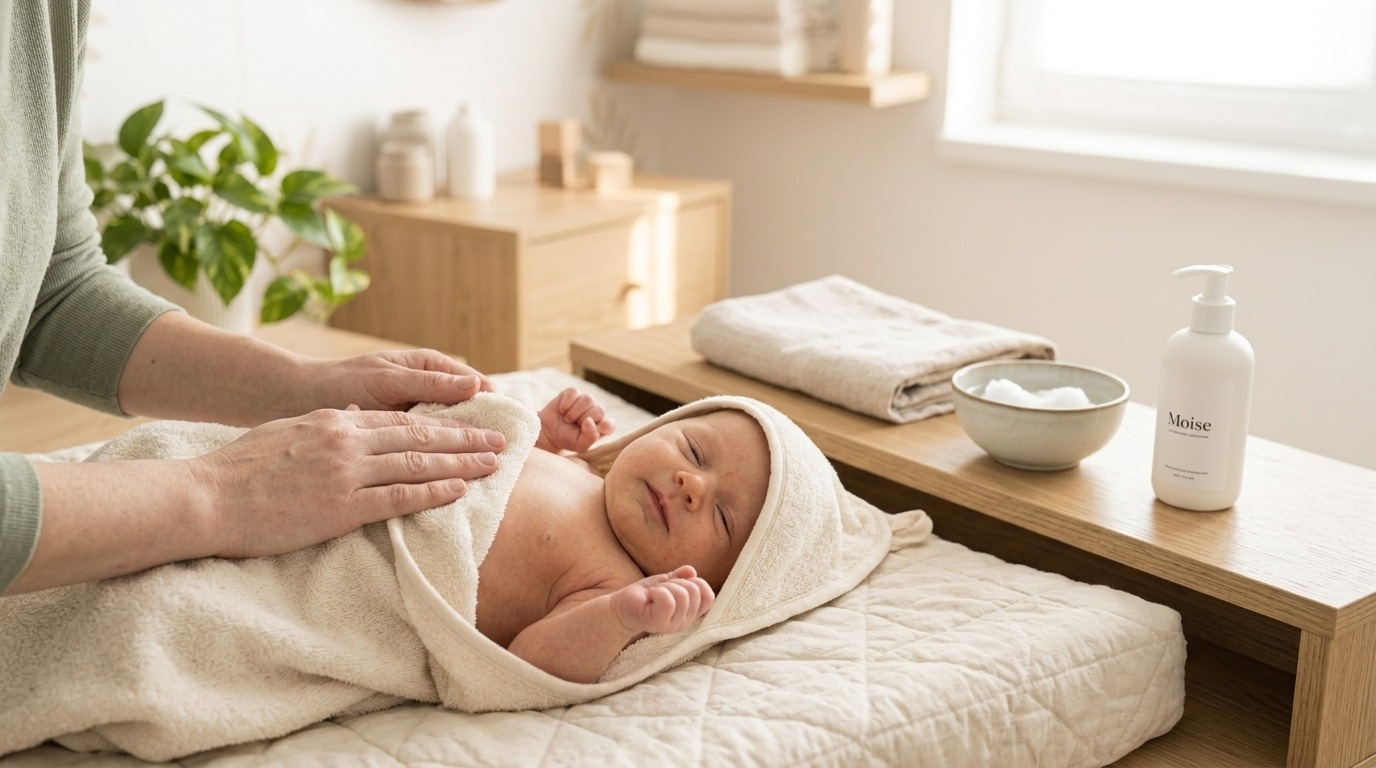
Wrap your baby in a soft, clean towel and pat rather than rub. Pay special attention to the neck, armpits, groin, behind the ears and between fingers and toes, where trapped moisture can cause soreness.
3. Moisturise When Needed
If your baby's skin looks or feels dry, a simple, fragrance-free moisturiser (sometimes called an emollient) can help restore the skin barrier. Apply a thin layer in the direction of hair growth, ideally soon after bathing while the skin is still slightly damp.
Thicker creams or ointments hold in more moisture and may suit very dry areas. If skin is red, inflamed, cracked or not improving, though, ask a pharmacist or GP before trying different products. No moisturiser can cure eczema or prevent every reaction.
4. Choose Comfortable Clothing
Soft, breathable fabrics such as cotton are usually kindest. Choose clothes that fit comfortably without being tight, and dress your baby in layers you can remove if they get warm. If a scratchy label, seam or wool garment seems to cause redness, simply take it out of rotation.
5. Protect the Nappy Area
- Change wet or dirty nappies promptly.
- Clean gently with water or fragrance-free, alcohol-free wipes.
- Let the skin dry before putting on a fresh nappy, and enjoy some nappy-free time when practical.
- Make sure nappies fit well without being too tight.
- A thin layer of barrier cream can help protect skin from moisture and friction.
For step-by-step technique, see how to clean your baby's nappy area.
6. Keep the Routine Simple
Introduce new products one at a time, with a few days between each, so you can tell what suits your baby. Avoid layering several creams and lotions at once. If a product seems to cause irritation, stop using it. If the skin doesn't settle, or gets worse, seek advice.
Ingredients and Baby Skincare Products to Be Careful With
Reading labels can feel overwhelming. The aim isn't to fear every ingredient, but to keep things short and simple. Tolerance varies from baby to baby, and no ingredient is guaranteed to irritate every child.
Baby skincare ingredients worth being cautious with include:
- Fragrance or "parfum". One of the most common sources of irritation. A fragrance-free label is the simplest choice for sensitive skin. Note that "unscented" can sometimes mean a masking fragrance has been added.
- Essential oils and strongly scented botanical extracts. Lavender, tea tree and citrus oils, for example, can irritate delicate skin.
- Harsh soaps and cleansers. These can strip the skin's natural oils and leave it dry and tight.
- Long ingredient lists. More ingredients mean more potential irritants and make it harder to work out what's causing a reaction.
- Vague "natural" claims. A product marketed as natural without clear ingredient information isn't necessarily gentler.
The NHS also advises against aqueous cream for eczema, as it can irritate skin. Not all preservatives or plant-derived ingredients are harmful. Preservatives, for instance, keep water-based products free from bacteria and mould.
When buying sensitive skin baby products, look for those labelled fragrance-free and suitable for babies with dry or sensitive skin. Even so, a label can't guarantee a reaction-free experience.
Please avoid using adult skincare, essential oils applied directly to the skin, medicated or steroid creams, or home remedies on your baby without advice from a pharmacist, health visitor or doctor. The NHS also advises against olive oil and peanut oil on babies' skin.
How to Identify and Avoid Your Baby's Skin Triggers
A little detective work can help you spot what your baby's skin dislikes. Keep notes on your phone, or a simple diary.
- Note when and where the irritation appears. Is it the cheeks, the folds, the nappy area or all over? Morning or evening?
- Record recent changes. New products, a different washing powder, new clothes, a change in routine, warmer weather or teething dribble.
- Change one thing at a time. Introducing several new products together makes it impossible to tell which is responsible.
- Stop using a suspected irritant where it's reasonable to do so, such as a new wipe or lotion.
- Watch for improvement over several days. Don't reapply a suspected trigger to "test" it, and never deliberately re-expose your baby to a suspected allergen.
- Speak to a healthcare professional if symptoms continue, keep returning or are severe.
Improvement after stopping a product is a helpful clue, but it doesn't prove that product was the cause. Skin can also improve on its own, or for other reasons.
If you suspect a food is involved, don't remove foods from your baby's diet (or your own, if breastfeeding) without medical guidance. Unsupervised food elimination can affect nutrition and rarely clarifies the cause.
When Should I See a Doctor About My Baby's Skin?
Many minor skin changes settle with gentle care. Some need professional assessment. Trust your instincts: you know your baby best.
Speak to your GP, health visitor or pharmacist, or call NHS 111, if your baby has:
- redness, dryness or a rash that persists or gets worse
- significant itching, or seems uncomfortable or unsettled by their skin
- skin that is cracked, bleeding, weeping or crusted
- possible signs of infection, such as spreading redness, warmth, swelling, pus, yellow crusts or increasing pain
- eczema that suddenly gets worse, blisters or becomes painful, which the NHS says can be a sign of infection
- symptoms that keep returning, or interfere with sleep or feeding
- a rash that hasn't improved with simple, appropriate care
Get urgent medical help if:
- your baby is under three months old and has a temperature of 38°C or higher
- your baby has a rash and seems unwell, floppy, unusually drowsy or isn't responding as they normally do
Call 999 or go to A&E immediately if your baby:
- has difficulty breathing, is breathing very fast or making grunting noises
- has sudden swelling of the lips, mouth, tongue or throat
- has pale, blue, grey or blotchy skin, lips or tongue
- collapses, or is limp and unresponsive
- has a rash that doesn't fade when you press a glass against it, especially if they seem unwell
To do the glass test, press the side of a clear glass firmly against the rash. If you can still see the spots through the glass, seek emergency help. On brown and black skin, the rash may be easier to check on paler areas such as the palms, soles or inside the eyelids.
When warning signs are present, don't wait to see whether a skincare routine helps.
Final Thoughts: Keep Baby Skincare Gentle and Simple
If you're asking "does my baby have sensitive skin?", the reassuring news is that caring for it rarely requires anything complicated. The key points to remember:
- Look for patterns. One red patch isn't a diagnosis. Recurring irritation in the same places or after the same exposures tells you more.
- Cleanse gently and moisturise when needed. Lukewarm water, short baths and a simple fragrance-free moisturiser go a long way.
- Cut back rather than add. Avoid unnecessary fragranced products and extra steps.
- Reduce moisture and friction. Prompt nappy changes, careful drying of folds and soft, comfortable clothing all help.
- Ask for help when you need it. Persistent, worsening or worrying symptoms deserve a professional opinion.
You don't need a cupboard full of products to look after your baby's skin. Gentle, consistent care, and knowing when to seek advice, is what matters most.
Disclaimer: This article is for general information only and is not a substitute for professional medical advice, diagnosis or treatment. If you're worried about your baby's skin or health, contact your GP, health visitor, pharmacist or NHS 111. In an emergency, call 999.
Frequently asked questions
Common signs include redness, dryness, rough patches and irritation after contact with certain products, fabrics, moisture or heat. The most telling clue is a pattern: irritation that keeps appearing in the same places or after the same exposures, and settles when the trigger is removed. Because these signs overlap with eczema and other conditions, persistent or recurring symptoms are worth discussing with a health visitor, pharmacist or GP.
Newborn skin is delicate, and many changes in the first weeks are normal, including peeling, blotchiness, milia and baby acne. These usually settle without treatment. However, it's best not to assume that every rash is simply "sensitivity". Symptoms that are persistent, severe, spreading or unusual, or that come with a high temperature or your baby seeming unwell, should be checked by a healthcare professional.
There's no single best product for every baby. Look for a moisturiser that is fragrance-free, has a short ingredient list and is designed for babies or for dry, sensitive skin. Thicker creams or ointments often suit very dry areas. Introduce one new product at a time, and stop if it seems to irritate. A pharmacist can suggest suitable emollients if dryness persists.
Not usually. Babies don't need a full bath every day, and frequent or long baths can dry the skin. Many parents find two or three short, lukewarm baths a week, with top and tailing in between, works well. The right routine depends on your baby; if they have eczema or a skin condition, follow the advice of your health visitor or GP.
They can for some babies, while others tolerate wipes perfectly well. Fragrance, alcohol and certain preservatives are the usual suspects, along with the friction of frequent wiping. If irritation seems linked to a particular wipe, switch to a fragrance-free, alcohol-free option, or use cotton wool and lukewarm water. Our guide to the best baby wipes for sensitive skin explains what to look for.
No. Sensitive skin is a general description of skin that becomes irritated easily, not a diagnosis. Eczema is a specific, recognised condition that usually causes dry, itchy, inflamed patches which flare up and settle over time. A baby can have easily irritated skin without having eczema. If you're concerned about recurring dry, itchy patches, a GP can assess them.
Often, yes. As babies grow, their skin barrier matures, and some early irritation becomes less frequent. The NHS notes that eczema symptoms also tend to improve as children get older. However, how skin changes depends on the underlying cause, so it isn't possible to promise that any baby will outgrow a particular condition. Gentle, consistent care helps in the meantime.
Seek urgent help if your baby is under three months old with a temperature of 38°C or higher, has a rash that doesn't fade under a glass, or seems unwell, floppy or unusually drowsy. Call 999 for breathing difficulty or swelling of the lips, mouth or tongue. Spreading redness, warmth, pus, crusting or increasing pain may suggest infection and need prompt medical advice.