Babies need far less skincare than most product shelves suggest. A good baby skincare routine by age is mostly the same simple habits, adjusted gently as your baby grows: clean skin, sensible baths, a well-cared-for nappy area and a moisturiser only when the skin needs one.
In short: A baby's skincare routine can stay very simple during the first year. Gentle cleansing, sensible bathing, nappy-area care and moisturiser when needed are usually enough.
Below, you'll see how that routine can adapt from the newborn weeks through to 12 months. The age groups are practical ranges, not strict medical stages. Your baby's skin won't change overnight on a particular birthday, and no single routine suits every baby.
Baby Skincare Basics: What Does a Baby Actually Need?
A baby needs clean, dry, comfortable skin and protection from things that irritate it. That's it. The rest is detail.
The basics look like this:
- Gentle cleansing. Warm water does most of the work, especially in the first month.
- Sensible bathing. A full bath a few times a week is fine for most young babies.
- Careful drying. Pat the skin dry, paying attention to creases in the neck, armpits, thighs and behind the ears.
- Moisturising when needed. Use an unperfumed product on dry patches, not as a daily ritual for every baby.
- Nappy-area care. Frequent changes, gentle cleaning and a barrier cream if the skin looks red.
- Scalp care. Plain water at first, then a little mild baby shampoo if you want.
- Sun protection. Shade and clothing first, always.
- Avoiding irritation. Fewer products, no fragrance, nothing harsh.
The table below shows how these basics can shift across the first year. Treat it as a rough guide rather than a rulebook.
| Skincare need | Newborn (0–4 weeks) | 1–3 months | 3–6 months | 6–9 months | 9–12 months |
|---|---|---|---|---|---|
| Gentle cleansing | Plain warm water; top and tail between baths | Water; a little unperfumed wash if needed | Water plus mild wash; wipe drool and milk | Clean food off after meals | Face and hands after meals and play |
| Full bath | 2–3 times a week is enough | 2–3 times a week, or more if your baby enjoys it | Same, more after sweaty days | As needed with mess and activity | As needed; daily is fine if skin stays comfortable |
| Moisturiser | Usually not needed; avoid lotions in month one | Unperfumed, only on dry areas | Dry patches, after baths | Dry patches, cheeks and chin if drool irritates | Dry patches; more in cold, windy weather |
| Nappy-area care | Water and cotton wool; change often | Water or fragrance-free wipes; barrier cream if red | Same | Same; skin may react to new foods' poos | Same; longer night stretches may need a barrier |
| Scalp care | Plain water | Mild baby shampoo if wanted; watch for cradle cap | Same | Same | Same |
| Sun protection | Out of direct sunlight | Out of direct sunlight | Out of direct sunlight | Shade, clothing, hat; SPF 30+ on exposed skin | Shade, clothing, hat; SPF 30+ on exposed skin |
Newborn Skincare Routine: 0–4 Weeks
A newborn's skin is still adjusting to life outside the womb. The best newborn skincare routine in these first weeks is mostly water, warmth and patience.
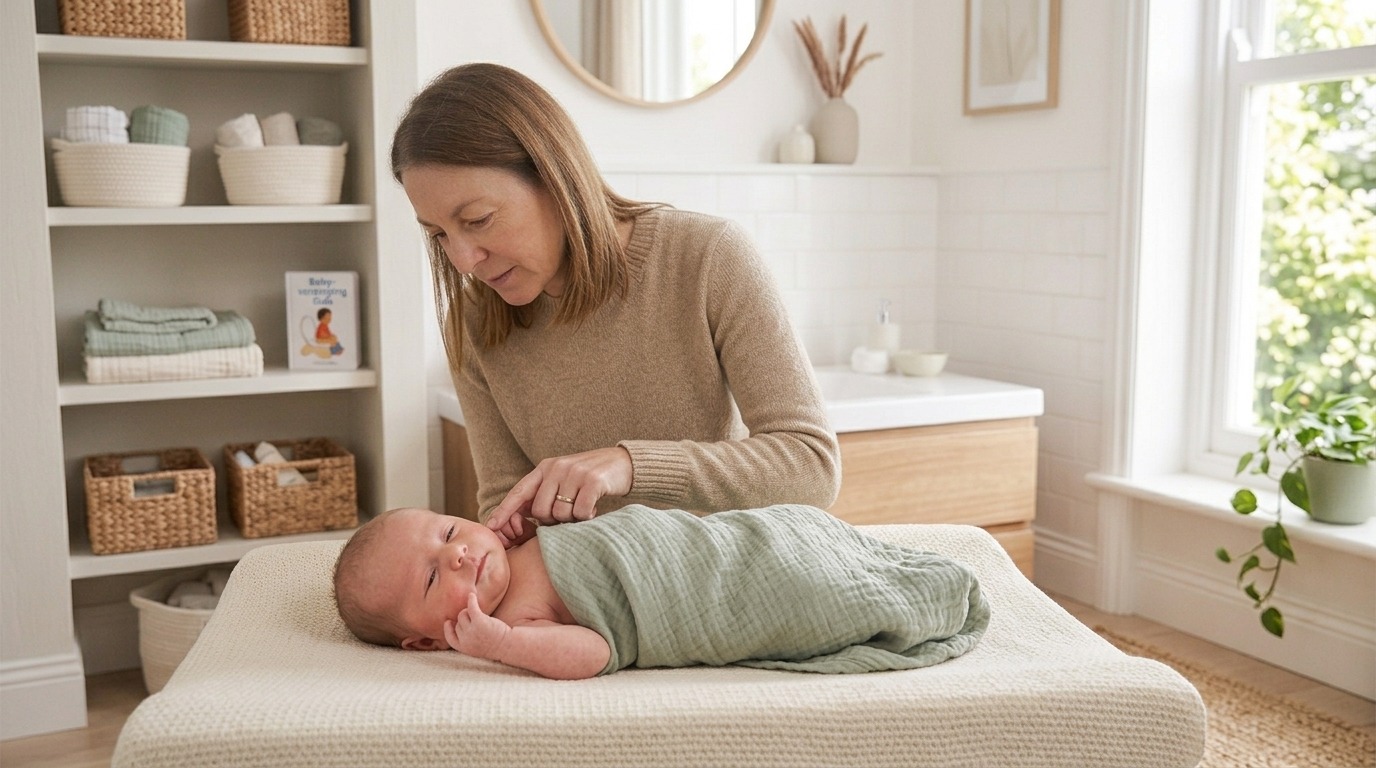
Gentle cleaning. You don't need to wash your baby head to toe every day. Many parents top and tail instead: cleaning the face, neck, hands and bottom with cotton wool and warm water. The NHS suggests wiping each eye from the nose outwards with a fresh piece of cotton wool. Clean around the ears, never inside them.
Bathing. The NHS says a newborn doesn't need a bath every day. Two or three times a week is fine, though a daily bath is OK if you both enjoy it. Plain water is best for the skin in the first month, so no liquid cleansers are needed.
Moisturising. Most newborns don't need moisturiser. The NHS advises avoiding lotions and oils until your baby is at least a month old.
Nappy area. Change wet or dirty nappies promptly. Clean with water and cotton wool, then pat dry, including the creases. If the skin looks a little red, a thin layer of barrier cream can help protect it.
Dry or peeling skin. Peeling or dry-looking skin in the first week or two is common and usually normal, according to NHS Healthier Together. It tends to settle on its own. It doesn't mean your baby needs a cupboard full of creams. Colour changes are common too; our guide to baby skin colour changes in the first weeks explains what's usually normal.
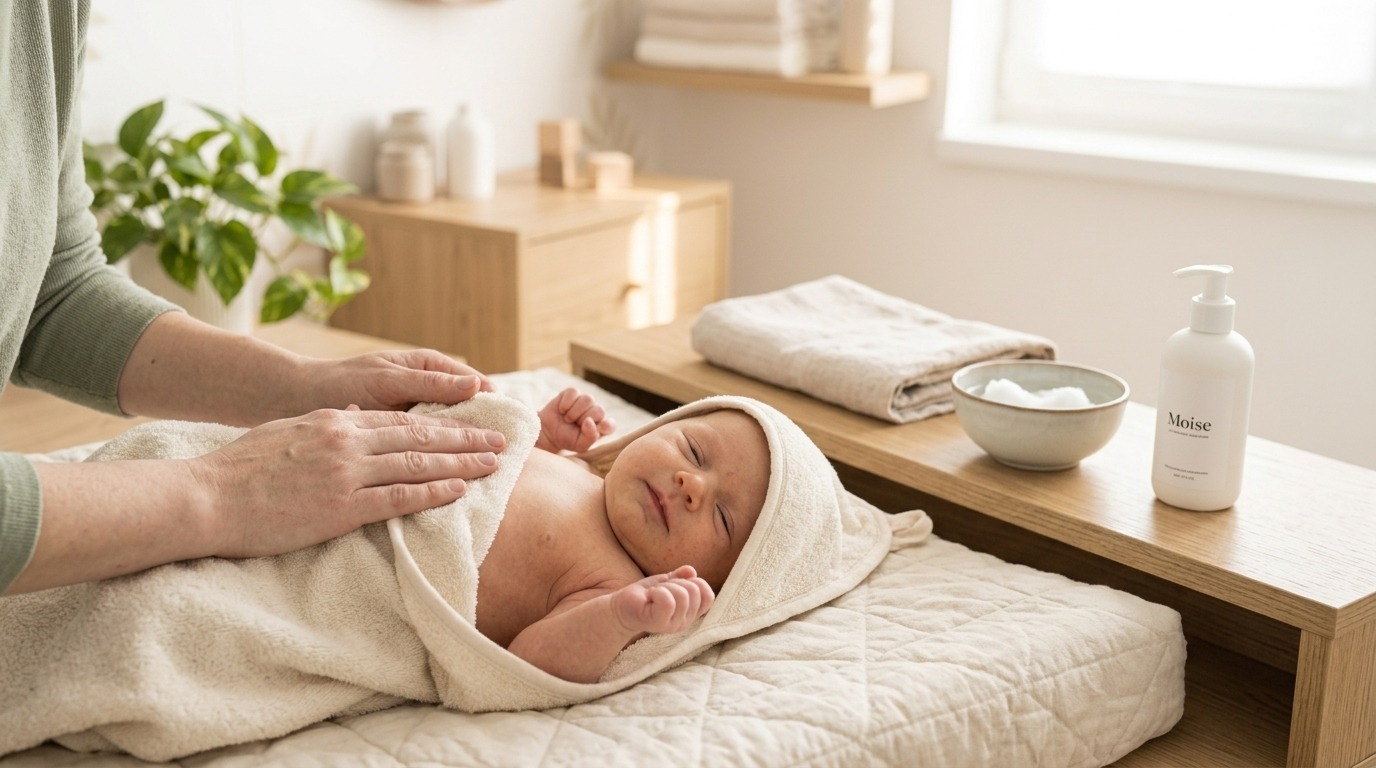
Scalp. Wash hair with plain water during a bath, supporting your baby's head over the bowl. Dry it gently with a soft towel.
What newborns usually don't need
You can safely skip most of the baby aisle at this stage. Newborns rarely need:
- lotions or baby oils
- fragranced products of any kind
- bubble baths
- talcum powder
- specialised cleansers or "newborn" washes
If you're putting together a shopping list, our newborn essentials checklist for the first month keeps things realistic.
Baby Skincare Routine at 1–3 Months
From around one month, the routine changes only slightly. You can keep doing what already works and add a product or two if your baby's skin seems to need it.
Bathing. Two or three baths a week usually remains plenty. The NHS Inform guidance says you can start using an unperfumed baby bath from about 4 to 6 weeks, using only a little.
Face cleaning. Milk can collect under the chin and in neck folds. Wipe these areas with warm water after feeds and dry them well. Moist creases are where redness often starts.
Moisturising. After the first month, an unperfumed moisturiser can go on any dry patches. Smooth skin that looks and feels comfortable doesn't need it.
Nappy care. Water and cotton wool or fragrance-free, alcohol-free wipes both work. The NHS advises against soap, baby lotion or bubble bath on nappy rash, as they can irritate the skin.
Scalp care. A small amount of mild baby shampoo is fine if you'd like to use one. Watch for greasy, yellowish scales, which may be cradle cap.
Common skin changes at this age
Several harmless skin changes tend to show up in the first few months:
- Dry skin, often on the hands, feet and ankles.
- Baby acne, small spots on the cheeks, nose and forehead.
- Cradle cap, scaly patches on the scalp.
- Mild irritation from drool, milk or rubbing clothes.
These often look worse than they feel to your baby. Still, rashes can look alike while having very different causes. If you're unsure what you're seeing, ask your health visitor, pharmacist or GP rather than guessing.
Baby Skincare Routine at 3–6 Months
Between three and six months, many babies kick, roll and wriggle much more. They may also start to drool. The skin routine stays gentle, but you'll pay more attention to sweat and moisture.
Movement and sweat. Active babies can get warm, especially in skin folds. Check the neck, armpits and the backs of the knees during nappy changes. Clean and dry them if they look damp or red.
Drooling. Dribble on the chin and neck can make the skin sore. Pat it dry with a soft cloth instead of rubbing. A thin layer of a simple barrier product can protect the skin if it's getting red.
Bathing. A few baths a week still suits most babies. You might bath a little more often after hot, sticky days, as long as the skin isn't drying out.
Moisturising. Keep using an unperfumed moisturiser on dry areas. Applying it after a bath, while the skin is still slightly damp, can help.
Nappy-area care. Change nappies often and give your baby some nappy-free time when you can. Our guide to newborn nappy essentials covers what's genuinely useful.
Clothing and overheating. Overheating can trigger heat rash. Dress your baby in light, breathable layers that you can add or remove. Our article on heat rash in babies explains how to spot and prevent it.
Sun protection. The NHS advises keeping babies under 6 months out of direct sunlight. Sunscreen is not recommended at this age, so rely on shade, clothing and a sun hat. Use a parasol or sunshade on the pushchair, but don't cover it with a blanket, as this can cause overheating.
Baby Skincare Routine at 6–9 Months
This is when skincare gets a bit messier. Solid foods, crawling and more time outdoors all bring small changes, but the core routine stays the same.
Messier mealtimes. Food on the cheeks and chin can irritate the skin if it's left there. Wipe it away with a soft, damp cloth after meals. Dab rather than scrub, and dry the skin afterwards. A thin layer of moisturiser or barrier cream around the mouth can help if the area keeps getting red.
Drooling. Teething often means more dribble. Keep a muslin handy, swap damp bibs and clothes, and protect irritated skin around the mouth with a simple barrier product.
Crawling and activity. Sweat, friction and dirt from the floor can leave knees, hands and folds looking grubby or red. A wipe with warm water usually sorts this out. Soft, breathable clothing helps reduce rubbing.
Bathing. You may want to bath your baby more often now, simply because they get dirtier. That's fine. There's no rigid schedule; just keep baths short and the water warm, not hot.
Sun protection. From 6 months, the NHS advises using a sunscreen of at least SPF 30 with UVA and UVB protection on exposed skin. Apply it generously, reapply every 2 hours and straight after swimming or sweating. Products made for babies and children are less likely to contain additives that might irritate the skin. Sunscreen comes second, though. Keep your baby in shade where possible, especially between 11am and 3pm, and use a wide-brimmed hat and light clothing.
Baby Skincare Routine at 9–12 Months
By nine months, the routine starts to look like a simple toddler routine. It's still gentle, just a little busier.
Bathing and cleansing. Many families settle into a bath every day or two at this age. That's fine if your baby's skin stays soft and comfortable. Use a small amount of mild, unperfumed wash on the grubby bits rather than lathering the whole body every time.
Face and hands. Wipe faces and hands after meals and outdoor play. Warm water and a soft cloth are usually enough.
Moisturising. Cold wind, central heating and frequent washing can all dry the skin. Moisturise dry patches after baths. Cheeks and the backs of hands often need it most in winter.
Nappy care. Longer stretches of sleep can mean a nappy stays on for longer at night. A thin layer of barrier cream at bedtime can protect skin that's prone to redness.
Outdoor exposure and sun protection. Keep up the same sun habits: shade first, then clothing and a hat, then SPF 30+ sunscreen on exposed skin.
Increased activity. A more active baby may need cleaning more often. That doesn't mean their whole body needs harsh soap every day. Target the dirty areas and let the rest of the skin be.
How Often Should You Bathe a Baby?
For a newborn, two or three baths a week is enough, according to the NHS. A daily bath is fine too if your baby enjoys it and their skin stays comfortable. There's no single bathing schedule that suits every baby.
Between baths, everyday cleaning covers what matters:
- the face and neck folds, where milk and dribble collect
- hands, especially once they go in the mouth constantly
- the nappy area, at every change
- any skin that got messy during feeding or play
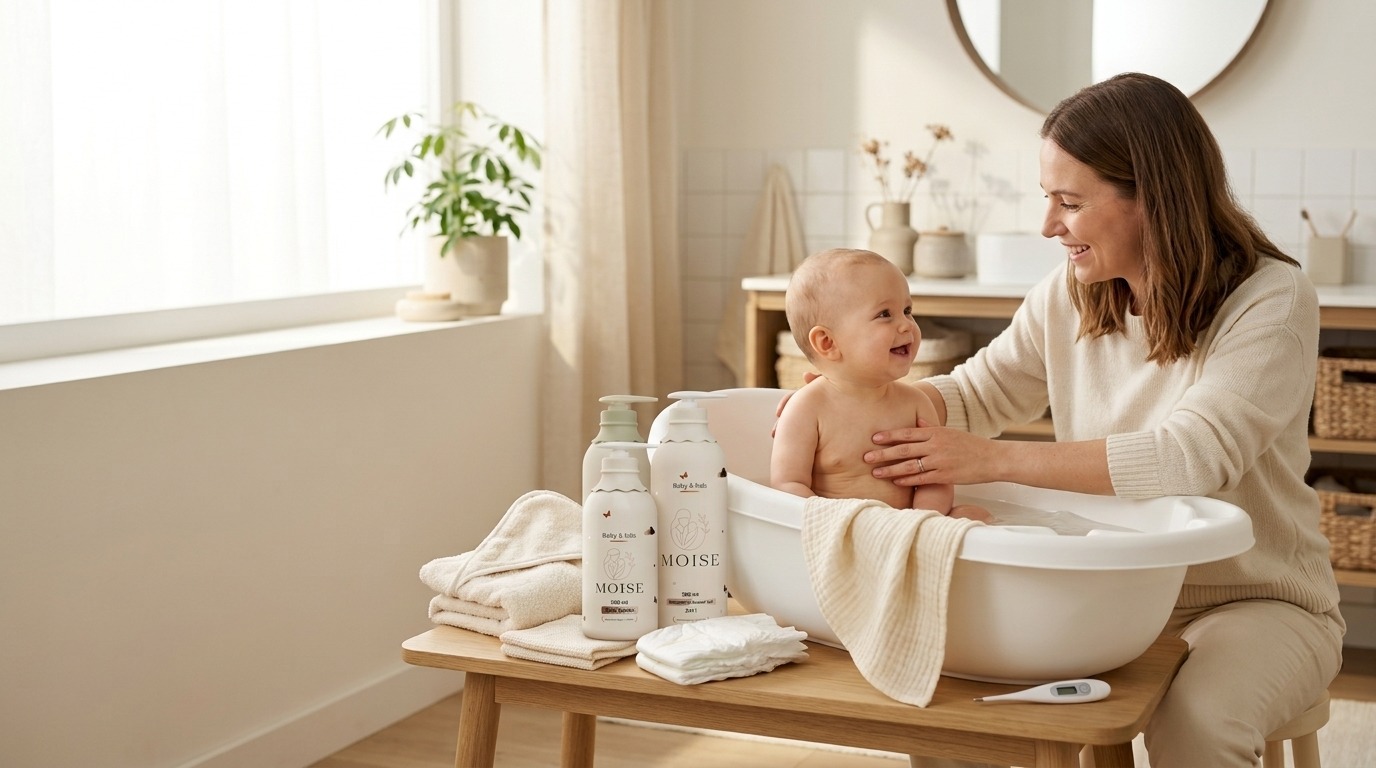
Water temperature. Run cold water first, then add hot, and mix well so there are no hot patches. The NHS suggests testing with your elbow: the water should feel about the same as your body temperature. Keep it comfortably warm, never hot.
Bath duration and safety. Short baths are kinder to the skin than long soaks. Never leave your baby alone in the bath, not even for a second.
Avoid overbathing. The NHS nappy rash advice notes that washing more than twice a day can dry the skin out. For more detail, read our full guide on how often you should bathe a baby.
How Often Should You Moisturise a Baby's Skin?
Only as often as the skin needs it. Many babies with healthy skin don't need daily moisturiser at all. Others with dry patches benefit from it once or twice a day.
When it helps. Moisturiser is useful for skin that looks dry, rough or flaky, or that gets dry in cold weather. The NHS suggests waiting until your baby is at least a month old before using lotions or oils.
How to apply it. Use clean hands and a small amount. Smooth it on gently in the direction the hair grows, rather than rubbing it in hard. After a bath, pat the skin almost dry first.
What type to choose. Look for a simple, unperfumed baby moisturiser. Thicker creams or ointments often suit very dry skin better than thin lotions.
More isn't better. Thick layers several times a day won't help healthy skin. If dry skin persists despite simple care, or your baby seems itchy or uncomfortable, speak to a health visitor, pharmacist or GP. Babies with eczema may need a personalised skincare plan from a healthcare professional.
Baby Skincare Products: What Is Essential and What Is Optional?
Very little is truly essential. Warm water, soft cotton wool or cloths, and a good supply of nappies cover most of the first year.
| Product | Essential? | What parents should know |
|---|---|---|
| Gentle cleanser | Usually optional | Not needed in the first month. Afterwards, a small amount of mild, unperfumed wash is fine. |
| Baby moisturiser | Useful for some babies | Helpful for dry patches after the first month. Not every baby needs it. |
| Baby shampoo | Usually optional | Plain water is enough for most young babies. Choose unperfumed if you use one. |
| Barrier cream | Useful when needed | A thin layer protects red or irritated skin in the nappy area. |
| Baby oil | Not essential | Not needed for routine care. Avoid lotions and oils in the first month. |
| Bubble bath | Usually unnecessary | Can irritate the skin and dry it out. Best skipped. |
| Baby powder | Usually unnecessary | The NHS advises against talcum powder on nappy rash. It can also be breathed in. |
| Fragranced products | Not necessary | Fragrance adds nothing for the skin and can cause irritation. |
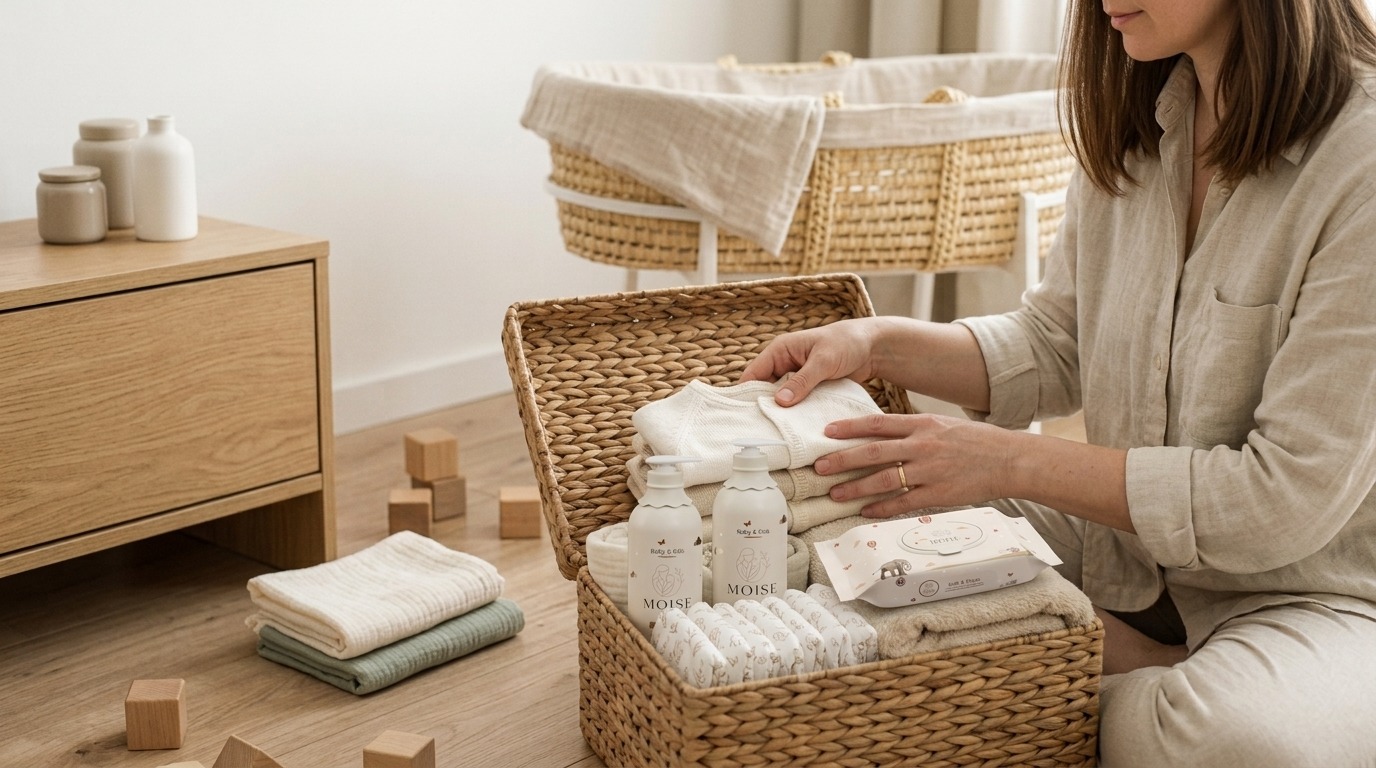
If you'd like to go deeper into what belongs in the bathroom cabinet, see our guide to baby bath products: what to use and what to avoid. At Moise, we follow the same principle: a few gentle, baby-suitable products are enough.
Ingredients and Products to Be Careful With
You don't need to read every label like a chemist. A few simple rules go a long way.
- Fragrance. Perfumes are a common cause of irritation. Choose unperfumed products where you can.
- Essential oils. They're concentrated plant extracts and can irritate a baby's skin. They don't belong in routine baby skincare.
- Harsh cleansers. Ordinary soaps and adult shower gels can strip the skin's natural oils.
- Strong exfoliants. Scrubs and acids are far too harsh for baby skin.
- Adult acne products. Never use them on baby acne.
- Unnecessary antiseptics. The NHS advises against antiseptic creams or lotions on nappy rash.
- Talcum powder. Not recommended for nappy care, and it can be inhaled.
- Heavily fragranced bath products. Bubble baths and scented bath additives can irritate.
- Products not designed for babies. Adult shampoos and soaps aren't suitable for a baby's scalp or skin.
"Natural" doesn't automatically mean safer. Plant oils and extracts can still irritate sensitive skin. Some UK guidance has also stopped recommending olive oil for baby skin. The safest choice is usually the simplest product, with the fewest added extras.
Baby Skincare for Dry or Sensitive Skin
Dry or sensitive baby skin usually responds best to less, not more. A simple routine can make a real difference:
- Keep baths short and sensible.
- Use warm water, never hot.
- Wash with water or a small amount of mild, unperfumed cleanser.
- Pat the skin dry instead of rubbing.
- Moisturise dry areas soon after the bath.
- Avoid fragranced products, including scented laundry detergents and fabric softeners.
- Dress your baby in soft, breathable fabrics such as cotton.
- Reduce friction from tight clothing, rough seams or scratchy labels.
Change one thing at a time, so you can tell what helps. If the skin stays red, cracked, itchy or inflamed, ask your GP or health visitor to take a look. Persistent problems may need a professional assessment.
Common Baby Skin Problems Parents May Notice
Most baby rashes are harmless and settle on their own. But similar-looking rashes can have quite different causes. Use this as a general guide, not a way to diagnose your baby.
| Skin change | What it may look like | Basic care | When to seek advice |
|---|---|---|---|
| Baby acne | Small red or white spots on the cheeks, nose and forehead, often a few weeks after birth | Wash with water; don't squeeze or use acne products | If spots look infected or last for months |
| Milia | Tiny white or yellow spots on the face, often in the first days | No treatment needed; usually clear within weeks | If unsure, or they persist in an older baby |
| Cradle cap | Greasy, yellow or white scales on the scalp, sometimes the face | Massage in an emollient, brush gently, wash with baby shampoo; don't pick | If it spreads over the body, bleeds, leaks fluid or doesn't improve |
| Dry skin | Rough, flaky or peeling patches | Shorter baths; unperfumed moisturiser | If it cracks, becomes red or itchy, or doesn't improve |
| Heat rash | Tiny red bumps or blisters, often after overheating | Cool the room and remove layers | If your baby seems unwell or it doesn't settle |
| Nappy rash | Red, sore patches in the nappy area | Frequent changes, nappy-free time, thin barrier cream | If it doesn't improve within a few days, or looks bright red with spots spreading into folds |
| Eczema | Dry, itchy, red or cracked skin, often on the face, scalp and body in babies | Speak to a GP or pharmacist for a skincare plan | If you suspect eczema, or it's weeping, crusted or not improving |
On brown or black skin, redness may be harder to see. Rashes may look darker, purple or grey instead.
Baby Skincare Mistakes to Avoid
Almost every parent makes one of these at some point. They're easy to fix once you know.
- Bathing too often. More washing can mean drier skin.
- Using too many products. Each extra product is another chance of irritation.
- Scrubbing the skin. Gentle wiping and patting is enough.
- Very hot water. It dries the skin and can scald. Always test it first.
- Adult skincare products. They're not formulated for baby skin.
- Squeezing spots. This can lead to infection and won't make baby acne clear faster.
- Picking or scratching flakes. Cradle cap crusts should be loosened gently, never picked.
- Shaking powder near the face. Fine powder can be breathed in.
- Using essential oils routinely. They're unnecessary and can irritate.
- Changing several products at once. If skin flares, you won't know which change caused it.
Baby Skincare Routine: A Simple Daily and Weekly Checklist
Here's a practical example you can save. It isn't a medical prescription or a mandatory schedule; adjust it to your baby.
Daily
- Clean the nappy area gently at every change
- Clean visible dirt, milk or food from the face
- Check skin folds in the neck, armpits and thighs
- Moisturise dry areas if needed
- Check for any new redness or irritation
During the week
- Full bath as needed
- Gentle hair and scalp wash as needed
- Check for persistent dry or irritated skin
- Review products if irritation develops
When Should You Speak to a Doctor or Health Visitor?
Trust your instincts. If something about your baby's skin worries you, it's always reasonable to ask.
Speak to your GP, health visitor or pharmacist if:
- a rash is spreading quickly or getting worse
- the skin is noticeably swollen
- there are signs that could suggest infection, such as heat, pus, crusting or blisters
- there are large open, raw or weeping areas
- your baby seems unwell, unsettled or isn't feeding as usual
- the problem keeps coming back or doesn't improve with simple care
- you're simply not sure what you're seeing
Fever and urgent symptoms
A high temperature is 38°C or more, according to the NHS. Babies' age matters here.
Call help or contact your GP urgently if your baby:
- is under 3 months old and has a temperature of 38°C or higher
- is 3 to 6 months old and has a temperature of 39°C or higher
- has a rash as well as a high temperature
- isn't feeding, or isn't their usual self and you're worried
- shows signs of dehydration, such as fewer wet nappies or no tears when crying
Call help if your baby:
- has a rash that does not fade when you press a glass against it
- is drowsy and hard to wake, or not responding as they normally would
- has difficulty breathing, grunting or their tummy sucks in under the ribs
- has blue, grey, pale or blotchy skin, lips or tongue
- has a stiff neck or seems bothered by light
- has a fit for the first time
- has unusually cold hands and feet
This list is based on current NHS guidance. If you're ever unsure, call NHS 111.
Medical disclaimer: This article provides general information about baby skincare and does not replace advice, diagnosis or treatment from a qualified healthcare professional.