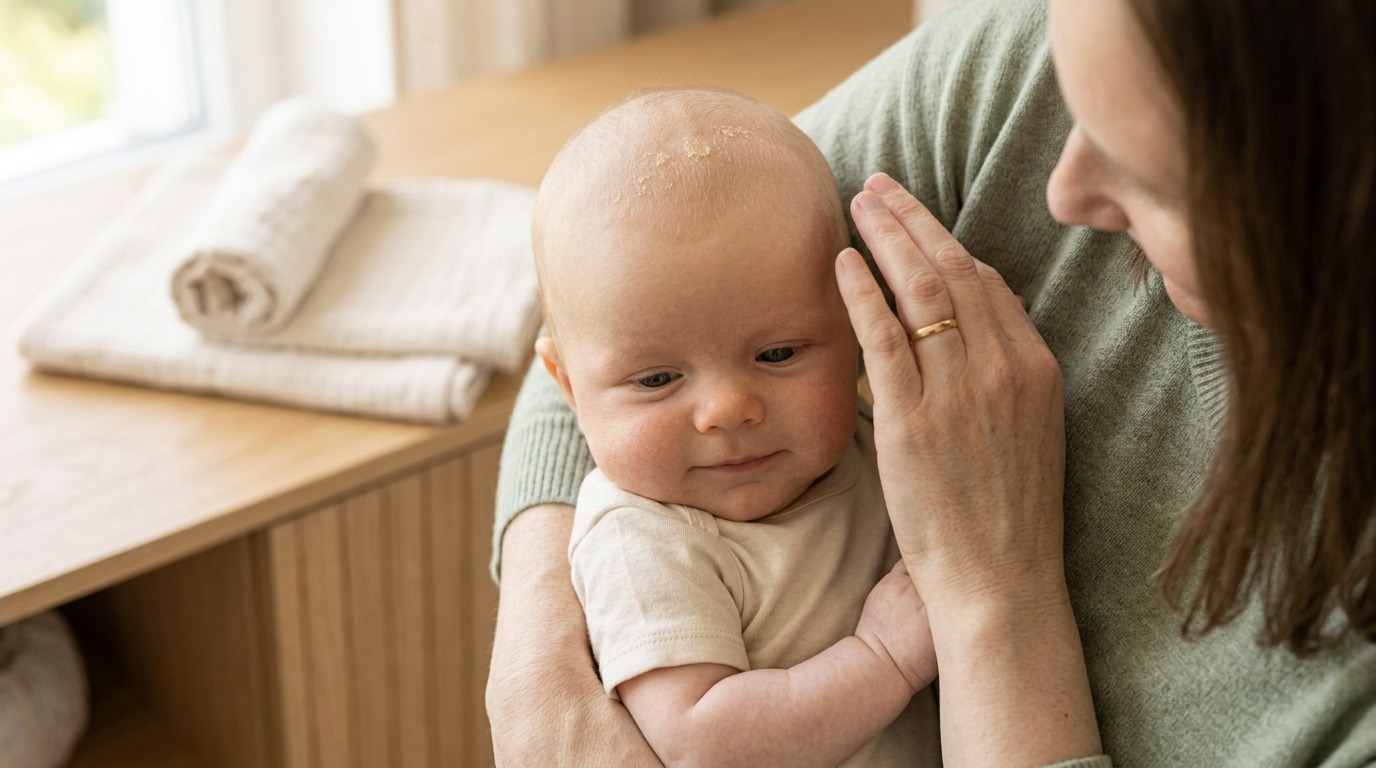
You are washing your baby's hair and you spot yellowish, greasy flakes stuck to the scalp. They were not there last week. For many parents, that is the first meeting with cradle cap.
Short answer: cradle cap is common and usually harmless. Gentle scalp care is often enough, and there is no need to scrape or pick off the scales. Speak to a healthcare professional if the skin swells, bleeds, leaks fluid or spreads widely, or if your baby seems uncomfortable or unwell.
This guide explains what cradle cap is, what causes it, how to care for it at home and when to worry.
What Is Cradle Cap?
Cradle cap is a harmless skin condition that causes greasy, scaly patches, most often on a baby's scalp. The medical name is infantile seborrhoeic dermatitis. "Seborrhoeic" refers to the oily areas of the skin. "Dermatitis" simply means inflamed skin.
It usually appears in the first weeks or months of life. Eczema UK notes that it tends to show before three months of age.
One detail surprises parents. Cradle cap in babies often looks greasy or waxy, not just dry. That is one way it differs from an ordinary dry scalp.
Not every flaky scalp is cradle cap, though. Newborn skin often peels in the early weeks. Dry skin, eczema and other conditions can also cause baby scalp flakes. If you are unsure, a health visitor, pharmacist or GP can take a look.
What Does Cradle Cap Look Like?
The main sign is patches of greasy, scaly skin. On a baby's scalp, typical features include:
- white or yellow scales that look greasy or waxy
- crusty patches that may flake off
- scales that sit close together and form a thicker crust
- a change in skin colour under or around the scales
The scales look similar on all skin tones. The skin beneath them varies. The NHS says it may look pink or red on white skin. On brown or black skin, it may look lighter or darker than the skin around it.
Patches often sit on the top of the head, which is also where your baby's soft spot is. They can also appear on the eyebrows, behind the ears and in skin creases.
The appearance varies a lot. One baby has a few fine flakes. Another has a thick, yellow crust across the crown. Both can be cradle cap.
What Causes Cradle Cap?
The exact cause is not known. The NHS states plainly that the cause is not clear. Several factors probably work together, and no single one explains every case.
Active oil glands
The skin's sebaceous glands make an oily substance called sebum. Eczema UK explains that these glands are very active in the first six months of life. Extra oil is thought to help old skin cells stick to the scalp instead of shedding.
Hormonal influence
Hormones passed from the mother before birth may make a baby's oil glands more active. This is a widely proposed explanation, not a proven single cause. It would also help explain why cradle cap settles as a baby grows.
Skin yeast
A yeast called Malassezia lives naturally on human skin. UK sources link it to seborrhoeic dermatitis, but its exact role is still unclear. It is not the yeast found in food, and it is not the yeast that causes thrush. Cradle cap is not an infection your baby has caught.
Developing skin
A baby's skin is still maturing in the first year. It does not always behave like adult skin. That may be part of why this pattern shows up early and then fades.
What does not cause cradle cap
Cradle cap is not caused by poor hygiene or by an allergy. It does not mean your baby's scalp is dirty. The sources reviewed for this article do not link it to breastfeeding, formula or particular foods either. You did not cause it.
Is Cradle Cap Normal?
Yes. Cradle cap is common in babies and is usually harmless. It generally does not mean anything is wrong with your baby's health.
A baby with simple cradle cap should feed, play and sleep as usual. The condition tends to improve with age and clears on its own in most babies.
Scales can build up again after you have loosened them. That is normal while the condition runs its course. Some babies have more noticeable scales than others, and nobody knows exactly why.
Does Cradle Cap Hurt or Itch?
Usually not. The NHS says cradle cap is not itchy or painful and does not bother babies. Other UK sources say it does not usually itch.
Babies differ, of course. Signs that your baby may be uncomfortable include:
- frequent rubbing of the head
- scratching at the scalp or face
- unsettled behaviour that seems linked to the skin
- skin that looks sore or irritated
Noticeable cradle cap itching deserves attention. Eczema UK notes that an itchy baby is more likely to have atopic eczema, which often starts on the face and scalp. If your baby seems itchy or sore, ask a GP or health visitor to check.
How to Treat Cradle Cap at Home
Cradle cap does not have to be treated. It usually clears by itself. If you would like to help it along, cradle cap home treatment is about softening, washing and patience.
- Soften the scales if needed. Lightly massage an emollient (a plain, unperfumed moisturiser) or coconut oil into the scalp. This is the current NHS advice. For stubborn scales, Eczema UK suggests applying it the night before you wash your baby's hair.
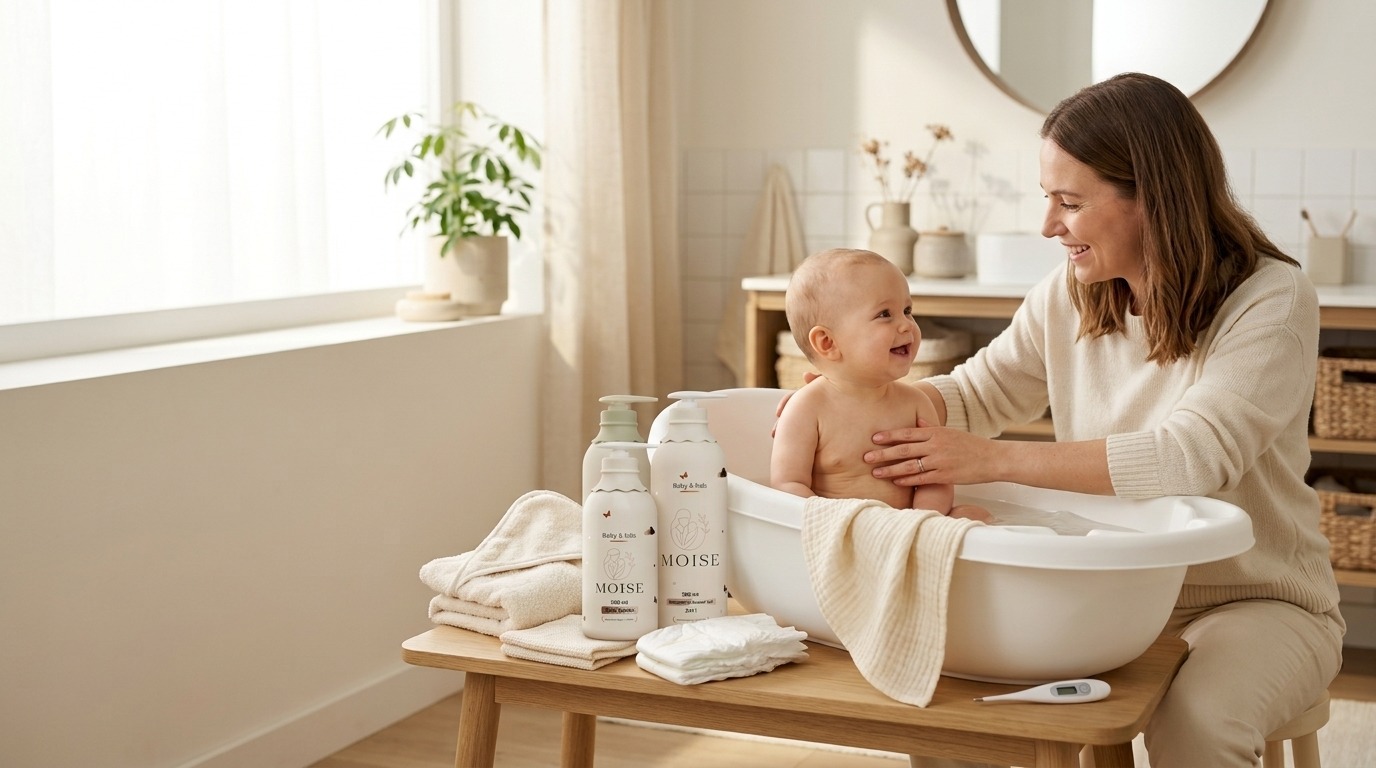
- Wash the scalp gently. Use a mild baby shampoo and lukewarm water. Massage with your fingertips. Do not rub hard. Rinse well so no oil or shampoo stays on the skin.
- Loosen only what comes away easily. Use a soft baby brush with light strokes. A cradle cap brush or comb with soft bristles is fine. If a scale resists, leave it for another day.
- Repeat patiently. Cradle cap treatment for a baby works gradually. Expect slow improvement over several washes, not a clear scalp after one.
A pharmacist can suggest a suitable emollient, an unperfumed baby shampoo or a cradle cap shampoo. That is a good next step if simple care is not helping.
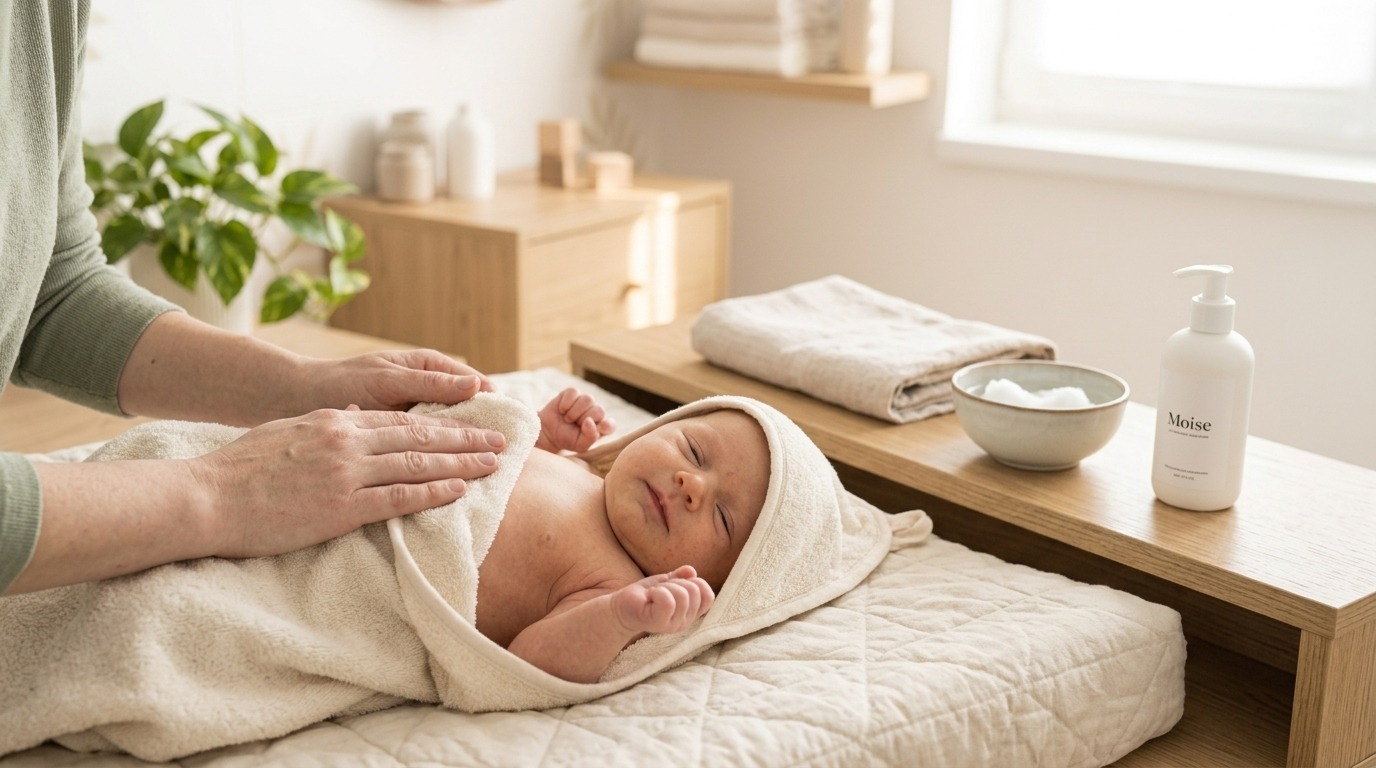
Is your baby only a few weeks old? The same gentle approach applies to cradle cap treatment for a newborn. Our guide to top and tailing a newborn covers day-to-day washing in those early weeks.
Should You Pick or Scrape Off Cradle Cap?
No. Do not pick, scratch, scrape or peel the scales, and keep fingernails away from them.
The NHS warns that picking crusts raises the chance of infection. Eczema UK adds that it can leave raw areas of skin. Forced removal can also cause bleeding and irritation.
The rule is simple. If a scale does not come away easily, leave it alone. It will loosen in its own time.
Can You Use Oil for Cradle Cap?
Some oils can help soften scales, but not every oil is suitable. Advice also differs between organisations, which is why parents hear mixed messages.
| Oil or product | What UK guidance says |
|---|---|
| Emollient (plain moisturiser) | Recommended by the NHS to loosen scales |
| Coconut oil | Listed by the NHS as an option; Eczema UK also accepts it |
| Unperfumed mineral oil | Eczema UK says it is fine to use |
| Sunflower oil | Eczema UK says it is fine to use |
| Olive oil | Not advised; the NHS says it may not be suitable for skin, and Eczema UK says it can damage the skin barrier |
| Peanut oil | Not advised by the NHS because of the allergy risk |
| Essential oils | Do not use on a baby's scalp |
Many products sold as baby oil are mineral oil with added fragrance. Check the label and choose an unperfumed one.
No oil cures cradle cap. Cradle cap oil only softens the scales so they lift more easily. Use a small amount, and wash it out with baby shampoo afterwards. If your baby has eczema or very sensitive skin, ask a pharmacist or health visitor before using any oil.
What Shampoo Is Best for Cradle Cap?
A mild, unperfumed baby shampoo is the best starting point. Look for a product that is:
- made for babies
- gentle and non-irritating
- free from fragrance or perfume
The NHS advises against soap, adult shampoos and fragranced products on a baby with cradle cap. Adult anti-dandruff shampoos are not for babies unless a healthcare professional recommends one.
Pharmacies also sell shampoos made for cradle cap. Read the leaflet, keep the product out of your baby's eyes and ask the pharmacist if you are unsure.
Be wary of labels. "Natural" and "chemical-free" do not automatically mean safer. Eczema UK points out that products described as natural or for sensitive skin may still contain fragrance and other irritants. Our guide to baby bath products explains what to look for on a label.
How Often Should You Wash a Baby's Hair?
There is no single schedule that suits every baby. Cradle cap does not mean the scalp needs scrubbing or daily shampooing.
For babies with cradle cap, Eczema UK suggests washing the scalp every few days with lukewarm water. Adjust to your baby. A baby with thick hair or a greasier scalp may need washing a little more often than a baby with fine, sparse hair.
A few habits help:
- use a small amount of gentle shampoo
- rinse thoroughly
- pat the scalp dry with a soft towel instead of rubbing
- avoid extra washes, which can dry the skin
For the wider routine, see how often you should bathe a baby.
Cradle Cap on the Eyebrows, Face or Behind the Ears
Cradle cap can appear beyond the scalp. Infant seborrhoeic dermatitis may also affect:
- the eyebrows and forehead
- the folds beside the nose
- the skin behind the ears
- neck folds and other skin creases
- the nappy area
Care stays gentle. Do not pick scales on the face, and keep oils and shampoo away from the eyes. For scales on the body, the NHS suggests regular baths with water and an emollient instead of soap.
If the nappy area is affected, change wet or dirty nappies promptly. A barrier cream can help protect the skin there.
The NHS advises seeing a GP if cradle cap is all over your baby's body. Seek advice too if the skin becomes swollen, weepy or sore. Our baby skincare routine by age explains how to keep everyday skincare simple.
Cradle Cap vs Eczema: What's the Difference?
Cradle cap is usually greasy and not itchy. Atopic eczema is usually dry and itchy. The table below sets out the general pattern.
| Feature | Cradle cap (seborrhoeic dermatitis) | Possible eczema |
|---|---|---|
| Scales | Often greasy, yellowish or whitish | Often dry and flaky |
| Itching | Usually absent | Often noticeable |
| Colour change | May be mild | Can be more pronounced |
| Common areas | Scalp, eyebrows, behind ears, skin folds | Often face and scalp in babies; varies with age |
| Skin feel | Greasy or waxy | Dry, rough, sometimes cracked |
| Baby's comfort | Usually little discomfort | Itching may disturb sleep and mood |
This is a general comparison, not a diagnostic test. The two can look alike, and a baby can have more than one skin condition at once. Eczema UK notes that some babies with seborrhoeic dermatitis also develop atopic eczema.
Other rashes cause confusion as well. Heat rash in babies looks quite different, with small raised spots. If you think your baby has eczema, speak to a GP.
How Long Does Cradle Cap Last?
It varies. The NHS says cradle cap usually goes away on its own within a few months. Eczema UK says it usually resolves by 6 to 12 months and, at the latest, around the first birthday.
Improvement tends to be gradual. Scales may thin, return for a while and then fade. There is no need to remove every scale straight away, because the condition clears whether or not you do.
Once infant seborrhoeic dermatitis has resolved, Eczema UK says it does not come back during childhood.
Persistent cradle cap is worth a conversation. The NHS suggests seeing a GP if it has not improved after a few weeks of treatment.
Does Cradle Cap Cause Hair Loss?
Not permanently. Some hair may come away with loose scales. The NHS says not to worry, because it will soon grow back.
Thick scales can also make hair look thinner than it is. What does harm the scalp is forcing scales off, so let them lift on their own.
Speak to a GP or health visitor if your baby loses hair in distinct patches, or if hair loss comes with sore or inflamed skin. That pattern is not typical of simple cradle cap.
Is Cradle Cap Contagious?
No. Cradle cap is not contagious. The NHS confirms it cannot be caught from other babies.
You do not need to keep your baby away from siblings, relatives or baby groups. Cuddles, shared play and normal family contact are all fine.
When Should You Worry About Cradle Cap?
Most cradle cap never needs a doctor. Some changes do deserve a professional opinion. The NHS advises seeing a GP if:
- the cradle cap has not improved after a few weeks of treatment
- your baby has cradle cap all over their body
- the crusts bleed or leak fluid
- the affected areas look swollen
According to the NHS, bleeding, leaking fluid and swelling could be signs of an infection or of another condition, such as atopic eczema or scabies.
It is also sensible to seek advice if:
- the skin feels hot, smells unusual or weeps
- there is pus or yellow fluid
- the rash is getting worse quickly or spreading
- the scalp looks very inflamed or sore
- your baby seems itchy, uncomfortable or unsettled by the skin
- you are not sure it is cradle cap at all
An article cannot tell you whether skin is infected. Only someone who examines your baby can. If you have a nagging doubt, ask. Health visitors, pharmacists and GPs see cradle cap all the time and are happy to check.
Cradle Cap: When to Contact a Doctor Urgently
Cradle cap on its own is not an emergency. A baby who is unwell and has a rash is a different matter. The guidance below comes from the NHS and applies to the UK. Elsewhere, use your local urgent care or emergency number.
Ask for an urgent GP appointment or call NHS 111 if your baby:
- has a rash you are worried about and you are not sure what to do
- is under 3 months old and has a temperature of 38C
- is 3 months or older and has a temperature of 39C or higher
- feels hotter than usual on the back or chest, feels sweaty or is shivering
Call 999 or go to A&E now if your baby is unwell with a rash and:
- has difficulty breathing, is breathing very fast or is making grunting noises
- has skin, lips or a tongue that look pale, blue, grey or blotchy
- seems confused or agitated, or is not responding as they usually do
- has sudden swelling of the lips, mouth, throat or tongue
- has a rash that looks like small bruises or bleeding under the skin and does not fade when you press a glass against it
On brown and black skin, colour changes may be easier to see on the palms, the soles of the feet, the lips, the tongue and inside the eyelids.
A high temperature is not always present in a seriously unwell baby. Trust your instincts. If you think something is seriously wrong, get help straight away.
What Not to Do for Cradle Cap
A few well-meant habits can make things worse. Avoid:
- Scraping, picking or scratching the scales. This can break the skin and raise the risk of infection.
- Using fingernails or harsh exfoliation. Baby skin is thin and marks easily.
- Aggressive brushing. A soft brush with light strokes is enough.
- Olive oil and peanut oil. The NHS advises against both.
- Essential oils. They can irritate a baby's skin.
- Soap, adult shampoos and strongly fragranced products. The NHS advises against these.
- Adult anti-dandruff shampoos without professional advice. They are not made for babies.
- Unverified home remedies. If a pharmacist would not suggest it, leave it out.
- Excessive shampooing. Washing too often can dry the skin.
Cradle Cap Treatment at a Glance
| Situation | What to do | What to avoid |
|---|---|---|
| Mild scalp scales | Gentle washing and patience | Scraping |
| Thick scales | Soften with an emollient or coconut oil, then wash | Pulling them off |
| Loose flakes | Brush away only what lifts easily | Picking |
| Mild colour change under scales | Gentle, unperfumed skincare | Soap and harsh cleansers |
| Baby scratches frequently | Ask a GP or health visitor | Assuming it is always cradle cap |
| Bleeding, weeping or pus | See a GP | Treating it aggressively at home |
| Baby appears unwell | Get medical advice promptly | Waiting for it to resolve on its own |
Cradle cap asks very little of you. Be gentle, be patient and keep an eye out for the warning signs above. In most babies, the scales fade and leave no trace.