You're changing your baby after a bath and notice something new.
Their cheeks look rough and pink. There's a dry patch in the crease of an elbow. They keep rubbing their face against your shoulder. It's natural to wonder: could this be baby eczema?
Baby eczema is a common inflammatory skin condition that can cause dry, itchy, irritated patches. Gentle skin care, regular use of suitable moisturisers and identifying individual triggers can help manage symptoms, but persistent or severe symptoms may require medical assessment and prescribed treatment.
The type most babies get is called atopic eczema (also known as atopic dermatitis). It's most common in young children, often starts in the first months of life and tends to come and go in flare-ups. It can't be cured, but it can usually be managed well, and many children find their symptoms improve as they grow.
It's worth saying early on: not every rash or patch of dry skin is eczema. Newborn skin goes through lots of normal changes, and several other conditions can look similar. This article will help you understand what eczema in babies often looks like, what tends to make it worse and how to care for your baby's skin day to day. It can't confirm a diagnosis. If you're unsure, or your baby's skin isn't improving, a GP, health visitor or pharmacist can take a proper look.
What does baby eczema look like?
Baby eczema symptoms vary from one child to the next, and they can change from week to week. The most common signs include:
- Dry, rough or flaky skin that feels like fine sandpaper under your fingers.
- Discoloured, inflamed patches. On lighter skin these often look pink or red. On brown and black skin, redness can be much harder to see. Affected areas may instead look purple, grey, brown, or darker or lighter than the surrounding skin.
- Itching or discomfort, which in babies usually shows up as rubbing, wriggling or restlessness.
- Skin that looks more irritated after rubbing or scratching, sometimes with small scratch marks.
- Patches that improve and then return. This pattern of calmer spells and flare-ups is typical of eczema.
- Cracked, crusty or weeping areas in more severe cases, or where the skin has been scratched a lot.
Over time, skin that's repeatedly scratched can look slightly thickened. Because eczema can look so different on different skin tones, don't rely on redness alone. Pay attention to texture, dryness and how your baby is behaving too.
The appearance of a rash on its own isn't enough to diagnose eczema. A healthcare professional will look at the pattern of the rash, where it appears, whether it itches, how long it's been there and your family history.
Common areas affected by baby eczema
In babies, eczema very often appears on the face. You might see it in these places:
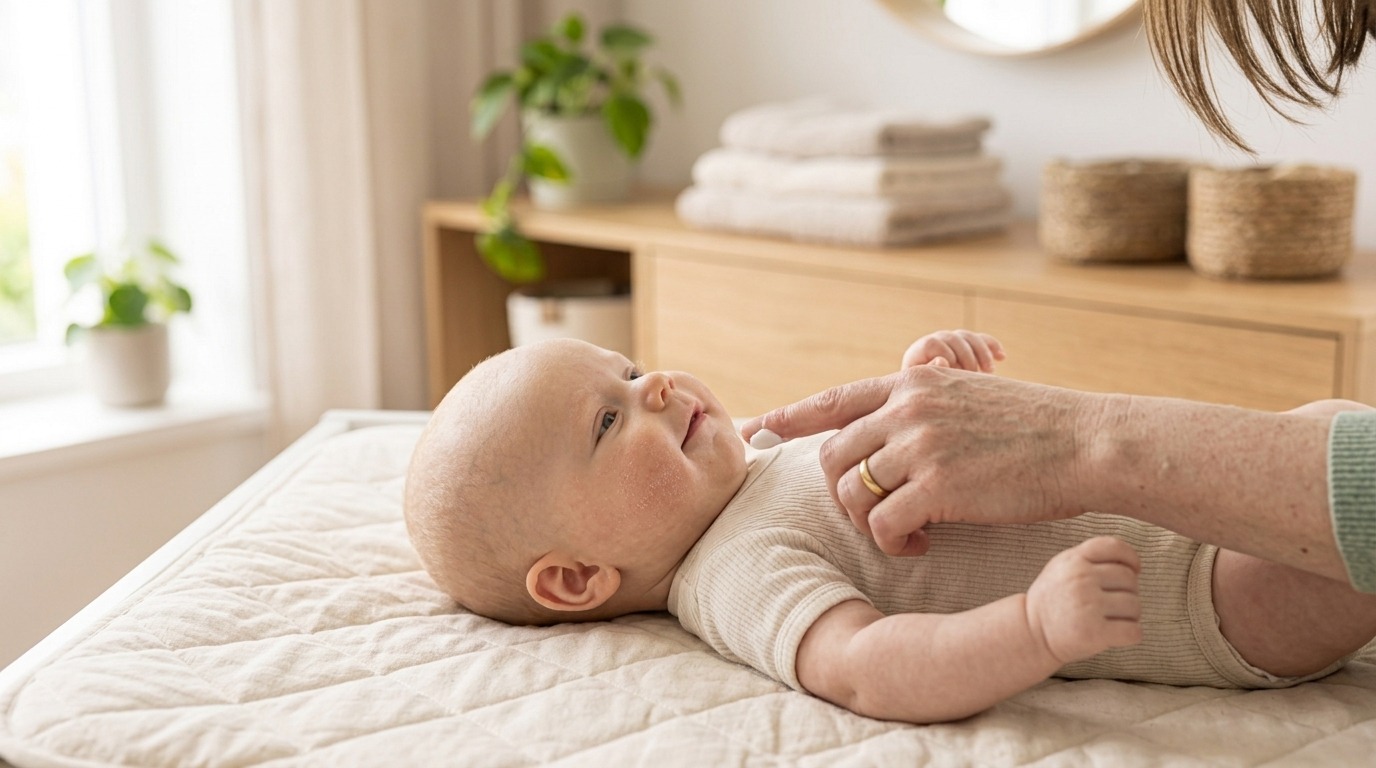
- Cheeks and face. Baby eczema on the cheeks is one of the most familiar patterns. The cheeks may look rough, blotchy or chapped.
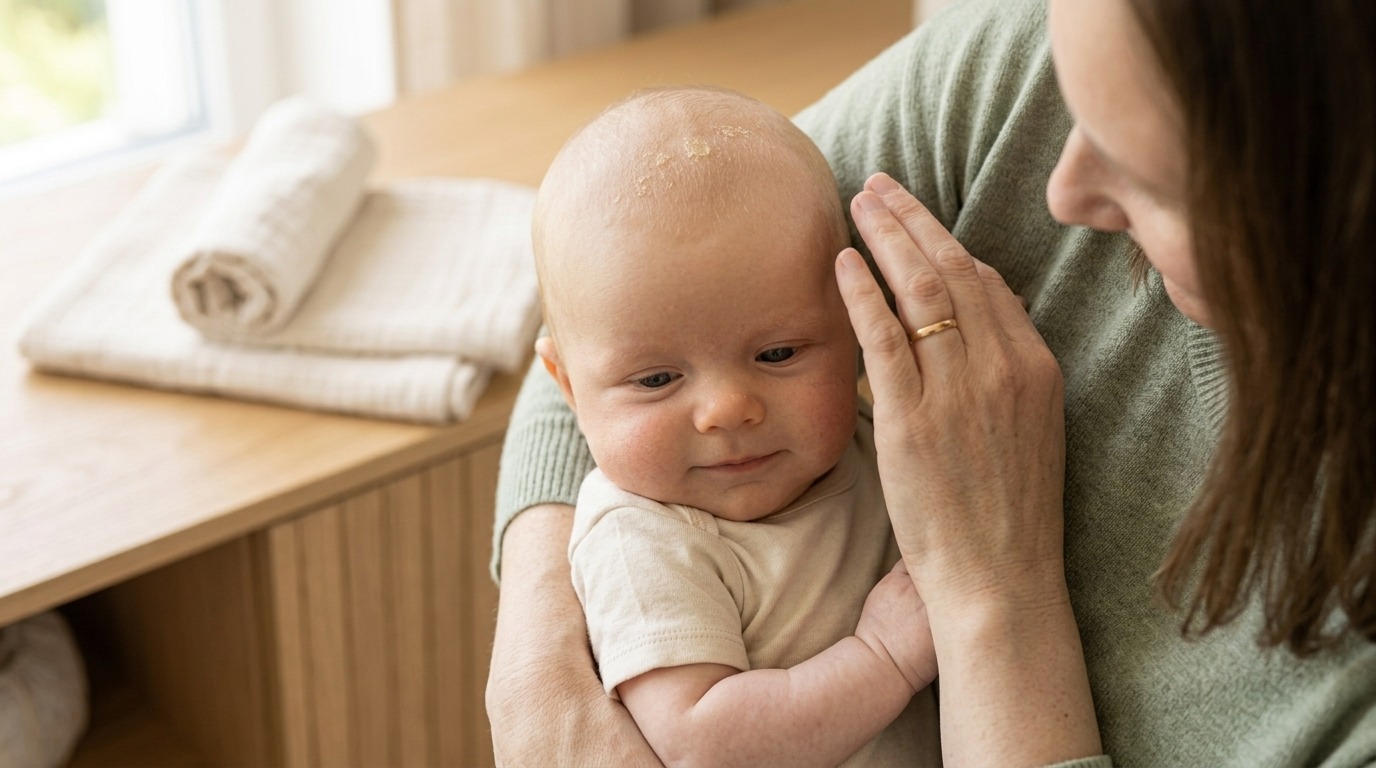
- Scalp and forehead. Dry, scaly patches can appear here, sometimes alongside cradle cap.
- Arms and legs. Baby eczema on the arms and legs often shows up on the outer surfaces first.
- Elbows and knees. As babies grow, eczema commonly settles into skin creases such as the inside of the elbows and the backs of the knees.
- The body. Any area that becomes dry or rubs against clothing can be affected.
The nappy area is often spared, possibly because it stays relatively moist. A rash there is more likely to be nappy rash, though it's always worth checking if you're unsure. Every baby is different, and not all babies with eczema will have it in the same places.
Does baby eczema itch?
Itching is one of the main features of eczema, but babies can't tell you about it. Instead, you might notice your baby:
- rubbing their face against bedding, your clothes or their cot mattress
- wriggling or squirming, especially when undressed
- having trouble settling or waking more often at night
- scratching once they can reach their skin with their hands
Some babies show obvious signs of itching, while others with milder dryness seem fairly content. Both are possible, so a lack of scratching doesn't rule eczema out.
Baby eczema by age: newborns, young babies and older babies
Eczema can appear at any point in infancy, and how it shows up may shift as your baby grows. The descriptions below are general patterns, not a timetable. Your baby's skin may follow a different path.
Eczema in newborns
In the first few weeks, it can be genuinely hard to tell eczema apart from normal newborn skin. Peeling skin, tiny white spots, blotchy patches and baby acne are all common and usually settle by themselves. Cradle cap is common too.
Because so many newborn rashes are harmless and temporary, try not to assume a rash is eczema. Equally, don't wait it out if something seems wrong. Speak to your health visitor, midwife or GP if your newborn has a rash that is persistent, widespread, weeping or seems to bother them.
Eczema in babies aged 3–6 months
This is often when dry, itchy patches become more noticeable, particularly on the cheeks, forehead and scalp. Several everyday things can aggravate skin that's already sensitive:
- saliva from early dribbling
- rubbing the face against bedding or a parent's clothes
- getting too warm under blankets or in heavy layers
- soaps, bubble baths or fragranced products
Not every baby reacts to these, and noticing a pattern takes time.
Eczema in babies aged 6–12 months
As babies start rolling, sitting and crawling, their knees, elbows and the outer sides of their arms and legs rub against carpets and floors more. Teething can bring more drooling. Starting solid foods means more food and wiping around the mouth.
Your baby's environment changes too. They may spend time at nursery or with other carers, wear new fabrics or meet pets. Any of these may play a part for some babies, but triggers vary widely. Many children's eczema improves as they get older, but there's no fixed age when that happens.
What causes eczema in babies?
The exact cause of atopic eczema isn't always known. What is understood is that eczema is linked to a weakened skin barrier and inflammation in the skin.
Healthy skin works a bit like a brick wall. Skin cells are the bricks, and natural oils and fats act as the mortar that holds moisture in and keeps irritants out. In eczema-prone skin, that barrier doesn't work as well. Moisture escapes more easily, the skin dries out, and irritants can get in and set off inflammation and itching.
Several factors seem to be involved:
- Family history. Babies are more likely to develop eczema if one or both parents have it, or if a close family member has asthma or hay fever. These are known as atopic conditions and often run together.
- Genes and the skin barrier. Atopic eczema often has a genetic component that affects how well the skin barrier works.
- The immune system and environment. Sensitive skin, an overactive inflammatory response and things in the environment all interact. That's why the same baby can have calm skin one week and a flare-up the next.
Two things are worth knowing clearly. Eczema isn't caused by poor hygiene, and washing more won't prevent it. Eczema isn't contagious, so your baby can't catch it or pass it on to others.
It also helps to separate underlying causes from triggers. The underlying factors make a baby prone to eczema in the first place. Triggers are the everyday things that can make symptoms worse in a baby who already has it. No single food, detergent, product or exposure causes every baby's eczema.
Common baby eczema triggers
Baby eczema triggers differ from child to child. One baby might flare after getting too hot, while another is bothered by a woolly jumper and not much else. The list below covers possible triggers, not certain ones.
Heat and sweating
Being hot can make eczema itchier. Warm rooms, heavy blankets, too many layers and sweaty skin under clothing may all contribute. Dress your baby in comfortable layers you can add or remove, and check they're not overheating by feeling the back of their neck or their tummy rather than their hands.
Fragranced soaps, bubble baths and skincare products
Soap, bubble bath and fragranced cleansers can strip natural oils and irritate sensitive skin. For babies with eczema, NHS guidance suggests washing with an emollient (a medical moisturiser) instead of soap. When choosing other products, fragrance-free is usually the safer starting point.
Remember that "natural" or "organic" doesn't automatically mean gentle. Plant extracts and essential oils can irritate eczema-prone skin too.
Laundry detergents and fabric softeners
Washing detergent is listed by the NHS as something that can make eczema worse for some people. If you suspect it's playing a part, try a fragrance-free, non-biological product, rinse well and skip fabric softener for a while. Most babies with eczema won't need specialist laundry products, so only make changes if you notice a link.
Rough fabrics and friction
Wool, scratchy seams, labels and tight clothing can rub against eczema-prone skin. Repeated friction, for example from crawling on rough carpet, may also irritate it. Soft, breathable fabrics such as cotton tend to feel more comfortable.
Saliva, drooling and food around the mouth
Dribble and bits of food sitting on the skin can irritate the chin, cheeks and the skin around the mouth. Gently wipe or pat the area clean with lukewarm water and a soft cloth, then apply a thin layer of moisturiser. Doing this before meals can act as a light protective layer.
A red, irritated area around the mouth after eating is often simple irritation. It doesn't necessarily mean your baby has a food allergy.
Weather and indoor conditions
Cold weather, wind and dry indoor air from central heating can all dry the skin out further. Some babies have flares that follow the seasons. Keeping up with moisturiser during colder months and avoiding overheated rooms may help.
Possible food-related concerns
Food allergy and eczema aren't the same condition. Having eczema doesn't mean your baby has a food allergy. Some babies do have both, and in some children certain foods such as cows' milk or eggs can make eczema worse.
UK guidance is clear that most children with mild eczema don't need allergy tests. NHS advice is not to change your baby's diet, or your own if you're breastfeeding, unless a doctor advises it. Cutting foods out without medical guidance can affect your baby's nutrition, and your own.
Speak to your GP if:
- eczema seems to flare consistently after a particular food
- your baby has an immediate reaction after eating, such as hives, swelling of the lips or face, or vomiting
- your baby's eczema is moderate or severe and isn't improving with good skin care
If your baby has swelling of the face, lips or tongue, or any difficulty breathing, call 999.
Everyday baby eczema care: a gentle daily routine
The foundation of caring for baby eczema is simple: clean gently, moisturise often and keep your baby comfortable. The routine below is a starting point. Adapt it to your baby's skin and to any advice from your GP, health visitor or pharmacist. For a wider look at skin care as your baby grows, see our baby skincare routine from newborn to 12 months.
1. Cleanse the skin gently
Use lukewarm water rather than hot, which can dry and irritate the skin. Soap and bubble bath can strip away natural oils, so NHS guidance recommends washing with an emollient instead. Many emollients can double as a soap substitute; check the label or ask your pharmacist.
Use your hands or a soft cloth and avoid scrubbing. Between baths, you can clean your baby's face, neck, hands and nappy area with cotton wool and water.
There's no single rule for how often to bath a baby with eczema. Some babies do well with a bath most days followed by moisturiser, while others seem better with fewer. Watch how your baby's skin responds and follow any advice from your healthcare professional.
2. Keep bath time comfortable
Short, lukewarm baths suit many babies with eczema. Afterwards, pat the skin dry with a soft towel instead of rubbing.
NICE updated its guidance in 2023 to say bath emollients (oils or additives poured into the water) shouldn't routinely be offered to children with eczema. A large UK trial found they added no clear benefit on top of standard care. It's the leave-on moisturiser applied directly to the skin that matters most. Emollients can also make the bath slippery, so hold your baby securely.
3. Apply a suitable moisturiser
Emollients are the cornerstone of eczema care. They help keep moisture in, protect the skin barrier and reduce dryness and itching. The NHS advises using them often, at least twice a day, and continuing even when the skin looks clear.
Emollients come in different forms:
| Type | General feel | Often used for |
|---|---|---|
| Ointment | Thick and greasy | Very dry or thickened skin, often at night |
| Cream | Lighter, absorbs more easily | Everyday use and daytime |
| Lotion | Thinnest, spreads easily | Larger areas or mildly dry skin |
| Gel | Light, non-greasy | Some babies and parents prefer the feel |
These are general differences, not rules. A UK trial comparing lotions, creams, gels and ointments in children with eczema found they worked equally well overall, but no single type suited everyone. The best moisturiser for baby eczema is usually the one that suits your baby's skin and that you'll use consistently.
A few practical tips:
- Choose fragrance-free. Look for a product suitable for babies, or one recommended by your pharmacist or GP.
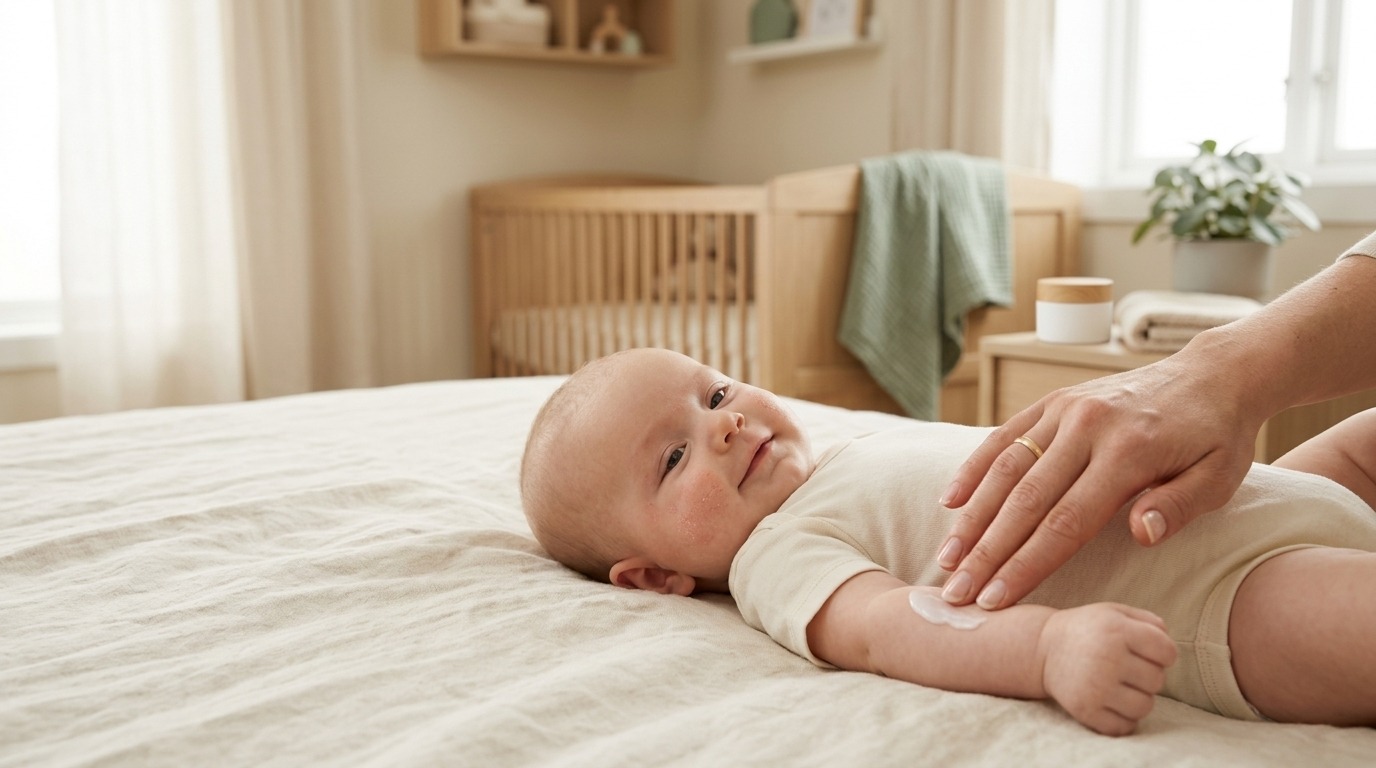
- Apply after bathing, once the skin has been gently patted dry.
- Smooth it on in the direction of hair growth rather than rubbing it in hard.
- Use a spoon or pump, not your fingers, to take it out of a tub. This helps keep the product clean.
- Don't use aqueous cream. The NHS warns it can irritate the skin and make eczema worse.
- Keep away from naked flames. Emollients aren't flammable on the skin, but they build up on clothing and bedding, which can then catch fire more easily.
If your baby's skin stays dry or inflamed despite regular moisturising, speak to your GP. Stronger moisturisers or prescribed treatments may help.
4. Choose comfortable clothing
Soft, breathable fabrics such as cotton are usually the most comfortable next to eczema-prone skin. Avoid wool directly against the skin, cut out scratchy labels and choose clothes that aren't too tight. Light layers make it easier to avoid overheating, which can make itching worse.
5. Keep nails short and reduce scratching
Scratching can damage the skin and let germs in. Keep your baby's nails short and smooth, using baby nail clippers, scissors or a soft emery board in a way that's appropriate for their age. The NHS also suggests anti-scratch mittens for babies, which can be helpful at night.
Avoid anything that restricts your baby's movement or comfort. If itching is keeping your baby awake, that's a reason to speak to your GP rather than something to manage alone.
6. Follow a consistent routine
A simple routine you repeat every day makes it easier to spot what helps and what doesn't. If you'd like to try a new product, introduce one at a time and give it a few days before deciding. Changing several things at once makes it hard to tell what caused any improvement or reaction.
Some parents find a short diary useful. Note any flare-ups and what happened around them, such as weather, new products or illness. This can also help your GP.
Which products are suitable for babies with eczema?
You don't need a cupboard full of products. A small, simple kit is often best:
- A fragrance-free emollient designed for babies or recommended by a healthcare professional. You may be prescribed one, or a pharmacist can help you choose.
- A gentle, fragrance-free cleanser, or an emollient used as a soap substitute.
- Mild, fragrance-free laundry products if regular detergent seems to make things worse.
- Soft washcloths, towels and cotton clothing.
It's sensible to avoid:
- fragranced lotions, bubble baths and baby perfumes
- essential oils and strongly scented "natural" products
- exfoliating scrubs or rough flannels
- aqueous cream
- anything that stings, burns or seems to make the skin redder
Labels such as "hypoallergenic", "dermatologically tested" or "natural" can be helpful, but they don't guarantee a product will suit every baby. Patch-test a small area first if you're unsure. No moisturiser can cure eczema. Its job is to help manage dryness and support the skin.
When moisturisers alone aren't enough, your GP may prescribe a treatment such as a mild steroid cream (topical corticosteroid). Used as directed, these are an established and effective part of eczema care. Always follow the prescriber's instructions on which cream, where, how much and for how long.
If you're unsure whether your baby's skin is eczema or simply sensitive, our guide to signs of sensitive skin in babies may help, alongside advice from a professional.
Baby eczema flare-ups: what should parents do?
A flare-up is when eczema suddenly gets worse. Signs include more dryness, itching, redness or discolouration, swelling and general irritability. When it happens:
- Keep skin care simple and gentle. Now isn't the time to try new products.
- Stop anything that seems to be irritating the skin, such as a new cleanser or detergent.
- Keep moisturising regularly and generously.
- Keep your baby cool and comfortable, in soft, light layers.
- Look for patterns. Did the flare follow an illness, hot weather or a new product?
- Seek professional advice if the flare-up persists, spreads, causes significant discomfort or doesn't improve with your usual care. If your baby already has a prescribed treatment plan, follow it.
Eczema naturally comes and goes. A flare-up doesn't mean you've done something wrong, and home care alone won't always be enough. Sometimes a prescribed treatment is needed to settle things down.
Baby eczema or another skin condition?
Many baby rashes look alike, especially in the early months. Some can even appear alongside eczema. The table below gives a general overview to help you know what to mention to a professional. It isn't a diagnostic tool.
| Condition | Common appearance | What parents should know |
|---|---|---|
| Baby eczema | Dry, rough, itchy patches; pink or red on lighter skin, darker, purple or grey on darker skin; often cheeks, scalp and creases | Tends to come and go. Usually managed with regular emollients; persistent symptoms need a GP review |
| Cradle cap | Greasy, yellowish or crusty scales on the scalp; can also affect eyebrows, behind ears or skin folds | Common and usually harmless; tends not to itch. Read more in our guide to cradle cap |
| Baby acne | Small red or white spots on the cheeks, nose or forehead | Common in the first weeks and usually clears by itself; not linked to poor hygiene |
| Irritant contact dermatitis | Red, sore or rough skin where something has touched it, such as saliva, food, a cleanser or a nappy | Usually improves once the irritant is reduced and the skin is protected |
| Heat rash | Small raised spots or bumps, often in skin folds or where clothing is tight, after getting hot | Usually settles once your baby cools down; avoid overdressing |
| Possible skin infection | Increasing redness, warmth, swelling, pain, pus, yellow or golden crusts, or weeping | Needs prompt medical assessment; may need antibiotic or antiviral treatment |
If your baby's rash is persistent, unusual, painful or getting worse, get it checked. Babies can also have dry skin without eczema; our article on dry skin in babies explains the difference in more detail.
When should you see a doctor about baby eczema?
It's always fine to ask for advice. The NHS recommends seeing a GP if your child has symptoms of eczema, or if treatments aren't helping. A pharmacist can also advise on mild, small areas of dryness.
Contact your GP or health visitor if:
- the rash is persistent, widespread or getting worse
- itching or discomfort is affecting your baby's sleep or feeding
- the skin is cracked, bleeding or repeatedly damaged by scratching
- your baby isn't improving with gentle, regular skin care
- you're not sure whether the rash is eczema
- you're worried about a possible allergy or a reaction to a product
Ask for an urgent GP appointment or call NHS 111 if your baby has eczema and the skin:
- is blistered, crusty, leaking fluid or has spots filled with pus
- is painful, swollen or feels warm
- suddenly gets worse or spreads
- comes with a high temperature, or your baby seems generally unwell
These can be signs that eczema has become infected, or of a more serious condition called eczema herpeticum.
Urgent warning signs
Eczema herpeticum is a rare but potentially serious infection caused by the cold sore virus (herpes simplex) spreading into eczema-affected skin. It needs urgent treatment.
Seek urgent medical help, via NHS 111, your GP urgently or A&E, if your baby:
- develops a rapidly spreading, painful rash
- has clusters of small blisters, or small "punched-out" looking sores, on eczema-affected skin
- has a fever with a concerning rash
- is unusually floppy, drowsy, hard to wake or difficult to settle
- seems seriously unwell to you
If your baby is under 3 months old and has a temperature of 38°C or higher, get urgent medical advice, even if they seem otherwise well. Don't try to treat a fever at home in a baby this young without speaking to a healthcare professional first.
Call 999 if your baby has difficulty breathing, has swelling of the face, lips or tongue, or has a rash that doesn't fade when you press a glass against it.
You don't need to decide yourself whether it's an infection or eczema herpeticum. That's a job for a clinician. Your job is to notice when something has changed or feels wrong and to get help quickly.
Frequently asked questions about baby eczema
What are the first signs of eczema in babies?
The first signs are often dry, rough patches that feel like sandpaper, usually on the cheeks, forehead or scalp. On lighter skin they may look pink or red. On darker skin they may look brown, grey or purple. You might also notice your baby rubbing their face or struggling to settle. A GP or health visitor can confirm whether it's eczema.
What does baby eczema look like on the cheeks?
Baby eczema on the cheeks often looks rough, chapped or blotchy, with slightly raised patches. The skin may appear pink or red on lighter skin tones, or darker, greyer or purple on brown and black skin. It may look worse after feeds, dribbling or rubbing against bedding. Other rashes can look similar, so ask a professional if you're unsure.
Can newborns develop eczema?
Yes, eczema can start in the first weeks of life, although it more often becomes noticeable after a couple of months. Newborn skin goes through many harmless changes, such as peeling, baby acne and cradle cap, which can be mistaken for eczema. If your newborn's rash is persistent, widespread or seems uncomfortable, speak to your midwife, health visitor or GP.
Is baby eczema contagious?
No. Atopic eczema isn't contagious, so your baby can't catch it from anyone or pass it to other children. It's also not caused by poor hygiene. However, eczema-affected skin can become infected. If the skin becomes weepy, crusty, blistered or painful, or your baby has a fever, seek medical advice promptly.
What triggers eczema flare-ups in babies?
Common triggers include overheating, sweating, soap and fragranced products, some laundry detergents, rough fabrics such as wool, saliva and food on the skin, and cold or dry air. Illness can also set off a flare. Triggers vary a lot between babies, and sometimes there's no obvious cause. Keeping a simple diary can help you spot patterns.
How often should I bathe a baby with eczema?
There's no single right answer. Some babies with eczema do well with a short, lukewarm bath most days, followed straight away by moisturiser. Others seem better with fewer baths. Use an emollient instead of soap, keep the water lukewarm and pat the skin dry. Your GP or health visitor can advise on what suits your baby.
Which moisturiser is best for baby eczema?
No single moisturiser is best for every baby. Research comparing lotions, creams, gels and ointments in children with eczema found they worked similarly overall. The right choice is a fragrance-free emollient that suits your baby's skin and that you'll use at least twice a day. A pharmacist or GP can help you choose, and some emollients are available on prescription.
Can baby eczema be caused by food allergies?
Food allergy doesn't cause eczema in most babies, but in some, certain foods such as cows' milk or eggs can make it worse. Most babies with mild eczema don't need allergy tests. Don't cut foods from your baby's diet, or from your own if you're breastfeeding, without medical advice. See your GP if flares consistently follow a particular food.
Should I use baby oil on eczema-prone skin?
Baby oils, particularly fragranced ones, aren't a substitute for an emollient and may irritate eczema-prone skin. Plant oils and essential oils can irritate too. An emollient designed for dry or eczema-prone skin is usually a better choice for helping the skin hold on to moisture. If you're unsure about a product, ask a pharmacist before using it.
Can baby eczema go away on its own?
Many children find their eczema improves as they get older, and for some it clears completely during childhood. Others continue to have it for longer. There's no way to predict exactly when or whether it will clear. In the meantime, regular moisturising and gentle care help keep symptoms under control, with prescribed treatment when needed.
Is it safe to use eczema cream on a baby?
Fragrance-free emollients are generally safe for everyday use and can be applied freely. Medicated creams are different. Topical corticosteroids (steroid creams) are effective and safe when used as prescribed, but your GP will choose the strength and tell you where, how much and how long to use them. Don't use over-the-counter steroid creams on a baby without medical advice.
When should I take my baby to the doctor for eczema?
See your GP if you think your baby has eczema, if it's affecting their sleep or feeding, or if it isn't improving with regular moisturising. Seek urgent help if the skin is weeping, crusty, blistered, painful or spreading fast, or if your baby has a fever or seems unwell. Babies under 3 months with a temperature of 38°C or higher need urgent assessment.
Conclusion: gentle, consistent care for baby eczema
Baby eczema is common, and seeing your little one's skin dry and itchy can be worrying. The good news is that a few gentle habits make a real difference.
- Baby eczema can cause dry, itchy and irritated skin, but not every rash is eczema.
- Triggers differ from baby to baby, so watch for your own baby's patterns.
- Gentle cleansing, regular moisturising and soft, comfortable clothing form the basis of everyday care.
- Avoid frequent product changes, and don't restrict your baby's diet, or your own, without medical advice.
- Persistent symptoms, signs of infection or sudden changes need medical attention.
Most of all, remember that eczema isn't a sign of poor parenting or poor hygiene. It's a skin condition, and lots of babies have it. Asking for help is part of looking after your baby well, never a sign you've got something wrong.
If you'd like more ideas for caring for delicate skin, explore our other baby skincare articles.
Medical disclaimer: This article provides general information about baby eczema and skin care. It doesn't replace individual medical advice, diagnosis or treatment. If you're concerned about your baby's skin or health, speak to your GP, health visitor, pharmacist or call NHS 111. In an emergency, call 999.
Frequently asked questions
The first signs are often dry, rough patches that feel like sandpaper, usually on the cheeks, forehead or scalp. On lighter skin they may look pink or red. On darker skin they may look brown, grey or purple. You might also notice your baby rubbing their face or struggling to settle. A GP or health visitor can confirm whether it's eczema.
Baby eczema on the cheeks often looks rough, chapped or blotchy, with slightly raised patches. The skin may appear pink or red on lighter skin tones, or darker, greyer or purple on brown and black skin. It may look worse after feeds, dribbling or rubbing against bedding. Other rashes can look similar, so ask a professional if you're unsure.
Yes, eczema can start in the first weeks of life, although it more often becomes noticeable after a couple of months. Newborn skin goes through many harmless changes, such as peeling, baby acne and cradle cap, which can be mistaken for eczema. If your newborn's rash is persistent, widespread or seems uncomfortable, speak to your midwife, health visitor or GP.
No. Atopic eczema isn't contagious, so your baby can't catch it from anyone or pass it to other children. It's also not caused by poor hygiene. However, eczema-affected skin can become infected. If the skin becomes weepy, crusty, blistered or painful, or your baby has a fever, seek medical advice promptly.
Common triggers include overheating, sweating, soap and fragranced products, some laundry detergents, rough fabrics such as wool, saliva and food on the skin, and cold or dry air. Illness can also set off a flare. Triggers vary a lot between babies, and sometimes there's no obvious cause. Keeping a simple diary can help you spot patterns.
There's no single right answer. Some babies with eczema do well with a short, lukewarm bath most days, followed straight away by moisturiser. Others seem better with fewer baths. Use an emollient instead of soap, keep the water lukewarm and pat the skin dry. Your GP or health visitor can advise on what suits your baby.
No single moisturiser is best for every baby. Research comparing lotions, creams, gels and ointments in children with eczema found they worked similarly overall. The right choice is a fragrance-free emollient that suits your baby's skin and that you'll use at least twice a day. A pharmacist or GP can help you choose, and some emollients are available on prescription.
Food allergy doesn't cause eczema in most babies, but in some, certain foods such as cows' milk or eggs can make it worse. Most babies with mild eczema don't need allergy tests. Don't cut foods from your baby's diet, or from your own if you're breastfeeding, without medical advice. See your GP if flares consistently follow a particular food.
Baby oils, particularly fragranced ones, aren't a substitute for an emollient and may irritate eczema-prone skin. Plant oils and essential oils can irritate too. An emollient designed for dry or eczema-prone skin is usually a better choice for helping the skin hold on to moisture. If you're unsure about a product, ask a pharmacist before using it.
Many children find their eczema improves as they get older, and for some it clears completely during childhood. Others continue to have it for longer. There's no way to predict exactly when or whether it will clear. In the meantime, regular moisturising and gentle care help keep symptoms under control, with prescribed treatment when needed.
Fragrance-free emollients are generally safe for everyday use and can be applied freely. Medicated creams are different. Topical corticosteroids (steroid creams) are effective and safe when used as prescribed, but your GP will choose the strength and tell you where, how much and how long to use them. Don't use over-the-counter steroid creams on a baby without medical advice.
See your GP if you think your baby has eczema, if it's affecting their sleep or feeding, or if it isn't improving with regular moisturising. Seek urgent help if the skin is weeping, crusty, blistered, painful or spreading fast, or if your baby has a fever or seems unwell. Babies under 3 months with a temperature of 38°C or higher need urgent assessment.