Do white noise and lullabies help babies sleep?
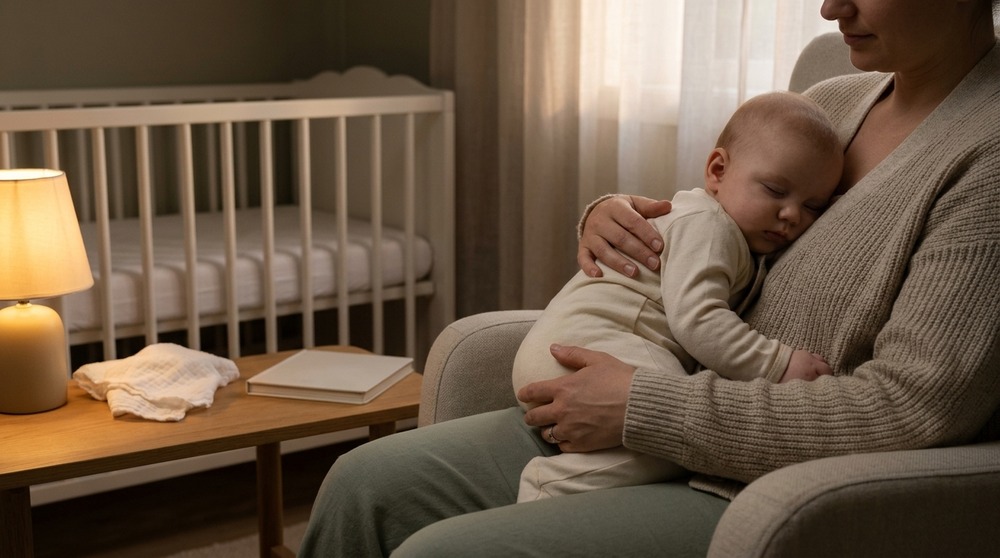
For some babies, yes. White noise for babies can help mask sudden household sounds and may help some newborns settle, and lullabies can calm a baby and become a familiar bedtime cue. But the evidence is modest, every baby responds differently, and neither will make your baby sleep through the night. Used gently and safely, both are optional tools, not essentials.
If you've ever found yourself humming the same tune for the fifteenth time at 2am, or wondering whether that sound machine your friend swears by is worth buying, this guide is for you. We'll look at what the research actually says, how to use white noise safely, and how to make sound a calm part of your baby's bedtime routine.
Why Do Babies Respond to Sounds When Falling Asleep?
Babies can hear before they're born. By the time they arrive, they've spent months surrounded by the muffled sounds of a heartbeat, blood flow and their mum's voice. After birth, they're very tuned in to voices, especially familiar ones, and to rhythm and repetition.
That's why gentle, repetitive sounds can feel soothing to some babies. A steady "shhh", a soft song or a low background hum gives them something predictable to focus on. Over time, sounds that happen every evening can also become part of the bedtime routine, one more signal that sleep is coming.
But babies aren't all the same. Some settle beautifully to background sound. Others are more easily distracted by it and drift off best in a quiet, dim room. Neither is unusual. Babies don't need background noise to sleep, and white noise doesn't recreate the womb, even if some sounds feel familiar.
What Is White Noise and How Does It Work?
White noise is a steady sound that contains many different frequencies, from low to high, played at roughly the same intensity. To our ears it sounds like a gentle hiss or rush: think of radio static, a fan or an air purifier humming in the corner.
Because it's constant, white noise can mask sudden noises. A door closing, a dog barking or a sibling laughing downstairs stands out less against a steady background sound. That's the main reason many parents use a white noise machine: to make the sleep environment more consistent, especially in a busy home.
You'll also see other "colours" of noise:
- White noise: an even spread across all frequencies. It sounds bright and hissy.
- Pink noise: more weight on the lower frequencies. It sounds softer, like steady rain or wind.
- Brown noise: even deeper, like a low rumble or distant waterfall.
These sound different, but there's no solid evidence that one colour of noise is better for babies' sleep than another. Pick whatever sounds most gentle to you and your baby.
Does White Noise Help Babies Sleep?
It might, for some babies, some of the time. The evidence is more limited than its popularity suggests.
The study most often quoted is a small UK trial from 1990. It included 40 newborns aged two to seven days. Of the 20 babies who heard white noise, 16 (80%) fell asleep within five minutes, compared with five out of 20 (25%) in the group without it. That's encouraging, but it was a small study looking only at falling asleep, not at how long babies stayed asleep.
A larger systematic review in 2021 looked at 38 studies of continuous noise and sleep across all ages. It rated the quality of evidence that continuous noise improves sleep as very low, and called for better research before it's promoted as a sleep aid.
So what can white noise realistically do?
- Help some babies settle, probably because a steady, repetitive sound is calming to them.
- Soften the impact of sudden noises in the house, so they're less likely to startle your baby.
- Act as a familiar cue if you use it consistently at sleep times.
What it can't do is fix the reasons babies wake. Hunger, a wet nappy, teething, feeling too hot or cold, or being unwell all still need your response. White noise is an optional soothing tool, not a sleep treatment, and it isn't a treatment for colic or reflux.
What Are Lullabies and Why Do Parents Sing Them?
Lullabies are gentle, slow, repetitive songs sung to soothe a baby to sleep. Almost every culture has them, and many of us sing the same ones our parents sang to us.
Part of their power is simply your voice. Your baby knows it well and finds it reassuring. Lullabies also tend to share a few features that make them calming: a slow tempo, a soft tone, simple melodies and lots of repetition.
Singing at bedtime can:
- Help you and your baby slow down together at the end of the day
- Give your baby a predictable cue that bedtime is coming
- Support bonding through closeness, eye contact and touch
- Calm you, too, on a long evening
And you don't need to be a good singer. Your baby doesn't care about pitch or lyrics. A gently hummed tune or a made-up song about their toes works just as well as a polished performance.
Do Lullabies Help Babies Sleep Better?
There's good evidence that singing calms babies. In one study, infants aged six to nine months stayed calm about twice as long listening to a song as they did listening to speech, even when the song was in an unfamiliar language. Researchers think the steady beat and repetition help hold a baby's attention and keep them settled.
That's not quite the same as proving that lullabies make babies sleep longer. Studies show singing helps babies stay calm. There's much less evidence that a lullaby changes how long a baby sleeps or how often they wake.
What lullabies do well is help your baby feel calm and secure at the moment you're settling them, and become a familiar part of your bedtime routine. Sung in the same place in the routine each night, a song can be a lovely signal that it's nearly time to sleep. For more on building that routine, see our guide to baby bedtime routines by age.
Some babies prefer quiet, though. If your baby seems more alert or wriggly when you sing, try humming very softly or simply staying close and quiet.
White Noise vs Lullabies: What Is the Difference?
| Comparison | White noise | Lullabies |
|---|---|---|
| Sound type | Continuous background sound | Gentle singing or music |
| Main purpose | May mask sudden environmental noises | May provide comfort and familiar bedtime cues |
| Sound pattern | Steady and repetitive | Melodic and rhythmic |
| Parent involvement | Plays on its own | Usually a parent singing, or gentle recorded music |
| Bonding opportunity | Limited direct interaction | Encourages closeness and interaction |
| Evidence | Small studies; overall evidence quality low | Good evidence for calming; little on sleep length |
| Best use | Optional background sound at sleep times | Part of a calming wind-down |
| Safety considerations | Volume, distance and how long it plays | Gentle volume, nothing too stimulating |
Neither is better for every baby. They do different jobs. White noise works in the background, while a lullaby is something you share with your baby. Plenty of families use one, both, or neither.
White Noise and Lullabies by Baby's Age
These are general suggestions, not developmental rules. Follow your baby's lead.
0–3 Months: Newborns
Newborns sleep in short, irregular bursts and wake often to feed. In these early weeks, your voice, a soft "shhh" or a quietly hummed song is often the most soothing sound of all. Some newborns also settle well with low-level white noise played at a distance.
Keep sound in the background of responsive care, not in place of it. If your baby is crying, check whether they're hungry, need winding or need a nappy change first. Keep night feeds and changes calm, dim and quiet. Our guide on how to change a nappy at night without waking your baby can help.
Whatever sounds you use, safe sleep always comes first: back to sleep, in a clear cot or Moses basket, in your room.
3–6 Months: Developing Sleep Patterns
Many babies start to show a little more predictability around now. This is a good time to make a sound part of your evening routine, such as the same lullaby after the bedtime feed, or white noise switched on as you lay your baby down.
Watch how your baby responds. If a sound seems to help them relax, keep it. If they seem more alert or fussy, try a quieter room instead. And remember that a song or sound machine won't stop a hungry baby waking. Night feeds are still normal at this age.
6–12 Months: Building Bedtime Associations
Babies at this age are more aware of their surroundings and may be more easily woken by household noise. A familiar song, a short story or quiet music can become a comforting part of the wind-down. Separation anxiety often shows up later in this stage, and a song you always sing can be reassuring.
If you use white noise, keep it at a low volume and at a distance from the cot. It's worth checking the volume now and then, because it's easy to nudge it up over time without noticing.
12–24 Months: Older Babies and Toddlers
Toddlers often love bedtime songs and may ask for "their" song every night. Stories, songs and a little quiet time make a lovely end to the day.
You may find you no longer need a sound machine, or you may keep using one if it helps your toddler sleep through household noise. Either is fine if it's used safely. If you'd like to phase it out, there's no rush. See the section on dependency below.
How to Use White Noise Safely for Babies
White noise isn't harmful in itself, but how you use it matters. The main things to think about are volume, distance and how long it plays.
A 2014 study tested 14 infant sleep machines at full volume. At 30cm, roughly the distance of a cot rail, all of them were louder than 50 decibels, the recommended limit for hospital nurseries. Three were louder than 85 decibels, the level considered risky for adults over a working day. The researchers concluded that these machines could produce sound levels that may affect infant hearing if used too loud and too close.
That doesn't mean you need to throw your machine away. It means using it sensibly:
- Keep the volume low. Use the lowest setting that works. It should sound like a quiet background hum, not something you need to talk over.
- Place it well away from your baby. Put the machine across the room, not on the cot or right next to it.
- Never put a sound machine inside the cot or Moses basket. It's a sound risk and a safe-sleep risk.
- No phones or speakers by your baby's head. If you use a phone app, place the phone on the other side of the room.
- Consider a timer. You don't have to play it all night. Many parents use it to help their baby fall asleep and let it switch off after 30–60 minutes.
- Follow the manufacturer's instructions for the device.
- Never use headphones or earbuds on a baby.
A quick check: stand by your baby's cot. If you'd need to raise your voice to talk over the sound, it's too loud.
There's no single decibel number that guarantees safety for every baby, because the effect depends on volume, distance and duration together. If you have any concerns about your baby's hearing, speak to your health visitor or GP. The National Deaf Children's Society also has information on children's hearing.
And remember: a quiet room is perfectly fine. Babies don't need white noise to sleep safely or well.
Can Babies Become Dependent on White Noise?
Babies learn to link certain things with falling asleep: a feed, a cuddle, a dark room, a particular song. White noise can become one of those sleep associations. That's not a problem in itself. It's how all bedtime cues work.
Using white noise regularly doesn't mean your baby is "addicted" or that they'll never sleep without it. If it's used at a safe volume and your baby sleeps well, there's no need to stop.
Some parents prefer to reduce it as their baby gets older, for example so their child can sleep anywhere. If you want to wean off it:
- Lower the volume a little every few nights.
- Use a timer so it switches off soon after your baby falls asleep.
- Eventually, play it only while you settle your baby, then stop using it.
Go at your baby's pace. Keep the rest of your routine the same so the change feels small.
Can You Play Lullabies and White Noise Together?
You can include both in your bedtime routine, but you don't need to play them at the same time. Two competing sounds make the room busier and noisier than it needs to be. A simple, clear sequence is easier for your baby to recognise.
A practical approach is to sing first, then switch on white noise (if you use it) as your baby goes down.
Example routine:
- Dim the lights.
- Change your baby's nappy. Gentle, fragrance-free wipes such as Moise XL Water Wipes work well at bedtime.
- Feed your baby according to their needs.
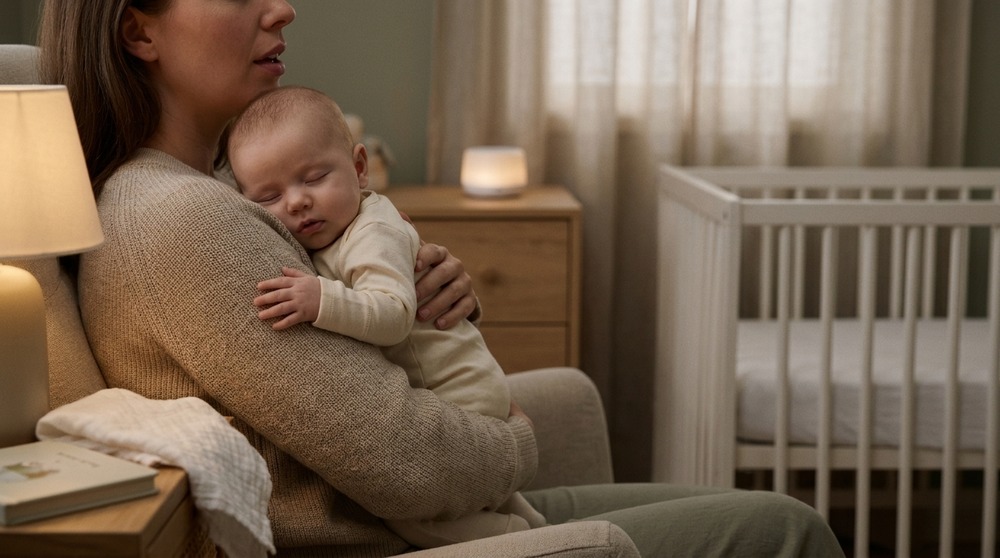
- Sing a gentle lullaby while you cuddle.
- If it helps, switch on low-volume white noise at a safe distance.
- Place your baby on their back in a safe sleep space.
Adapt the order to your baby. Some babies need the song during the feed, others after.
Other Natural Ways to Help Your Baby Settle
Sound is just one tool. Other gentle ways to help your baby settle include:
- A predictable bedtime routine. The same steps in the same order each night.
- A calm, comfortable room. Dim lighting and a temperature of 16–20°C.
- Cuddling or gentle rocking while your baby is awake and you're with them.
- Talking or singing softly.
- Watching for tiredness cues, such as yawning, rubbing eyes or turning away, and starting the wind-down before your baby is overtired.
- Low-key night-time care. Keep feeds and changes quiet and dim, without play.
- Meeting hunger and comfort needs. A full tummy and a clean, well-fitting nappy make settling easier.
- A consistent, safe sleep space. Back to sleep, in a clear cot with no pillows, bumpers or soft toys. Read more in our guide to safe sleep for babies.
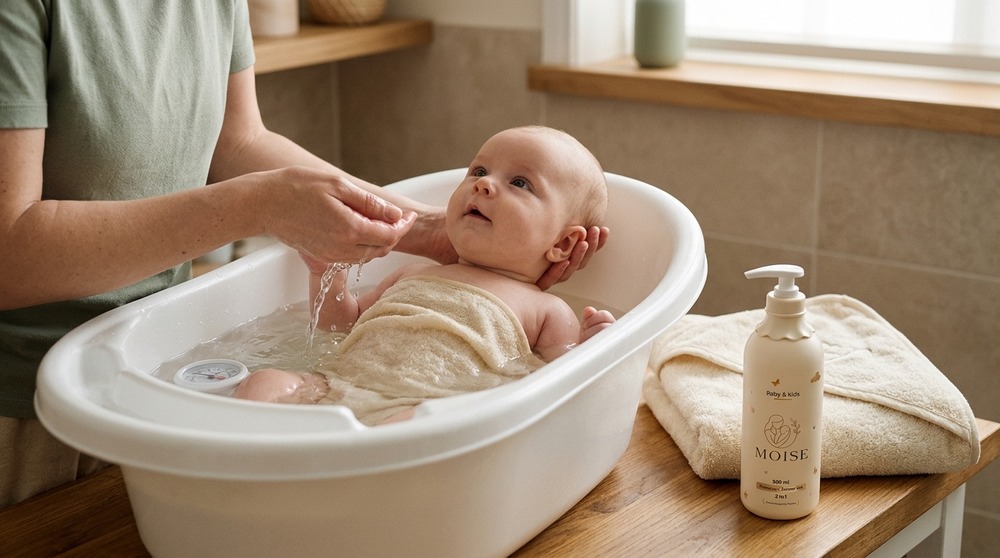
A warm bath can also be a relaxing part of the evening for some babies. If yours isn't keen, our tips on making bath time calmer might help.
What If Your Baby Still Struggles to Sleep?
White noise and lullabies can't solve every sleep problem. If your baby is having a hard time settling, think about:
- Hunger, especially during growth spurts
- Being overtired, or not tired enough
- A wet or dirty nappy
- Teething or a new developmental stage
- Feeling unwell or uncomfortable
- A change in routine, such as travel or visitors
- The room being too hot, too cold or too bright
Your health visitor can help with sleep worries and routines. Contact your GP, health visitor or NHS 111 if sleep problems come with concerns about feeding, weight gain, breathing, illness or your baby's general wellbeing. In an emergency, such as breathing difficulties or a baby who is hard to wake, call 999.
Conclusion: Use Sound Gently, Not as a Fix
White noise for babies and lullabies can both be helpful, but neither is magic. White noise may help some babies settle and mask sudden household sounds, though the research behind it is limited. Lullabies are well known to calm babies and offer a lovely moment of closeness, even if they don't guarantee longer sleep.
If you use white noise, keep it quiet, keep it at a distance and consider a timer. If you sing, don't worry about how you sound. And if your baby sleeps best in silence, that's completely fine too. What matters most is a calm routine, responsive care and a safe place to sleep.
Frequently asked questions
It helps some babies. A small study found more newborns fell asleep quickly with white noise, and it can mask sudden household sounds. But the overall evidence is limited, and white noise won't stop babies waking for feeds, comfort or other needs.
White noise can be used safely with newborns if it's kept at a low volume, placed well away from the cot and never put inside the sleep space. Some machines can get very loud, so use the lowest setting that works.
As quiet as possible while still being helpful. It should sound like a soft background hum. If you'd need to raise your voice to talk over it next to the cot, it's too loud. Keep the machine across the room rather than near your baby's head.
It doesn't need to. Many parents use a timer so white noise plays while their baby falls asleep and then switches off. If you do play it for longer, keep the volume low and the machine at a distance.
Babies can learn to link white noise with sleep, just like a song or a cuddle. That's a normal sleep association, not an addiction. If you want to stop, lower the volume gradually over a few nights.
Neither is better for every baby. Lullabies are good for calming and bonding and make a lovely bedtime cue. White noise works in the background and can mask household sounds. Many families use one, both or neither.
You can use both in your bedtime routine, but it's simpler to sing first and then switch on white noise as your baby goes down. Playing them at the same time can make the room unnecessarily noisy.
There's no single best sound. Many babies find a parent's voice, a gentle "shhh" or a soft, repetitive song the most soothing. Others prefer a quiet room. Watch how your baby responds and go with what calms them.
There's no set age. If white noise is used safely and your child sleeps well, you can keep using it. If you'd like to stop, reduce the volume or use a timer gradually, at whatever age suits your family.
Yes. Any sound, including music or white noise, can be too loud if it's played at a high volume or close to your baby's ears. Keep music soft, place speakers away from the cot and never use headphones on a baby.