How to start potty training, in short: introduce a potty or toilet seat, explain to your toddler what it's for, swap daytime nappies for pants, and offer regular potty sits at natural moments like waking up, after meals and before bed. Praise every try, stay calm about accidents, and go at your child's pace. Most children can learn between about 18 months and two and a half years, but there's no single right age.
Potty training is one of those milestones that sounds simple until you're standing in the bathroom with a toddler who has very different plans. If you're a first-time parent, it's normal to feel unsure where to begin, or worried about getting it wrong.
The good news is there's no perfect method you need to follow to the letter. What helps most is a bit of preparation, a predictable routine and a lot of patience. Below, we'll walk through how to start potty training step by step: how to tell if your toddler is ready, what you'll need, a sample daily schedule, and how to handle the wobbles along the way.
When should you start potty training?
Most children can start learning to use a potty somewhere between 18 months and two and a half years old. The NHS says almost all children can be potty trained in that window, and that you don't need to wait for your child to ask before you start. The American Academy of Pediatrics notes that children often begin to show signs of bladder and bowel control between about 18 and 24 months.
That said, age is only a rough guide. Two children born on the same day can be months apart in how ready they are. What matters more is a mix of things:
- Physical development: your child can walk to the potty, sit on it steadily and get up again.
- Cognitive development: they're starting to connect the feeling of needing a wee or poo with what happens next, and can follow simple instructions.
- Emotional readiness: they're reasonably settled and not in the middle of a big upheaval, like a new sibling or starting nursery.
It also helps to know that daytime training and night-time dryness are two different things. Daytime training is a skill your child learns with your help. Staying dry at night usually comes later and depends largely on the body maturing. The NHS notes that most children become dry at night after they're dry during the day, and that it isn't something you need to teach. So it's completely fine to keep a nappy on for naps and bedtime while you focus on the daytime.
Signs your toddler is ready for potty training
The most useful signs that your toddler is ready for potty training are:
- Staying dry for longer stretches, for example for about two hours at a time or after a nap.
- Showing interest in the toilet, the potty, or what you're doing in the bathroom.
- Noticing when they're going, such as going quiet, squatting, hiding or pulling at their nappy.
- Telling you about it, whether with words, a gesture or a look, before, during or after they've been.
- Walking to the potty and sitting on it without help.
- Following simple instructions, like "let's go and wash our hands".
- Disliking a wet or dirty nappy and wanting it changed.
- Pulling pants up and down, even if they still need a hand.
Your child doesn't need to tick every box before you start. Many toddlers show a few of these signs and pick up the rest as they go. If your child seems to have none of them, or becomes very upset when you try, waiting a few weeks and trying again is perfectly reasonable.
What do you need before starting potty training?
You don't need a cupboard full of gear. Here's what genuinely helps, and what's nice to have.
| Item | Essential or optional? | Why it helps |
|---|---|---|
| Potty, or a child toilet seat | Essential | Gives your child a safe, comfortable place to go. |
| Sturdy step or footstool | Essential if using the toilet | Supports their feet so they can relax and push. Knees slightly higher than hips is a good position. |
| Easy-off clothes | Essential | Joggers and leggings beat dungarees, zips and tights when every second counts. |
| Pants (or washable training pants) | Essential | Help your child notice when they're wet. |
| Spare clothes | Essential | Accidents will happen, at home and out. |
| Gentle wipes or a soft cloth | Essential | For wiping and cleaning up. |
| Potty books, sticker chart | Optional | Make the potty feel familiar and fun. |
| Travel potty, car seat liner | Optional | Useful once you're out and about in pants. |
| Second potty | Optional | Handy if your bathroom is upstairs. |
For wiping and quick clean-ups, many parents keep a pack of mild wipes by the potty. If your toddler has sensitive skin, wipes with very few ingredients, such as XL Water Wipes, are a gentle option. A small pack of travel size wipes in the changing bag is worth having for trips out.
One more thing to check before you start: is your child pooing comfortably? The NHS advises that toddlers should be passing soft poos at least every other day. If your child's poos are hard, pebble-like or painful, speak to your health visitor or GP before stopping nappies, because constipation can make potty training much harder.
The last two "supplies" don't cost anything: a consistent routine, and plenty of patience.
How to start potty training: a step-by-step guide
These seven steps take you from "what's that?" to a toddler who heads to the potty on their own. You don't have to rush through them. Some children move through the early steps in a few days, others need a few weeks.
Step 1: Introduce your child to the potty
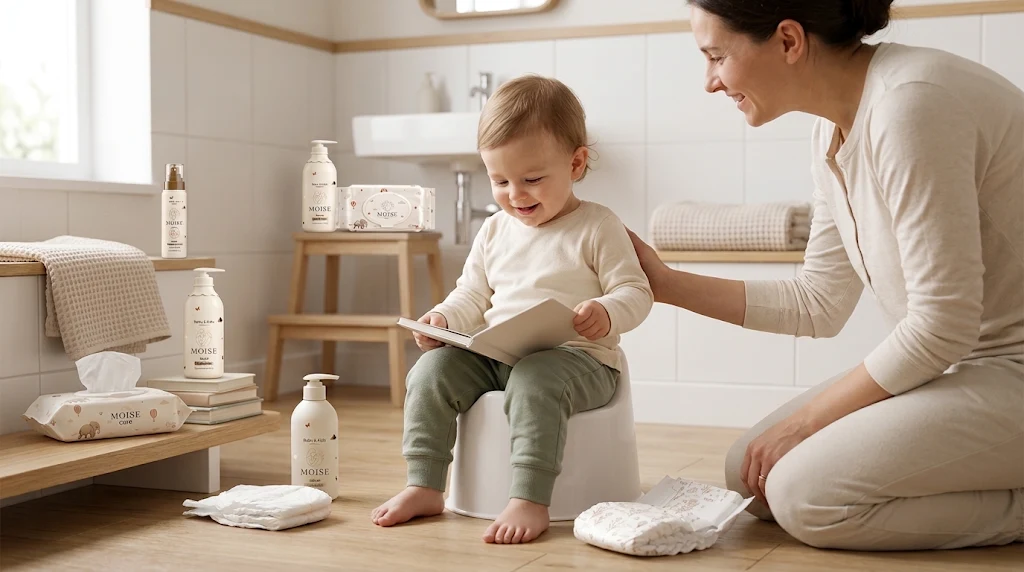
Put the potty somewhere your toddler can see it and touch it, ideally in the bathroom. Let them explore it, carry it around, even sit their teddy on it.
Explain what it's for in simple words: "This is your potty. When you need a wee or a poo, it goes in here." Let them sit on it fully clothed at first, just to get used to it. Picture books about potties can help too, as can letting them see you or an older sibling use the toilet.
If you can, start changing nappies in the bathroom. The NHS suggests this helps children connect wees and poos with the potty. Talking about it as it happens ("you're doing a poo") helps your child learn what those feelings mean.
Step 2: Establish a consistent potty routine
In the early days, your toddler won't always know they need to go, so don't wait to be told. Instead, build potty sits into the day:
- after waking up
- after meals and snacks
- before leaving the house
- before naps and bedtime
Keep sits short, a few minutes is plenty. A book or a song can help a wriggly toddler stay put. If they want to get up, let them. Forcing a child to sit usually turns the potty into a battle, and that's the last thing you want.
In between, watch for clues: going quiet, fidgeting, crossing legs, hiding behind the sofa. When you spot them, calmly suggest a trip to the potty.
Step 3: Teach the correct toilet habits
Once your toddler is sitting on the potty regularly, start teaching the small skills that go with it:
- Sitting comfortably and safely. Feet flat on the floor or on a step, knees slightly higher than hips. This position makes it easier to relax and poo.
- Wiping. Show your child how to wipe from front to back, which matters especially for girls, as it helps keep germs from the bottom away from the urethra. You'll do most of the wiping for a while, and that's normal.
- Handwashing. Make it part of every trip: wet, soap, rub, rinse, dry. A short song gives them a sense of how long to scrub.
- Little jobs. Let them flush, pull up their pants or tip the potty into the toilet with your help. Small bits of independence build confidence.
Step 4: Transition from nappies to underwear
When your toddler is getting used to the potty, it's time to switch from nappies to pants during the day. The NHS recommends stopping all nappies in the daytime, including pull-ups, because wearing pants helps children notice when they're wet. That feeling is an important part of learning.
To make the switch feel exciting rather than scary:
- let your child pick their own pants, perhaps with a favourite colour or character
- start on a few days at home, when you can stay close to the potty
- keep nappies or nappy pants for naps and night-time for now
Consistency matters. Going back and forth between nappies and pants during the day can be confusing. If your child goes to nursery or a childminder, or spends time with grandparents, agree on the same approach so everyone's using the same words and routine.
Not sure what the difference is between taped nappies and pull-up styles? Our guide to nappy pants vs nappies explains when each makes sense.
Step 5: Use positive reinforcement
Praise the effort, not just the result. Sitting on the potty is worth celebrating, whether or not anything happens.
Simple things work well: a big smile, a high five, "you sat on your potty, well done!" Some families like a sticker chart. Keep rewards small and immediate; toddlers don't connect a toy at the weekend with a wee on Tuesday.
Avoid punishment, shaming or showing disappointment. Feeling pressured or embarrassed can make children anxious about the potty, and anxious children often start holding on, which leads to more accidents and sometimes constipation.
Step 6: Recognise and respond to accidents
Accidents are part of learning. Almost every child has them, often for months after they seem "done".
When one happens:
- Stay calm. A neutral "oops, never mind" works better than a big reaction.
- Help your child into clean, dry clothes.
- Clean up together if they want to help.
- Gently remind them: "Next time, let's try to get to the potty."
If skin in the nappy area gets a little red from repeated wetness, rinse with water, pat dry and give it some air. A gentle wipe like our baby wipes or a soft damp cloth is enough for cleaning up. If the skin stays sore, check with your GP or pharmacist.
Step 7: Gradually build independence
As your toddler gets more confident, start stepping back. Encourage them to notice their own body signals and tell you when they need to go. Ask "does your body need a wee?" rather than "do you need the potty?" every half hour.
Slowly reduce the reminders. Let them do more of the routine themselves, from pulling down pants to washing hands. Keep praising, keep encouraging, and expect a few bumps. Independence comes in small steps, not all at once.
Creating a simple potty training schedule
A potty training schedule is simply a set of regular moments in the day when you offer your toddler a potty sit. It works best when it follows your child's natural rhythm rather than the clock. Here's an example you can adapt:
| Time or activity | Potty training opportunity | Helpful parent tip |
|---|---|---|
| Waking up | First sit of the day | Bladders are often full in the morning, so go before getting dressed. |
| After breakfast | Sit 15–30 minutes after eating | Eating can trigger the urge to poo, so this is a good time to try. |
| Before going out | Quick sit before leaving | Make it a habit: shoes, coat, potty. |
| Before lunch | Sit before sitting down to eat | Keep it relaxed; a minute or two is enough. |
| After lunch | Sit after the meal | Another natural moment for a poo. |
| Before and after naps | Sit before sleep and on waking | A dry nappy after naps is a great sign of progress. |
| Late afternoon | Sit during the afternoon lull | Watch for tiredness signals; tired toddlers often forget. |
| Before bath and bedtime | Last sit of the day | Keep it calm and part of the wind-down routine. |
Treat this as a starting point, not a rulebook. If your toddler naps at a different time or eats on a different schedule, shift the sits to match. And if they're clearly not interested at a particular moment, skip it. The aim is a predictable rhythm, not a timetable they have to obey.
How long does potty training take?
There's no fixed timeline. Some toddlers get the hang of daytime potty use within a few weeks, while others take several months to become reliable. Both are normal.
How long it takes depends on things like:
- how ready your child was when you started
- how consistent the routine is across home, nursery and other carers
- whether there's anything else going on, such as a new baby, a house move or illness
- whether your child is comfortable doing poos (constipation slows things down)
- your child's own temperament: some are cautious, others dive straight in
Daytime and night-time training often happen at quite different stages. Many children are dry during the day long before they're dry at night, and needing a nappy overnight for a while longer is common.
Setbacks are normal too. Plenty of children have a run of accidents after weeks of going well, especially during a busy or unsettled time. It doesn't mean you've failed or need to start again from scratch. A calm, steady approach usually gets things back on track.
Potty training boys vs girls: is there a difference?
The basic process is the same for boys and girls. Readiness, routine and encouragement matter far more than whether your child is a boy or a girl.
There are a couple of practical differences:
- Boys: most find it easier to start by sitting down for both wees and poos. It's simpler, less messy, and they don't have to work out whether they need a wee or a poo. Standing up can come later, often once they've seen a parent or older sibling do it. Gently tucking the penis down while sitting helps keep wee inside the potty.
- Girls: teach wiping from front to back from the start. This helps keep bacteria from the bottom away from the urethra and reduces the chance of irritation.
You may hear that girls train faster than boys. On average that can be true, but plenty of boys train early and plenty of girls take longer. Go by your own child, not by gender stereotypes.
Common potty training challenges and how to handle them
Almost every family hits at least one of these. None of them mean potty training has gone wrong.
What to do when a toddler refuses to use the potty
If your toddler refuses to sit on the potty, take the pressure off. Don't insist or bargain for ages. Instead, keep the potty around, offer it casually at the usual times, and let them see others using the toilet. Giving a small choice can help ("Do you want to use the potty or the big toilet?" or "Teddy first, then you?"). If the refusals carry on for a week or two, a short break is often the quickest way forward.
Fear of flushing or the big toilet
The noise of a flush or the size of an adult toilet can be genuinely frightening for a small child. Let them leave the room before you flush, or let them press the button once they're ready. A child seat and a sturdy step make the toilet feel safer. The NHS suggests ear defenders can help children who are sensitive to the sound.
Withholding poo
Some toddlers hold on to their poo, often because a previous poo hurt or because they feel anxious about the potty. Withholding can lead to constipation, which makes the next poo more painful, and the cycle continues. Keep things relaxed, make sure your child is drinking well and eating fibre-rich foods, and let them use a nappy for poos for a while if that's what it takes to stop the holding. If it carries on, or poos are hard or painful, talk to your GP or health visitor.
Frequent accidents
Lots of accidents usually means your child isn't yet noticing the signals in time, or is too busy playing to stop. Increase the regular sits, especially around transitions (before going out, before screen time). Make sure clothes are quick to pull down. If accidents are suddenly frequent after a good spell, think about whether something has changed, or whether your child might be unwell or constipated.
Resistance to wearing underwear
Some children simply like the familiar feel of a nappy. Let them choose their own pants, try a pair over the nappy for a day or two, or make getting dressed in "big kid pants" a fun part of the morning. Keep it light rather than turning it into a power struggle.
Regression after initial success
It's very common for a child who was doing well to start having accidents again. Starting nursery, a new sibling, moving house or illness can all throw things off. Go back to more frequent reminders and plenty of praise for a while, without making a fuss about the accidents. Regression is usually temporary.
Potty training during travel or big changes
If you're travelling, take a travel potty, spare clothes and a car seat liner, and keep the routine as close to normal as you can. Our changing bag checklist is a good starting point for packing. If a major change is coming up, like a new baby, it can be easier to wait until things have settled before you start.
When should you pause potty training?
A short pause can be the best thing you can do. Consider taking a break of a few weeks if:
- your child becomes very resistant, upset or distressed about the potty
- your family is going through a big change or transition
- your child has persistent constipation or painful poos (get advice before carrying on)
- your child shows very little interest or readiness after a fair try
Pausing isn't giving up. Keep the potty out, keep talking about it in a relaxed way, and try again when your child seems more comfortable. Many children make much faster progress the second time round.
When to talk to a GP, health visitor or paediatrician
Most potty training wobbles are normal and sort themselves out with time. But it's a good idea to get professional advice if your child has:
- pain, stinging or crying when weeing
- persistent constipation, or poos that are hard, painful or infrequent
- blood in their wee or poo
- unusual urinary symptoms, such as weeing much more often than usual, smelly or cloudy wee, or new daytime wetting after being dry
- significant or ongoing withholding of wee or poo
- ongoing difficulties despite a calm, supportive approach over a good length of time
In the UK, your health visitor is a great first port of call for general potty training worries. They can also talk it through at your child's two to two-and-a-half-year review. For pain, blood or possible infection, see your GP. This article is general information and doesn't replace advice from a healthcare professional who knows your child.
Conclusion
Knowing how to start potty training mostly comes down to four things: watching for readiness, keeping a simple routine, praising effort, and staying patient. You don't need a strict method or a perfect week off work. You need a potty, some easy-off clothes, and the willingness to let your child go at their own pace.
Accidents and setbacks are part of the journey for nearly every family, not a sign that something's wrong. Celebrate the small wins along the way: the first sit, the first wee in the potty, the first time they tell you they need to go.
Every child gets there in their own time. With a calm, encouraging approach, yours will too.
Frequently asked questions
There's no single best age. Most children can learn between about 18 months and two and a half years, and many start around two. Your child's readiness and your family's circumstances matter more than their exact age.
Common early signs include staying dry for a couple of hours, showing interest in the toilet, noticing or telling you when they're weeing or pooing, and disliking a wet nappy. Your child doesn't need to show every sign before you begin.
Introduce the potty, explain what it's for, and let your child sit on it at regular times such as after waking, after meals and before bed. When they're used to it, switch to pants in the daytime, praise every try and stay calm about accidents.
Offer the potty at natural points in the day: on waking, after meals, before going out, before and after naps, and before bed. Early on you may add a few extra sits in between, but avoid asking every few minutes, which can feel like pressure.
In the daytime, pants usually work best because your child can feel when they're wet. The NHS recommends stopping all daytime nappies, including pull-ups, once you start. Many families keep a nappy or nappy pants for naps and night-time until their child is reliably dry.
It varies a lot. Some children are reliable in the day within a few weeks, others take a few months. Night-time dryness usually comes later, and occasional accidents can continue for some time after training seems complete.
Stay calm and avoid forcing it. Keep offering the potty without pressure, give small choices, and praise any effort. If the refusal continues for a week or two, take a short break and try again later.
Most boys find it easier to start sitting down for both wees and poos. Standing up can come later, once they're confident and often after watching a parent or older sibling.
Stay calm, reassure your child, help them into clean clothes and gently remind them to try the potty next time. Never scold or shame them, because anxiety can make accidents and withholding more likely.
You usually don't need to "train" for night-time. Most children become dry at night some time after they're dry in the day, as their body matures. When your child regularly wakes up dry, you can try going without a nappy at night.
Yes. If your child is upset, resistant or going through a big change, a break of a few weeks is often helpful. Keep the potty out and try again when they seem more comfortable.