What is a normal number of wet nappies for a newborn?
How many wet nappies should a newborn have each day? In the first two days, most babies have only one or two wet nappies, and that is expected. The number then rises as feeding gets going: three or more on days three and four, then at least five or six heavy wet nappies a day from around day five. By the end of the first week, six or more heavy wet nappies every 24 hours is the usual pattern.
If you are counting nappies at 3am and wondering whether that one counts, you are not alone. Counting wet nappies is one of the simplest ways to keep an eye on your baby in the early days, and midwives will often ask you about it.
It helps to know what these numbers can and cannot tell you. Wet nappies are one useful sign that milk is going in. They are not a test on their own. Your midwife or health visitor will also look at how your baby feeds, their poos, their weight and how alert they are.
These figures are general guidelines for healthy, full-term babies. If your baby was born early, is unwell or is having feeding difficulties, your maternity team may give you a different plan. Always follow their advice over a general chart.
How many wet nappies should a newborn have by age?
This newborn nappy output chart follows the bands used in NHS and UNICEF UK Baby Friendly materials. "Day 1" means the first 24 hours after birth.
| Time | Feed | Wet nappy? | Dirty nappy? | Notes |
|---|---|---|---|---|
| 6:00 am | Breast / formula | Yes / No | Yes / No | Any concerns |
| 9:00 am | Breast / formula | Yes / No | Yes / No | Any concerns |
| 12:00 pm | Breast / formula | Yes / No | Yes / No | Any concerns |
This is a practical guide, not a diagnostic threshold. Local maternity teams may phrase it slightly differently, and your baby's circumstances matter.
A few things make counting easier and fairer:
- Count over a full 24 hours. Wees come in clusters, so a quiet few hours does not tell you much by itself.
- A nappy with a poo can still count as wet. If there is urine in it too, count it.
- Disposable nappies hide small wees. Modern absorbent cores pull moisture away fast, so a light wee can be easy to miss.
- Look at the whole picture. Feeding, poos, weight and how your baby seems all count alongside the nappy tally.
You do not need to wait for a full 24 hours to pass before asking for help. If your baby seems unwell, is feeding poorly or has passed very little urine, contact your midwife or GP straight away.
Why does the number of wet nappies increase after birth?
Wet nappies increase because your baby is taking in more milk each day. In the first couple of days, newborns pass very little urine, which is why one or two wet nappies is the expected starting point.
If you are breastfeeding, your body makes colostrum first. It comes in small volumes, and that is exactly what a newborn's small tummy needs at this stage. Around days three to four, as your milk supply increases, babies usually take more at each feed. You will typically see more wet nappies, and heavier ones, as that happens.
Formula-fed babies follow a similar pattern as feeding settles into a rhythm over the first days.
Low output is not automatically normal just because your baby is breastfed or only a few days old. Poor attachment, a sleepy baby, tongue-tie, illness or other medical issues can all reduce how much milk goes in. That is why the early nappy pattern is worth watching rather than explaining away.
What is the first urine after birth?
Your baby's first wee is an important early observation. Many babies pass it soon after birth, sometimes before anyone notices, but timing varies. Some babies may only wee once in their first 24 hours.
Your midwife will ask whether your baby has had a wet nappy. If you have not seen one within the timeframe your maternity team gives you, or you are unsure, tell them. Do not rely on an online chart to decide whether a delay is acceptable. They can check your baby and advise you based on how your baby is doing.
Do breastfed and formula-fed newborns have different wet nappy counts?
The same general age-based guide applies to both. Wet nappies for breastfed and formula-fed babies follow a similar rising pattern over the first week. What differs is how you and your midwife judge whether feeding is working.
Wet nappies in breastfed babies
With breastfeeding, you cannot see how much milk your baby takes, so other signs matter more.
- Attachment and milk transfer. A good latch means a wide mouth, chin touching the breast and no pain beyond the first few sucks. Effective feeding shows as long, rhythmic sucks with swallows you can see or hear.
- Frequent feeds. Newborns usually feed often in the early days, commonly 8 to 12 times or more in 24 hours. Frequent feeding also helps build your supply.
- Feed length is not a measure. A long feed does not prove your baby is getting milk, and a short feed is not always a problem. How your baby sucks and swallows tells you more.
- Signs work together. Wet nappies, the change in poos from dark meconium to yellow, weight checks and a feeding assessment build the full picture.
Ask your midwife, health visitor or a breastfeeding specialist to watch a feed if nappies are fewer than expected, feeds are painful, your baby is very sleepy at the breast or you are simply not sure. The NHS advises asking for help early.
A baby who feeds often and has some wet nappies may still need support. Feed counts and nappy counts are reassuring signs, not proof.
Wet nappies in formula-fed babies
Formula-fed newborns can also become dehydrated or have feeding difficulties, so the nappy guide applies to them too.
- Make up feeds exactly as instructed. Use the amount of powder and water stated on the pack.
- Never dilute formula or add extra water. NHS guidance is clear that you should not add extra water or extra powder when making up a feed. Too little powder can leave your baby undernourished; too much can contribute to constipation or dehydration.
- Feed responsively. Watch for hunger cues, let your baby pace the feed and never force them to finish a bottle.
- Keep an eye on output and wellbeing. Wet nappies, poos, alertness and weight checks still matter.
Do not give a newborn extra water to "top up" fluids unless a healthcare professional specifically tells you to.
How can you tell whether a nappy is wet enough?
A "heavy" wet nappy is one that feels noticeably weightier than a fresh one. Because modern nappies lock moisture away, this can be surprisingly hard to judge at first.
- Try the water test. The NHS suggests adding 2 to 4 tablespoons of water to an unused nappy. Pick it up and feel the weight. That gives you a reference for what a heavy wet nappy feels like after the first few days.
- Compare by feel. Hold the used nappy next to a fresh one if you are unsure.
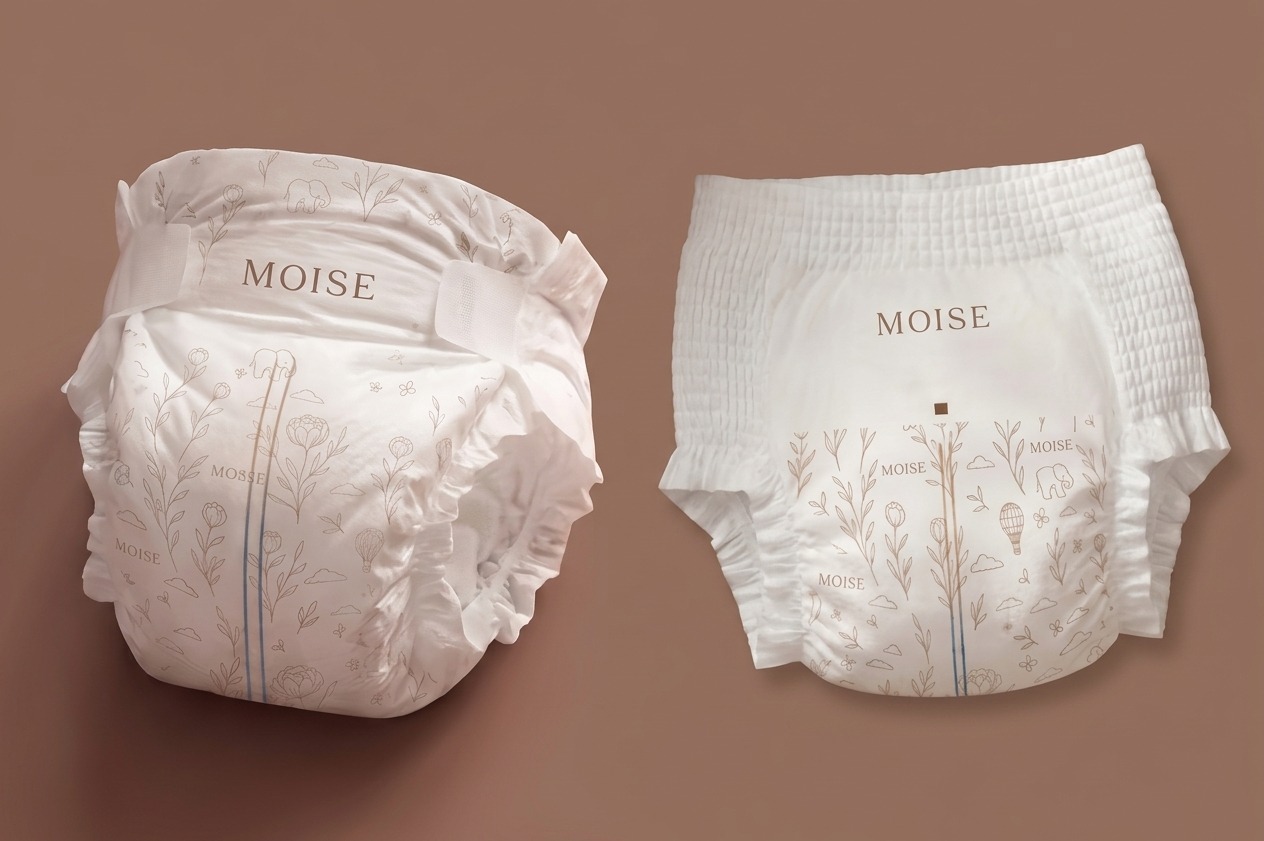
- Use the wetness indicator, if there is one. Many disposable nappies have a line that changes colour when wet. Moise nappies, for example, have indicator lines that change colour. An indicator is a helpful prompt, but a small wee may not trigger it fully, so open and check the nappy too.
- Know the limits. You cannot measure exactly how much your baby has passed by looking or feeling, and you do not need to. The aim is to notice the overall pattern.
Once feeding is established, urine is usually pale yellow and not strong-smelling. Colour can vary, especially in the first days. Dark urine, ongoing staining or an unusual pattern is worth mentioning to your midwife or health visitor, particularly alongside other concerns.
What are urate crystals or "brick-dust" stains?
In the first couple of days, you may see reddish-orange or pinkish marks in the nappy that look a little like brick dust. These are usually urates: crystals that appear when a newborn's urine is concentrated.
Urates are common in the very early days, when babies take in only small amounts of milk. They tend to fade as feeding increases. If they carry on beyond the first few days, it can be a sign your baby needs help with feeding, so tell your midwife.
Do not assume pink or orange staining is harmless if it continues, if your baby has few wet nappies or if you have any feeding worries. Get it checked.
How many wet nappies suggest a newborn is getting enough milk?
Reaching the expected number for your baby's age is a reassuring sign, but it is only one part of how to tell if a newborn is getting enough milk. Healthcare professionals look at several newborn feeding signs together:
- Feeding frequency and effectiveness. Regular feeds with rhythmic sucking and swallowing.
- Waking and feeding actively. Your baby wakes for feeds, or rouses when you offer a feed, and feeds with energy rather than drifting off straight away.
- Poos changing colour. From black, sticky meconium in the first days, through greenish-brown, to soft yellow poos by around day five. From day four, the NHS expects at least two soft yellow poos about the size of a £2 coin each day for the first few weeks.
- Weight. Babies often lose some weight in the first few days. After that, steady weight gain is one of the clearest signs feeding is going well. Your midwife will weigh your baby during the first week.
- Alertness and general condition. A baby who is alert when awake and has good colour is reassuring.
- A professional feeding assessment. Your midwife or health visitor can watch a feed and check how it is going.
Your baby may still need feeding support even if the nappy count looks fine. If something feels off, say so.
Signs of dehydration in newborns
Babies become dehydrated more easily than older children and adults, and the signs can be subtle. Do not wait for several signs to appear before asking for help.
Possible warning signs include:
- Fewer wet nappies than expected for your baby's age, or nappies that stay fairly dry
- A long gap with no wet nappy, especially with any other symptom
- Dark yellow or strong-smelling urine, or pink-orange staining that continues past the first few days
- Unusual sleepiness, being hard to wake for feeds or seeming less responsive than usual
- Poor feeding, a weak suck, or refusing feeds
- A dry mouth, few or no tears, or sunken eyes
- A sunken soft spot (fontanelle) on top of the head
A sunken fontanelle can be a sign of serious dehydration, but it should never be the only thing you check. A baby can be dehydrated without it.
When to get help
Call 999 or go to A&E if your baby is very drowsy or hard to wake, floppy, breathing in an unusual way (fast, noisy or with pauses), has a sunken fontanelle with other signs of dehydration, or seems seriously unwell.
Contact your midwife, health visitor or GP promptly, or call NHS 111 if your baby is feeding poorly, has noticeably fewer wet nappies than expected for their age, has dark urine or ongoing urate staining, or shows any other possible sign of dehydration.
Tell your maternity team if your newborn has not had a wet nappy within the timeframe they gave you after birth.
Please do not try home remedies, give extra water, or wait another day to see whether the nappies pick up. Newborns should not be given water unless a healthcare professional specifically advises it.
What should you do if your newborn has fewer wet nappies than expected?
If your newborn is not peeing as much as you expected, these steps can help you act quickly and calmly. They are not a substitute for a professional check.
- Check your baby's age and the count. Work out which band in the chart applies and how many wet nappies there have been over the last 24 hours.
- Think about feeding. Is your baby waking for feeds, sucking and swallowing well, and feeding often enough? Have poos changed as expected?
- Keep offering feeds as usual. Offer the breast or correctly made-up formula in line with the feeding advice you have been given. Do not add water or dilute formula.
- Call your midwife, health visitor or GP promptly if the count is below what is expected for your baby's age or you have any feeding concerns. Out of hours, call NHS 111.
- Get urgent help if your baby shows signs of dehydration or seems unwell. Call 999 if they are hard to wake, floppy or breathing abnormally.
If your newborn has concerning symptoms or is passing much less urine than expected, do not wait until the next day.
How to track your newborn's wet nappies
A simple log takes the guesswork out of the first week, especially when you are short on sleep. It also gives your midwife clear information.
Note down:
- The time of each feed
- Whether the feed seemed effective (sucking and swallowing, settled afterwards)
- Each wet nappy and each dirty nappy
- Any unusual urine colour or pink-orange staining
- Anything that worries you about alertness or feeding
- Any instructions from your maternity team
A notebook works well, or a notes app on your phone.
Example log (not a feeding schedule):
| Baby's age | Wet nappies in 24 hours (general guide) | What you may notice |
|---|---|---|
| Days 1–2 | 1–2 or more | Small amounts of urine; some babies wee only once in the first 24 hours |
| Days 3–4 | 3 or more | Nappies start to feel heavier |
| Days 5–6 | 5 or more heavy wet nappies | Urine usually pale; NHS guidance says at least 6 from day 5 |
| Day 7 onwards (first weeks) | 6 or more heavy wet nappies | A steady daily pattern |
The times are only there to show the layout. Newborns feed on their own rhythm, so feed your baby when they show hunger cues and follow your maternity team's advice. Never delay a feed to fit a table.
At changing time, a gentle routine helps protect delicate skin. Our guide on how to clean your baby's nappy area walks you through it, and if you are heading out, the changing bag checklist covers what to pack.
Frequently asked questions
In the first 24 hours, one or more wet nappies is a common general guide, and some babies wee only once. Follow your maternity team's advice, and tell them if you have not seen a wet nappy or are unsure.
Yes, one to two or more wet nappies is the usual guide for days one and two. Your baby's feeding, poos, weight and general condition matter too, so ask for advice if output is lower or anything else worries you.
The NHS says at least six heavy wet nappies every 24 hours from day five onwards. Other UK guides use five or more on days five to six, then six or more from day seven. Either way, it is a general guide, not a guarantee that feeding is going well.
Yes. Absorbent cores can make small wees hard to spot, and wetness indicators may not respond to small amounts. Open and check each nappy, compare it with a fresh one, and focus on the overall pattern rather than trying to guess exact amounts.
It depends on your baby's age, weight, feeding progress and health, so there is no single rule. Follow the feeding plan your midwife or doctor has given you, and contact them promptly if wet nappies are fewer than expected.
Urine can be more concentrated in the first couple of days. Once feeding is established, it is usually pale. Dark urine that persists, staining beyond the early days, fewer wet nappies or feeding worries should be checked by a healthcare professional.
Yes. Wet nappies are only one sign. Seek advice if your baby is feeding poorly, unusually drowsy, not gaining weight as expected or has other symptoms, even if they are still passing urine.
Call your midwife, health visitor, GP or NHS 111 promptly if wet nappies are below what is expected for your baby's age, your baby is not feeding well or urine looks unusual. Call 999 if your baby is floppy, very hard to wake or breathing abnormally.